They call it kadedekedewa. Roughly “dog shark.” Or “lazy shark.”
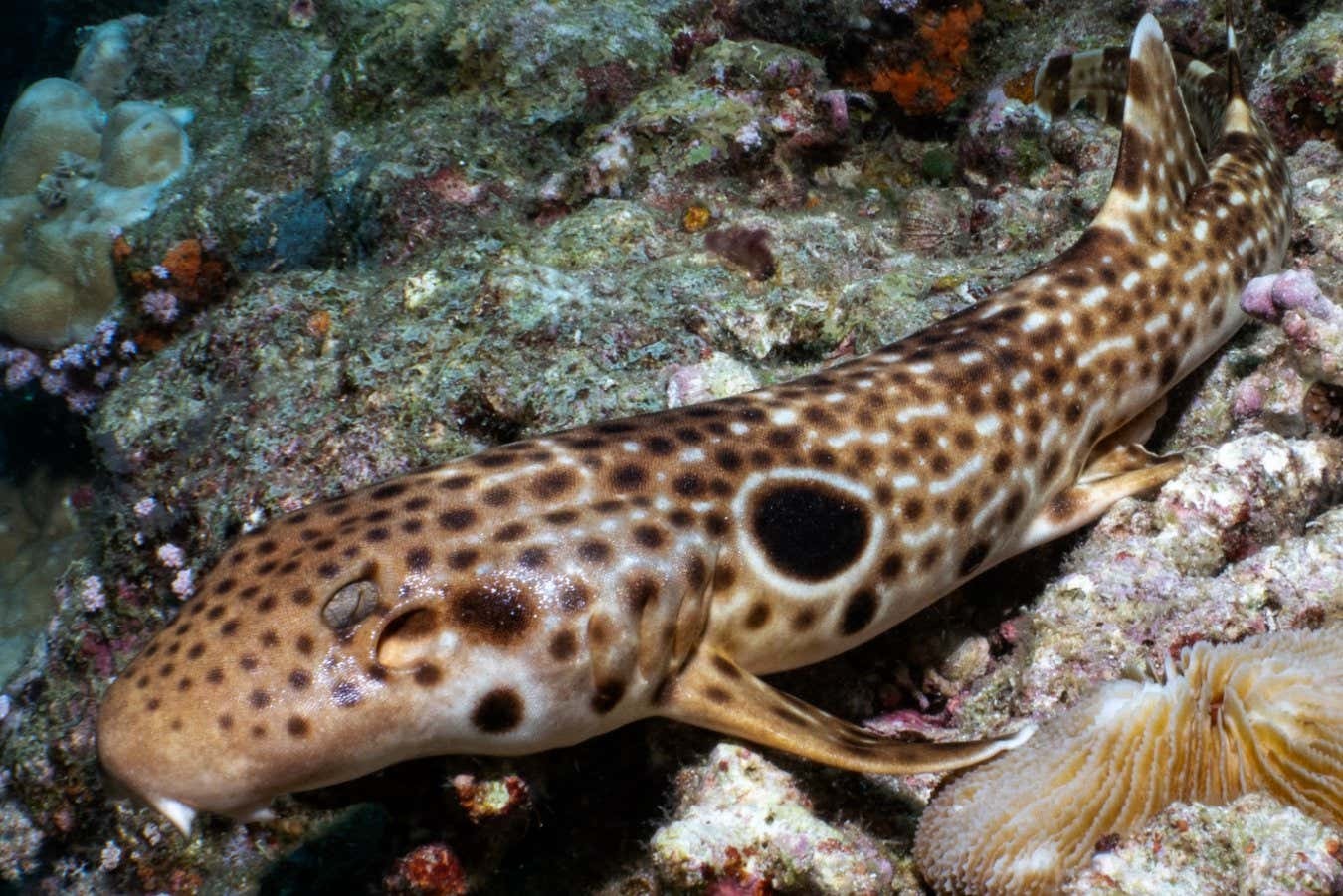
For a long time, the people of Papua New Guinea just watched it. Saw it waddling across reef flats when the tide went out. Most of its body stayed dry. It didn’t swim so much as stomp. Now, science agrees. It is new to the record. A whole new species of Hemiscyllium, the genus known for walking sharks. Or epaulette sharks.
The name given? Hemiscyllium dudgeonae.
Christine Dudgeon didn’t plan to find it. In fact, she probably wasn’t looking hard enough. It was past midnight. March 2025. She was swimming in a metre of water in Milne Bay. Looking for a different shark, Hemiscyllium michaeli.
She was tired. Cold? Maybe just over it. “I was a bit over it,” Dudgeon admitted.
Then she saw one.
Nearly three-quarters of a metre long. Swimming along the bottom. She shone a torch at it. The thing froze. Defense mechanism.
Dudgeon grabbed it. Not aggressively, but with a specific move. The “flip and tuck.” Jiu-jitsu for fish. Flip them over, tuck the tail under your arm, and the wriggling stops. She passed the bundle to her colleague Jess Blakeway in the nearby boat.
Blakeway knew instantly.
“You sort of just see the colour,” she said. The pattern wasn’t right for the known species. Other walking sharks look like leopards. This one? Different. Spots. Dashes. Like Braille. Like Morse code.
Over the next few days, the team found eleven more. They took samples. Let most go. Kept three. Back in the lab, DNA tests confirmed the suspicion.
This wasn’t a variant. It wasn’t a mix-up. Genetically distinct. Separate.
Walking sharks use their pectoral fins as legs. Only found in Australia and New Guinea now. This new species adds to that small club.
But there’s a catch. A bad one.
Habitat loss is eating them alive. Coastal development. Palm oil plantations expanding. Coral bleaching turning white and dead. The researchers believe H. dudgeonae exists only in Milne Bay. That makes it precarious. Probably the most endangered shark in its group.
“This species adds to Papua New Guinea’s extraodinary biodiversity, yet it faces local extinction without urgent conservation action.”
Jess Blakeway said it plainly. Urgent action needed.
Otherwise? We lose them. Another strange creature, vanished before we even knew it walked.
Source: Journal of the Ocean Science Foundation (DOI: 10.528/zenodo.203529).
(Note: The newsletter blurb and Rowan Hooper segment were excluded as they were not part of the factual discovery report.)