It has been nearly fifty years since One Flew Over the Cuckoo’s Nest took the stage at the 1976 Academy Awards, but its record still stands. Jack Nicholson and Louise Fletcher didn’t just win; they dominated. The film swept the “Big Five” categories: Best Picture, Director, Lead Actor, Lead Actress, and Adapted Screenplay.
Here is the kicker. It is the only film since It Happened One Night in 1934 to achieve this specific clean sweep.
That gap might explain why people still talk about it so much. In a modern era of franchise blockbusters and split votes, One Flew Over the Cuckoo’s Nest feels like a relic of a time when a single studio production could capture the entire cultural zeitgeist. It earned six Golden Globes and six BAFTAs. It landed in the National Film Registry in 1993. But the story isn’t just about awards. It’s about the clash between individual freedom and institutional control, played out in a sterile mental hospital in the early 1960s.
The Setup: McMurphy vs. The System
The movie begins with routine. The morning meds. The lineup. Then R.P. McMurphy arrives.
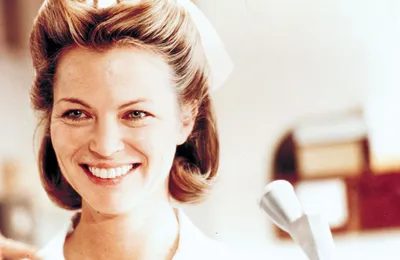
Nicholson’s McMurphy is a transfer from a prison work farm. He is loud, charismatic, and completely uninterested in the rules set by Nurse Ratched. Ratched, played with icy precision by Louise Fletcher, runs the security ward with a psychological grip that is as effective as any physical restraint.
The conflict starts small. In a group therapy session, McMurphy wants to watch the World Series on TV. He asks for a vote. The patients, conditioned to obey, vote no. It’s a display of learned helplessness.
Then comes the Monopoly fight. Harding and Taber get into a scuffle. McMurphy grabs a hose, sprays them down, and then declares he’s going to throw a water fountain through the window to escape the boredom. He can’t lift it. The moment deflates. But the seed is planted.
In the next session, McMurphy shames Billy Bibbit into admitting his feelings, then pushes for another vote on the World Series. This time, the patients vote yes. But Ratched shuts it down. The therapy group is only half the ward. The rules remain.
The Rebellion Escalates
McMurphy’s defiance turns physical. He climbs onto the shoulders of Chief Bromden, a gigantic man who feigns deafness and muteness. With Chief acting as his ladder, McMurphy scales the fence and hides in a bus destined for a field trip.
Once the patients are aboard, McMurphy drives the bus to a boat charter. He picks up a friend, Candy, and takes everyone out fishing. For a few hours, they are free.
They return to find police and Dr. Spivey waiting. Dr. Spivey, played by the actual superintendent of the Oregon State Hospital, agrees McMurphy isn’t mentally ill. He should go back to prison.
Ratched intervenes. She argues she can help McMurphy if he stays. And here is the trap. McMurphy learns from an orderly that he can be held indefinitely past his sentence. When he asks why no one told him this during therapy, chaos erupts. Cheswick, Chief, and McMurphy are sent for electroshock therapy.
While waiting, Chief reveals his secret. He isn’t deaf or mute. He fakes it to avoid engagement. He and McMurphy plan an escape.
The Night of the Party
That night, McMurphy’s friends bring liquor. He bribes the night watchman, Turkle, to let them in. They wake the ward. A drunken revelry ensues.
The morning shift walks in to a trashed ward. Patients passed out on the floor. Billy Bibbit in bed with Candy.
Ratched shames Billy for his lack of control. The shame is too much. Billy commits suicide.
McMurphy snaps. He attacks Ratched, trying to strangle her. He is knocked out by an orderly.
The Aftermath and Lobotomy
Time passes. Chief watches orderlies bring McMurphy back. But McMurphy doesn’t respond. He has been lobotomized.
He is a shell. A vegetable.
Chief realizes McMurphy is helpless. In an act of mercy, he smothers McMurphy with a pillow. Then, Chief lifts the water fountain. He throws it through the window. He steps out into the light.
Behind the Scenes: A Turbulent Production
The road to the screen was rocky. Ken Kesey’s 1962 novel was adapted into a Broadway play in 1963, starring Kirk Douglas. Douglas held the film rights for over a decade before passing them to his son, Michael Douglas, who co-produced with Saul Zaentz.
Kesey hated the adaptation. He sued the production.
The movie was shot on location at the Oregon State Hospital. Dean Brooks, who played Dr. Spivey, was the hospital’s superintendent at the time. This wasn’t a set. It was real.
The film also launched the careers of Brad Dourif, Christopher Lloyd, and Will Sampson. For Dourif, it was a credited debut. He played Billy Bibbit, a role that earned him an Academy Award nomination for Best Supporting Actor.
The Legacy
One Flew Over the Cuckoo’s Nest isn’t just a drama. It’s a cultural benchmark. It defined the archetype of the rebellious outsider. It highlighted the dangers of unchecked institutional power. And it proved that sometimes, the only way out is through the window.
The water fountain. The World Series. The pillow.
These images stick. Not because they are pretty. But because they are final.
Chief Bromden escapes. McMurphy dies. Ratched remains, watching from her office. The system continues.
Does it matter who won the awards? The film won them all. But the story is about who lost.