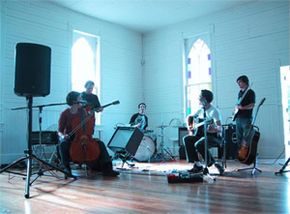
You’ve got the gear. You’ve got the riffs. You’re ready to stop practicing in a basement and actually play for humans who aren’t your parents. But here’s the rub. Your current speaker setup sounds like a toaster exploding. And if you don’t have ten grand stuffed inside a mattress, you need to start small. You need the bare minimum. The essentials that will get you from “garage jam” to actual venue gigs.
This isn’t about building a stadium rig. It’s about getting a pro audio system that works in a small club, a backyard party, or a high school gym.
Where to Start Your Sound Setup
Buying random gear is a fast track to wasting money. You need a plan. A basic sound system has four main components. Get these right, and you’ll sound better than 80% of opening acts.
- Instrument cables – Don’t cheap out. These carry your signal from guitar or keyboard to the amp.
- Microphones – You need at least two. One for vocals. One for drums or instruments.
- Microphone stands – If you want your hands free to play something other than holding a mic.
- Mixing board – This is the brain. It takes all those inputs and sends them to the speakers.
- Amplifiers – To power those speakers so people can hear you over the crowd noise.
- Speakers – The final output. If these suck, everything else fails.
The Core of a Pro Audio System
Let’s break it down. You don’t need a $5,000 mixer. You need one that has enough inputs for your band. Usually, that means four to eight channels. Think about what you’re using. Bass. Guitar. Drums. Vocals. Two mics. Maybe a keyboard. If you have more players, you need more channels.
“Your mixing board is the most important part of your signal chain. It controls the balance. Without it, you’re just making noise.”
Speakers are next. You don’t need massive stacks. Two active speakers, each with their own built-in amplifier, work fine for small venues. They’re lighter. Easier to move. And they cut out the need for a separate amp head. Look for speakers with at least 500 to 1,000 watts of power. That gives you enough headroom so the sound doesn’t distort when you get loud.
Microphones matter. Start with two dynamic mics. They’re tough. They handle high volume levels well. Good for vocals and snare drums. Shure SM58s are the industry standard for a reason. They rarely break. They sound consistent.
Cable Quality and Signal Flow
Cables are boring. Until they fail mid-song. Then they’re a nightmare. Buy decent instrument cables. Shielded ones. Avoid the thin, flimsy ones from big-box stores. They pick up interference. Hum. Buzz. That’s not part of the music.
Signal flow is simple. Input goes to the mixer. Mixer goes to the amp. Amp goes to the speaker. Keep it clean. Short cables where possible. Long cables only if you have to run them across the stage. Long runs can
Matching Gear to the Room
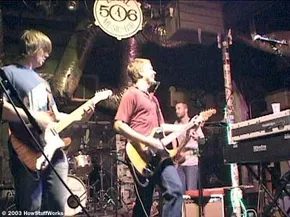
The real money saver in touring isn’t just negotiating better rates. It’s knowing exactly what you’re walking into. Pick your venue type carefully. Stop hauling a full PA system to a dive bar that already owns three.
Clubs with resident bands usually have the heavy lifting done for them. A permanent PA. Speakers bolted to the ceiling. A house mixer sitting on a desk, waiting for you to plug in. This is the dream scenario. You show up with your guitar, your bass, maybe a vocal mic or two, and you’re live. If you want total control over the mix, bring your own small mixer. It’s not required. But having your own hands on the faders helps when the sound guy is asleep.
Theater and school gym circuits work the same way. They have rigs. They have infrastructure. Bring your instruments. Bring your cables. Leave the truck at home.
But if you’re playing private parties or those sketchy school gyms with no infrastructure, you’re on your own. You need the full kit.
Parties and Small Clubs
Here’s where the budget gets tight. These spots don’t have a house sound. They don’t have a stage. They often have terrible acoustics and worse owners who want to pay you in exposure.
You need portable, high-impact gear. A compact PA system that fits in a sedan. Two powered speakers. A simple mixer with enough inputs for your band. Don’t bring your full stage rig. No massive amps. No huge drum kits unless the audience is specifically expecting a acoustic folk set.
Think about transport. Can you carry this equipment in one trip? If you need a dolly, two people, and a van, your overhead just doubled. Small clubs rarely reimburse for extra help. You’re likely driving yourself. You’re likely loading in and out in ten minutes flat.
Power is another trap. Small venues have limited outlets. You’ll be running extension cords across dance floors. Tape it down or someone will trip and pull your board out of the wall. Get a heavy-duty power strip with surge protection. Don’t rely on the wall outlet being stable.
What about sound? You’re fighting background noise. Clinking glasses. Shouting over the music. Your PA needs headroom. If it’s peaking at 80% volume just to be heard over the beer pong table, you’ve got a problem. Bring monitors. Not big wedges. Just enough so you can hear yourself without turning up the main mix to dangerous levels.
And don’t forget the cables. Two hundred feet of XLR. Three hundred feet of instrument cable. Extra batteries for wireless mics. You can’t buy these at the venue. The corner store won’t have them. Buy twice as many as you think you need. They break. They get stolen. They get lost in the mud.
Is it worth the hassle? Only if the payout is right. Small club gigs often pay poorly. $50. $100. Sometimes a door split that never materializes. Make sure your gear investment makes sense for that return. If you’re spending $500 in gas and wear on your van for a $50 gig, you’re subsidizing their business. Cut the losses. Book bigger rooms. Or play parties where the client provides the sound.
The
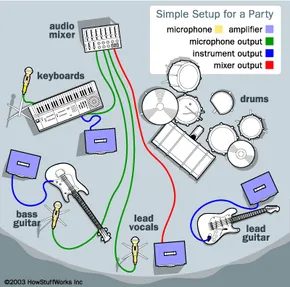
You’ve got your core lineup sorted. Lead guitar brings their axe and amp. Bassist brings theirs. Drummer has the kit. Keyboardist has the keys and speaker. Lead singer has the mic and amp. Two members double up on backing vocals.
Practice is easy. Garage? Basement? You’re good. It’s loud. It’s raw. It works.
But what happens when you leave the basement?
Small gigs might still work if everyone brought big amps. A 30-watt or 60-watt guitar head? That pushes sound through a crowded room. Ten or fifteen watts? Not so much. If the room is full of talking people, those small amps disappear. You need more.
Here is the missing piece. You probably don’t have a mixer yet. You don’t have mics for the backing singers either.
At practice? You ignore them. At a gig? You can’t.
If the background vocals aren’t heard, the band sounds thin. The sound falls apart. The energy drops.
Fix this with a simple setup.
Grab a small 4-channel mixer. It’s cheap. It’s portable. It does the job. Route the backing vocal mics into it. Mix them with the lead singer’s signal. Push that combined output into the lead singer’s existing amp.
Now you’re set.
You need:
– The 4-channel mixer
– Two vocal microphones for the backing singers
– Mic cables
– Mic stands
That’s it. You’re ready for an intimate venue. A small club. A coffee shop stage.
But what if the promoter books you for a high school gym? Or a community center with high ceilings and echoey walls?
School Gymnasiums
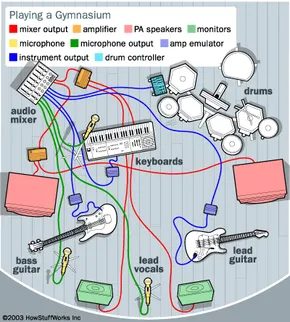
Let’s be real. Your bedroom amp isn’t cutting it. If you’re playing to 500 people screaming in a gym, you need a real PA system. Otherwise, you’re just making noise, not music. You need a mixer to gather all those signals before they hit the airwaves.
Money tight? Rent the gear. Do it until your day planner is clogged with bookings. Once you’re ready to buy, look at pawnshops, used music stores, and eBay. Used equipment saves a ton of cash.
How to Connect Instruments to the Mixer
You have two choices for setup: miking or direct input.
For the lead guitarist, you can mike their amp. Or run the signal through an amp emulator into the mixer. The bassist gets the same treatment. Direct input box or emulator. Keyboard? Straight into the mixer. No mics needed. Electronic drums? Direct into the mixer. Acoustic drums? Get some mics. Vocals need mics too. Lead and background.
Count the inputs. Four instruments plus three vocalists equals seven sources. You need an 8-channel mixer to handle it.
Power and Speaker Requirements
The mixer sends the signal to an amplifier. For a gym, at least 100 watts is the floor. 200 watts is better. Don’t cheap out here. The PA speakers must handle that power. Check the specs. You might need speaker stands, too.
Stage monitors matter. Musicians need to hear themselves. Your mixer has a monitor-out signal. You’ll need a monitor amp and several monitor speakers to make it work.
The Full Equipment List
Here is what you’re hauling.
- One 8-channel or 12-channel mixer
- Main amplifier
- Monitor amp
- Main speakers
- Speaker stands (if needed)
- Monitor speakers
- Speaker cables for main and monitor
- Three to seven mikes
- Mike stands
- Mike cords
- Power cords and extension cords
- A van for hauling all this stuff
This isn’t just gear. It’s logistics. One wrong cable and the show stalls.
Equipped Clubs
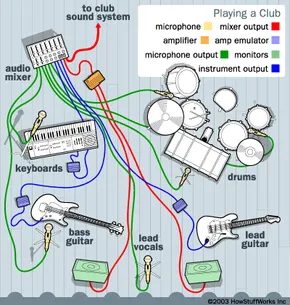
Playing a big venue with a full PA system doesn’t mean you should leave your sound to chance. Even if the club has its own mixer and speakers, bringing your own gear gives you control.
Many bands bring their own mics, stands, and an 8-to-12 channel mixer. You run all your microphones into your own board. Then, you send that mixed signal to the club’s inputs. The band controls the mix. The club staff just turns it up.
This setup simplifies things if there is no sound engineer on site. You won’t have to learn their complex board. You only use one of their channels. It is cleaner. It is safer.
If you mic your guitar amps, bring the amps and the mics. Using amp emulators or direct input boxes? Bring those too. Plug them into your own mixer.
A Sample Mixer
To understand what you are buying, look at a basic unit. The Peavey RQ 200 is a six-channel analog mixer. It is simple. Real simple.
Every mixer, no matter how basic, has core features.
It handles multiple inputs. This multi-channel aspect is the essence of a mixer. If it only has one channel, it is an equalizer or pre-amp. Most mixers have XLR inputs. Some add RCA or quarter-inch line inputs. Each channel can be mono or stereo. On the panel, you will find a linear pot. Also called a slider or fader. It sets the level for each channel. The RQ 200 has six.
It sends a main output to an amp. Powered mixers have an amp built in. Unpowered ones are more common. They need a separate amp. The mixer provides the main out.
It creates a separate monitor output. This allows for its own levels per channel. A knob sets the monitor level for that channel. The monitor out connects to a monitor amp.
It includes EQ. The Peavey 200 has high and low gain controls. It cuts or accents high frequencies (above 10 KHz) and low frequencies (below 70 KHz).
Most mixers can add effects like reverb. They can produce stereo output from mono inputs. You adjust the position of each channel in the left/right mix. They often provide phantom voltage (48 volts) for condenser mics.
More sophisticated mixers offer aux outputs with different mixes. Digital mixers accept digital signals. The possibilities are endless. Unless you are on a tight budget.
Buying Equipment
The pro audio market is overwhelming. Thousands of products. Dozens of lines. It is hard to navigate.
Take the edge off. Try these steps.
Read industry magazines. Get an introductory book. Talk to members of other bands. Offer to help another band set up and tear down. Buy inexpensive used equipment. Use it to learn what you do and do not like.
Check pawnshops. Used music stores. eBay. These are prime spots for gear.
Check the links below for more info.
Related HowStuffWorks Articles
- How Cutting Your Own CD Works
- How the Club Circuit Works
- How Music Royalties Work
- How Record Labels Work
- How Recording Contracts Work
- How Acoustic Guitars Work
- How Analog and Digital Recording Works
- How Amplifiers Work
- How Electric Guitars Work
- How CD Burners Works
- How CDs Work
- How Speakers Work
- How do microphones work, and why are there so many different types?
More Great Links
Mixers
- Mackie
- Peavey
- Yamaha
- Fostex
Amplifiers
- Mackie
- Peavey
- Yamaha
- Crate amps
Miscellaneous
- Recording an Electric Guitar without microphones
- Microphones: Miking an Electric Guitar
- John Vestman Mastering: Secrets of Miking
- Guitar Miking: Getting a Great Guitar Sound
- Vocalist.org.uk: P.A. & Other Equipment
- Access Music – Typical retailer