It makes no sense. The sun’s surface burns at 9,932 Fahrenheit. The corona? Millions of degrees hotter. We’ve known this for years. It breaks basic thermodynamics.
Now, there is a clue. Dust.
Specifically, cosmic dust riding magnetic waves. This isn’t about electrons or ions, which have held center stage for decades. This is grit.
Syed Ayaz of the University of Alabama leads the charge. His team looked at data from NASA’s Parker Solar Probe. The spacecraft skirted the corona at 3.8 million miles. That is dangerously close.
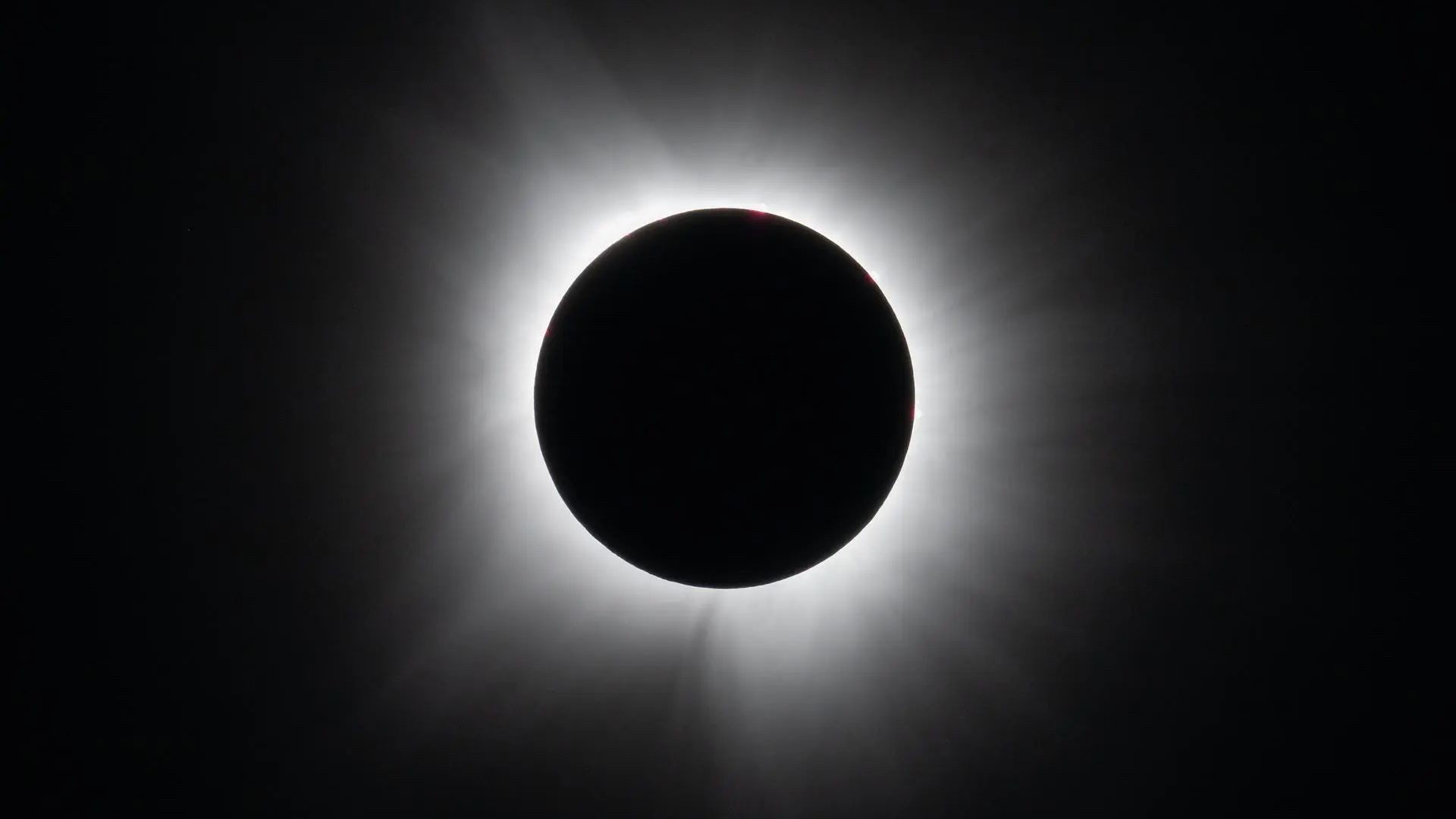
You know the corona. That ghostly halo during a total eclipse. It looks dim compared to the white disk of the photosphere. Not because it’s cold. But because it’s thin. Sparsely distributed plasma outshined by sheer volume elsewhere.
“For decades, researchers have focused mainly… Our work adds a new ingredient.”
Here is the kicker. Parker doesn’t carry a dust detector. Why? Because scientists didn’t think dust survived the heat. They assumed it would vaporize. It couldn’t possibly matter.
They were wrong. Or at least, they were missing something.
Parker’s FIELDS experiment measured electromagnetic spikes. Voltage jumps that shouldn’t happen. Ayaz realized what was striking the ship. Tiny dust grains. Moving fast. They smash into the spacecraft and create charged particle clouds.
This charge interacts with the solar wind. It hits the Alfvén waves. Those are plasma waves reverberating through the sun’s magnetic field.
How does dust change them?
Two ways.
– Mass adds inertia. Heavy dust makes the plasma drag harder. Energy travels farther into the corona before dumping its heat.
– Charge boosts interaction. Static electricity on the dust amps up collisions between particles and the magnetic field. Energy releases locally. Instant heating.
“If dust mass dominates, wave energy may travel farther,” Ayaz notes. “If dust-charge effects dominate… particle heating.”
The balance shifts the target. Where the energy lands determines where the temperature spikes. Dust isn’t just debris. It is a conductor of energy distribution.
We have to rethink the model. Future missions need better dust sensors. It’s no longer optional background noise.
One question lingers.
Is the dust just passing through? Or is it actually shaping the storm? We don’t know yet. We’re just beginning to see it.