April 1961. Yuri Gagarin went up. Space opened its door.
Since then we have been climbing back to the moon. Maybe Mars. Maybe further.
But wait.
What if the merger of artificial intelligence and humanoid robots skips all of it? That question hung heavy at the Humans to Titan Summit in Boulder, Colorado, June 11 and 12. Experts gathered. They talked about Saturn’s biggest moon.
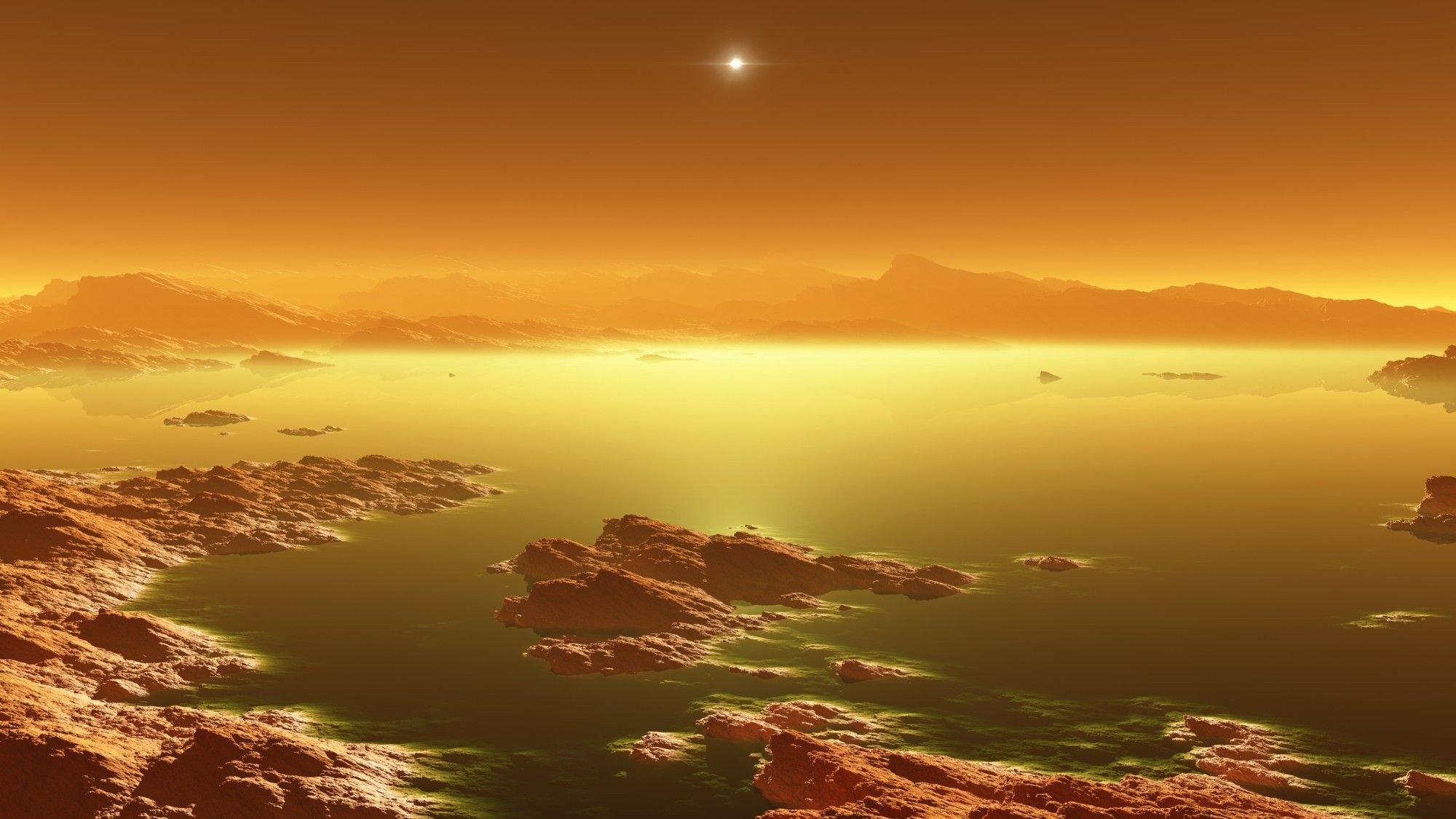
Titan is wild. Thick atmosphere. Clouds. Rain. Rivers of methane. Seas of ethane. It calls out for explorers. But who goes? Flesh and bone, or silicon and code?
Futile but necessary
Pascal Lee calls it both exciting and futile. Lee chairs the Mars Institute. He works at the SETI Institute and leads the NASA Haughton-Mars project.
“The futile part comes from the fact that sending humans is a long game,” he told Space.com. “Technology moves fast.”
But direction matters.
A trip to Titan? Decades away. Probably more. Meanwhile a revolution brews on Earth. Android robots. AI gets better every month.
Lee sees it clearly. We are moving from narrow AI, focused on specific tricks, to general AI. Soon it matches us.
Then comes artificial super intelligence. Complexity. Subtleties. Human-like thinking without the biology.
Does it have a soul? Who knows. Speculation.
But it makes for an objective scientist. An observer that does not blink.
Better than humans?
Robots run. Jump. Acrobatics.
“You get an artificial human,” Lee said. It is not sci-fi anymore.
They do not eat. No sleep required. No bathroom breaks. No waste.
Useful? Yes. Risky? No. Cheap? Compared to life support for a human? Cheap.
An android explores without the liability. Behaves like a human minus the frail biology.
“That’s our future in space.”
The hardware catches up fast. China and the US race neck-and-neck. Physical performance blurs the line between machine and person.
Take the UBTech Robotics Walker S2. Chinese engineering.
It swaps its own battery.
Lee calls that skill immortality.
The company calls it 24/7 autonomy. One minute down. Next minute back online. Fully charged. Working while the humans dream.
Devon Island as practice
So where do they learn to work together?
Devon Island. The Arctic. It serves as a Mars analog for the Haughton Project. Cold. Isolated. Hard.
Lee hopes to put ‘able-to-learn’ robots there. Train them as field assistants. Teach them to support the crew.
Test the team dynamic before Titan.
The plan gets circular. Build robot infrastructure on Titan first. Let the androids set up the base. Do the hard labor. Map the lakes.
Then we go.
Humans arrive at a facility run by machines. A visit. A triumph. A stopgap.
“Titan is the next big leap beyond Mars,” Lee says. “But it’s also the last leap before interstellar.”
Robots build the door. We just walk through it? Or do they go alone?
The battery swaps keep happening.