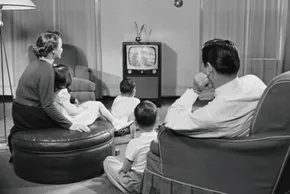
You know the drill. You’re sitting on your couch, maybe sipping a cosmopolitan, and some familiar jingle pops into your head. Maybe it’s the clinking glasses of Cheers. Or maybe it’s the opening lines of The Golden Girls : “Here’s the story of a lovely lady.” We quote them constantly. “Yadda, yadda, yadda” didn’t come from nowhere. It came from Rhoda.
These shows aren’t just background noise. They are the backbone of American television culture. But did you ever stop to think about where this format actually came from? Who decided that a group of people arguing in a living room was entertaining enough to broadcast?
The answer might surprise you. It wasn’t born in front of a camera. It started in the dark, with just a voice and a microphone.
The Radio Roots of Television Comedy
In 1979, the New Wave band The Buggles released “Video Killed the Radio Star.” It was a catchy anthem for the death of an era. But let’s be honest about what really happened. Television didn’t kill radio. It co-opted it.
The sitcom owes its entire existence to radio.
Before the “sitcom” label even existed, radio broadcasters were experimenting with a specific type of show. They called it a “situational comedy.” The format was tight. It had to be short. Usually, it ran for just 15 minutes.
Variety magazine later coined the term “sitcom” to describe these shows. The name stuck. The format stuck. Even the structure of the modern sitcom—the setup, the conflict, the resolution—was perfected by radio producers who had to paint pictures with sound alone.
The First Sitcom Star
If you want to find the very first sitcom, you have to go back to the early days of broadcast. The pioneer wasn’t a slick Hollywood star. It was an immigrant.
Her name was Molly Goldberg.
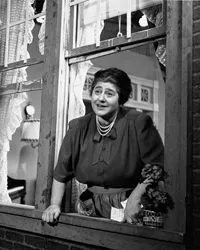
She was portrayed as a zaftig, doting wife and mother of two. She was the good neighbor to all. Her show, The Molly Goldberg Show, didn’t just entertain; it created the template for what a character-driven comedy could be.
We often think of sitcoms as a purely American invention of the TV age. That’s wrong. The DNA was written in radio. The 15-minute constraint forced writers to be sharp. The lack of visuals forced them to be clever with dialogue.
Today, we watch Friends or The Office and see the evolution of that original radio blueprint. But the spark? That happened decades earlier, in the quiet of a studio, with a woman named Molly and a microphone.
Where does it go from there? The format expanded. The runtime doubled. The cameras rolled. But the heart of the show remained the same. It was always about the situation. And the comedy. And the people stuck inside it.
From Radio Waves to Living Rooms
Television didn’t exactly burst onto the scene as a family staple right out of the gate. Sure, broadcasts started in the early 1930s, but it took the end of World War II for households to finally ditch the radio dial and stare at a screen. As the set became a fixture in the home, networks panicked. They needed content. CBS hired Worthington Minor to find it.
Minor had a theory. Short situational comedies were killing it on radio. Advertisers loved them. Audiences loved them. Why not move that format to TV? He found his answer in Gertrude Berg.
The Blueprint for Early Sitcoms
Berg was already famous for “The Goldbergs,” a massive hit that started as a vaudeville show in the Catskills way back in 1925 before migrating to radio. The premise was simple but effective. It followed Molly and Jake Goldberg, Jewish immigrants, and their two kids in a Bronx apartment.
Every episode solved a small neighborhood problem. Molly would dispense advice, recipes, and humor while interacting with the locals. It was cozy. It was relatable. And it worked so well that it became the template for decades of sitcoms to come. When Minor offered Berg the chance to move her characters from the airwaves to the box in 1949, she took it.
Copycat Successes
Once “The Goldbergs” jumped to TV, the floodgates opened. Other networks scrambled to lure their own radio stars into the black-and-white medium. “The Aldrich Family,” “The Life of Riley,” and “Lum and Abner” all premiered in 1949. Some hits harder than others. But one thing was undeniable. People wanted more screens. They wanted more stories.
The Lucille Ball Gamble
By 1950, the industry was shifting again. CBS executive Harry Ackerman wanted to adapt “My Favorite Husband” for television. The star was Lucille Ball. But there was a catch. Ackerman wanted Ball’s real-life husband, Desi Arnaz, to play her TV spouse.
Studio heads hated the idea.
It’s hard to believe now, but executives balked at the thought of a Cuban bandleader being the typical American woman’s husband. They thought it was too risky. It was an era where ethnic sitcoms like “Mama” and “Amos and Andy” were popular, but a mixed-marriage lead? That felt like too much for 1950.
Ball wasn’t having it. She wanted Arnaz on board. So she did what no other actress would do. She went independent.
Creating Desilu
Ball and Arnaz formed Desilu Productions. They didn’t just write a script and hope for the best. They tested the concept live. They took a 20-minute vaudeville-style comedy act on the road. If the audience laughed, the show had legs. If they didn’t, it was dead in the water.
The tour was a success. But the TV pilot? It bombed.
The characters were too much like Ball and Arnaz. Too quirky. Too specific. Enter Oscar Hammerstein II. The famous lyricist saw the failed pilot and gave them a brutal piece of advice. Make them ordinary. Make them relatable.
The New Name Game
They listened. The characters were rewritten. Lucille Ball became Lucy MacGillicuddy Ricardo. Desi Arnaz became Ricky Ricardo. They got landlords and neighbors named Fred and Ethel Mertz to round out the cast.
It wasn’t just a name change. It was a fundamental shift in how television storytelling worked. By grounding the show in ordinary relatability rather than celebrity caricature, they didn’t just save a pilot. They built a new medium. The rest, as they say, is history. But the struggle to get there? That’s the real story.
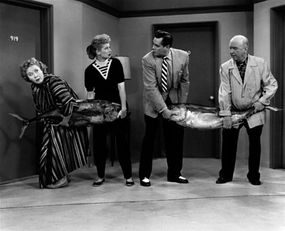
“I Love Lucy” didn’t just join the party; it rewrote the guest list. Like “The Goldbergs,” it established the blueprint for the American sitcom. The structure felt familiar—family and friends, work and home—but the execution was a whole different animal. Where “The Goldbergs” relied on dialogue, “I Love Lucy” leaned into absurdity. Lucy Ricardo’s problems were often ridiculous. She needed to join a dance troupe. She had to hide her pregnancy. She wanted to sell chocolate. The stakes were low, but the physical comedy was high-wire. Lucille Ball was a master of the pratfall.
The show also dictated how these stories looked.
The Technical Shift
Both shows aired on Monday nights. Both had a live studio audience. But “I Love Lucy” was filmed in Hollywood. “The Goldbergs” was in New York. This wasn’t just a location change. It was a technological revolution.
The producers hated kinescope. That was the standard process for live TV. It involved filming a TV monitor. The result was grainy. It was dull. Desi Arnaz and Lucille Ball wanted better. They wanted film.
This decision forced innovation. Arnaz designed a set that could handle three cameras. Later, a fourth was added. This multi-camera setup is now the industry standard. It allowed them to capture performances from multiple angles. The episodes were not broadcast live. They were edited. Released later. This gave stations flexibility. They could air the show when it fit their schedule.
But what actually makes a sitcom a sitcom? The next section looks at the format.
Half-hour television has a specific, ruthless rhythm. In the golden age of broadcast, the structure was cleaner. Ads bookended the show, sitting before the credits and after them. You got maybe two and a half minutes of pure content out of a 15 or 30-minute block. Today, the half-hour has shrunk. Frequent commercial breaks chop the runtime down to a tight 22 minutes. Every second counts.
That compression demands efficiency. A sitcom usually relies on a core quartet of characters. It is a formula, though it works. You need a hero, an anti-hero, a love interest, and a buddy. Variations exist, but the skeleton remains. Take Married with Children. It fits the mold despite its chaotic energy. Ed is the unlikely hero. Peg plays the anti-hero. Kelly serves as the high school boy’s dream love interest. And Bud? He is the buddy. The archetypes hold, even when the characters are deeply flawed.
Plot Constraints and Storylines
The 30-minute limit forces the plot to be tight. It must resolve. Successful stories usually stay within a family or workplace setting, or a messy mix of both. Within that box, you play with A and B storylines.
The A storyline is the main event. It drives the episode. It rarely resolves until the very final scene. The B storyline is secondary. Depending on the cast size, you might get C or D plots. Peripheral stories fill the gaps. Throw in a hook or a sudden plot twist. Now you have a show.
The Power of the Teaser
Most sitcoms use teasers. This is a short scene appearing before or during the opening credits. Not every show uses them, but most do. The goal is simple: get the audience laughing as they channel-surf. The teaser might not connect to the A or B plot. It just needs to be funny.
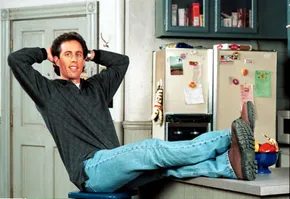
Look at early Seinfeld. Jerry Seinfeld uses a stand-up routine as a teaser. It is a lead-in joke. A humorous observation that sets the tone. The audience laughs before the story even begins.
Running Gags and Character Humor
The key to longevity is variety. Character-driven humor beats slapstick almost every time. The running gag is your best tool. It is a funny situation or line of dialogue that reappears across an episode or a series. Sometimes it evolves into a catchphrase.
Often, the joke is unintentional at first. An actor says something odd. The audience reacts. It strikes a chord. Writers notice. They write the line back in. It gets funnier with each repetition. The success of the running gag or inside joke relies entirely on the actor’s delivery. If they sell it, you believe it.
The next section will explore how this paper blueprint translates to the small screen.
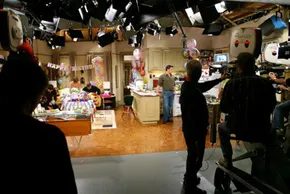
Sitcoms come in a wide variety of situational flavors. The genres range from workplace dramas to family antics. But the technical styles for filming them? That’s a much smaller club. You are generally looking at three buckets: live studio audiences, single-camera setups, or location shoots. It’s not an infinite menu.
The Fourth Wall and the Live Studio Audience
When you watch a classic multi-cam sitcom, you’re usually looking at a set built in front of a live studio audience. Most of the action happens in a central hub. Think Lucy and Ricky Ricardo’s apartment in I Love Lucy. Or Monica’s apartment in Friends. Or Central Perk. Or the bar at Cheers. The design is consistent. Three solid walls enclose the space. The audience and cameras look through the open fourth wall.
Take The Goldbergs. It was performed and shot on set with a live audience. The main set was the Goldberg’s six-room Bronx apartment. It opened up to a small gallery of seats for the crowd. Cameras were positioned in that open fourth wall area. The cast lived on that set for up to eighteen hours. They practiced lines and scenes repeatedly. Shooting happened only in the final hour.
I Love Lucy refined this process. It added walk-through areas. It gave cameras different points of view. It used static bleachers for the audience to sit in. It was a machine.
Sets Without Crowds
Not every show has the energy of a live crowd. If a show is filmed on set without a studio audience, the fourth wall opens to cameras and production crew instead of a seating gallery. You have directors, producers, gaffers, and technicians filling that space.
Shooting on a set has distinct advantages. It provides a stable environment. You have more control over lighting. Sound is cleaner. Continuity is easier to manage. You aren’t at the mercy of the weather or a noisy street.
Location Shooting for Authenticity
Sitcoms filmed on location set up the whole production in the real world. Cast, crew, props, everything moves to the site. The location could be a street. An old office building. An abandoned North Hollywood hospital like in Scrubs.
Shooting on location adds authenticity. It adds believability. By placing characters in a real setting, the sitcom avoids the potential distraction of a fake set. The world feels lived-in.
Single Camera vs. Multiple Cameras
Sitcoms may be filmed using a single camera or multiple cameras. The single camera approach offers more control. You get close-up scenes. Wide shots. Lots of movement. Shows like Scrubs, My Name is Earl, and The Office use this technique. They follow characters as they go from place to place. The camera moves with them.
Multiple cameras offer a different opportunity. They capture several angles of each scene simultaneously. It’s faster. It’s more traditional for live-audience shows. But single camera allows for a cinematic feel. Which do you prefer? The energy of the live crowd or the controlled gaze of a single lens?
That Sounds Familiar
Most sitcoms try to develop a good stockpile of catchphrases. They stick in your head. You find yourself saying them days later. Ever find any of these running through your head?
- “Lucy, you’ve got some ‘splaining to do” (Ricky, I Love Lucy )
- “Gee, Mrs. Cleaver” (Eddie Haskell, Leave it to Beaver )
- “You rang?” (Lurch, The Addams Family )
- “Nip it! Nip it!” (Barney Fife, The Andy Griffith Show )
- “Elizabeth, I’m coming!” (Fred Sanford, Sanford and Son )
- “Up your nose with a rubber hose” (Vinnie Barbarino, Welcome Back, Kotter )
- “Dyn-o-mite” (J.J., Good Times )
- “Nanoo-Nanoo” (Mork, Mork and Mindy )
- “Whatchoo talkin’ ’bout, Willis?” (Arnold Drummond, Diff’rent Strokes )
- “Eat my shorts” and “Don’t have a cow, man” (Bart Simpson, The Simpsons )
- “No soup for you!” (The Soup Nazi, Seinfeld )
- “How you doin’?” (Joey Tribbiani, Friends )
- “That’s what she said” (Michael Scott, The Office )
These lines defined eras. They anchored characters. They gave us something to quote at parties.
The Future of Sitcoms

Technical specs have evolved. Jokes have gotten dirtier. Performances have matured.
But the heart? It’s untouched.
At its core, a sitcom remains a thirty-minute vessel for characters in relatable, entertaining chaos. The similarities across television’s history are vast. Maybe that’s why the format refuses to die.
Reality TV floods the airwaves. Hour-long dramas dominate prestige talk. Writers’ strikes halt production.
So where is the sitcom in five years?
It’s alive. Probably because of syndication.
You know the drill. After airing 100 times, a show enters syndication. Cable networks and broadcast channels run “I Love Lucy” and “Seinfeld” daily. They still pull ratings. They still make money.
Writers still flock to Hollywood. Sure, you can write from anywhere these days. You can get an option from your laptop in Ohio. But the industry consensus? Live in LA. That’s where the success happens.
Producers still option scripts. Production companies still shoot pilots.
Then there’s the branch. The explosion of handheld cameras. Computer video. Cell phone footage.
Vlogs. Indie films. Web soaps.
Enter the web sitcom.
Short. Situational. Built for the browser. “Break a Leg” is a prime example. Written and produced by Vlad and Yuri Baranovsky through their San Francisco-based company, Late Again Films, it follows a guy who gets a sitcom deal. Meta? Sure. Effective? It keeps the genre breathing online.
Blogs and vlogs now chronicle the struggle. The hope. The Hollywood grind.
The genre isn’t just holding its own. It’s branching out.
A Taxonomy of the Sitcom
You can’t talk about the format without looking at the subgenres. They define the structure. They define the audience.
The Family Sitcom
This is the bedrock. “The Goldbergs.” “I Love Lucy.” “The Honeymooners.” “Leave It to Beaver.” “The Donna Reed Show.” “The Dick Van Dyke Show.” “Good Times.”
Non-Nuclear Family Sitcom
Not the classic mom-dad-kid setup. Think “The Andy Griffith Show.” “My Three Sons.” “The Brady Bunch.” “The Partridge Family.” “The Bernie Mac Show.”
The Dysfunctional Family Sitcom
Things are broken. “Roseanne.” “Married… with Children.” “Malcolm in the Middle.” “Curb Your Enthusiasm.”
Modern Family Sitcom
A specific era of relatable friction. “Growing Pains.” “The Cosby Show.” “Home Improvement.” “The King of Queens.” “Everybody Loves Raymond.” “The House of Payne.”
The Workplace Sitcom
Where do we spend most of our adult lives? Work. “The Mary Tyler Moore Show.” “MA S*H.” “Taxi.” “Designing Women.” “The Jamie Foxx Show.” “Just Shoot Me.” “Murphy Brown.” “Scrubs.” “The Office.”
The Animated Sitcom
Animation allows for exaggeration no live-action actor can match. “The Flintstones.” “The Jetsons.” “The Simpsons.” “South Park.” “Futurama.” “Family Guy.” “King of the Hill.”
The Fantastical Sitcom
Supernatural elements as a metaphor for domestic life. “Mr. Ed.” “My Favorite Martian.” “The Addams Family.” “The Munsters.” “Bewitched.” “Gilligan’s Island.” “I Dream of Jeannie.” “Mork & Mindy.” “Sabrina the Teenage Witch.”
The Kidcentric Sitcom
Growing up. “The Monkees.” “Happy Days.” “Welcome Back, Kotter.” “Punky Brewster.” “The Facts of Life.” “Blossom.” “Saved by the Bell.” “The Fresh Prince of Bel-Air.” “Moesha.” “Hannah Montana.”
Friends Sitcom
Ensemble casts. Small rooms. Big personalities. “The Odd Couple.” “Laverne & Shirley.” “Three’s Company.” “The Golden Girls.” “Cheers.” “Seinfeld.” “Hangin’ with Mr. Cooper.” “Friends.” “The Steve Harvey Show.” “Will & Grace.” “That ’70s Show.” “My Name is Earl.”
The format survives because it adapts. And because we keep watching.
Links to more resources follow. The industry changes. The genre stays.