In early May, satellites saw a volcano blow. Underwater.
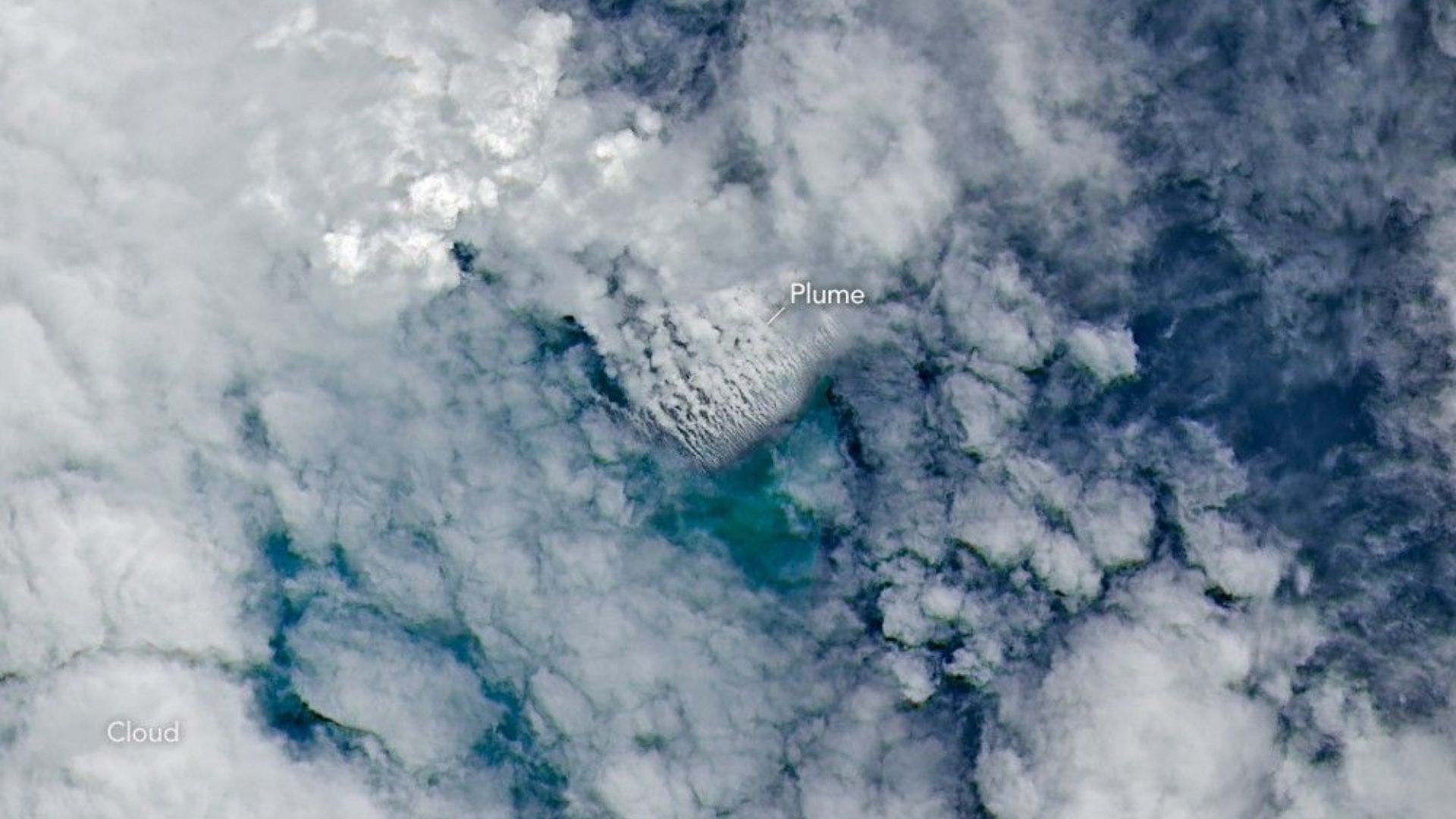
NASA’s eyes in the sky caught an eruption in the Bismarck sea off Papua New Guinea. The data came in clear. The interpretation? A nightmare.
Volcanologists stared at the footage and hit a wall. Not a metaphorical one. A literal lack of information. There are no high-resolution maps here. The seafloor is a ghost in the machine.
Without baseline data, we’re guessing. How did the eruption change the bottom of the ocean? What does the volcano look like now? We don’t know. We’re not even sure which rock just got angry. Current theories point to the Titan Ridge. About ten miles southeast of a site that erupted back in 1972.
It’s frustrating. But Jim Garvin, chief scientist at NASA’s Goddard Space Flight Center sees opportunity.
“The good news is that there are huge oppportunities to explore and learn.”
Satellites don’t need to see the bottom to see the top. They tracked the ash plume shooting miles high. They spotted the discolored water. Rafts of pumice rock floated by like debris after a bomb drop. NASA’s Suomi NPP satellite used its VIIRS sensor to catch thermal anomalies. Heat signatures.
Simon Carn from Michigan Tech thinks the vent is shallow. Really shallow. The existing maps suggest depths of several hundred meters. The heat says otherwise.
“There must be a lot of hot near the surface,” Carn said.
Now everyone waits.
Will an island form?
We rarely see this in real-time via satellite. If land rises from the Bismarck, we get to watch it happen. If it doesn’t? Also fine. Eruptions are unpredictable. The nearby blast in 1972 lasted four days. Another one in 1957 churned for almost four years.
Patience is key. Or boredom. Whichever comes first.
But if a rock appears, it becomes a lab. A natural test subject.
Garvin calls it “island-naut” exploration. We could send people there. Watch how weather beats on fresh volcanic soil. Introduce animals. Watch humans struggle. It’s a dress rehearsal for leaving Earth.
For the Moon. For Mars. The Artemis missions are coming. Women and men will return.
Can we learn from a wet, windy island to survive the dry vacuum of space? Maybe.
We’re already asking the question. The satellite footage sparked it.
And it proves one stubborn truth in oceanography. We’ve mapped the face of the moon in better detail than our own backyard. The deep ocean floor remains a stranger.