Scientists have identified a previously unknown cellular structure in gut microbes that appears to be a primary engine behind the methane emissions from cattle and other ruminants. This discovery, published in Science, pinpoints a specific biological mechanism that could offer new, targeted strategies for reducing the agricultural sector’s carbon footprint.
The Hidden Factory in the Rumen
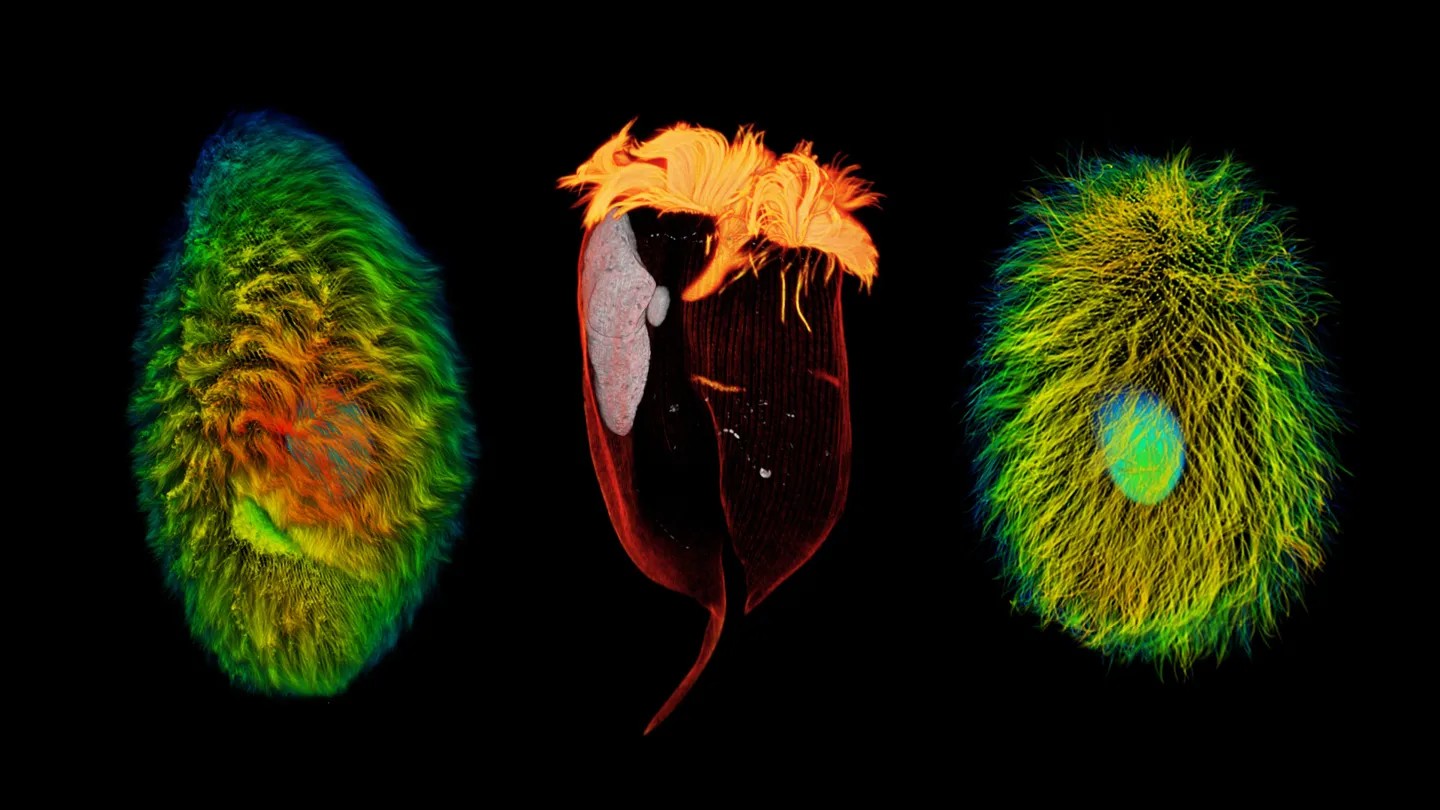
The focus of this research is the rumen, the first stomach chamber in cud-chewing animals like cows, sheep, and goats. This fermentation vat is home to a complex ecosystem of microbes that break down plant material. Among these microbes are single-celled protozoa known as ciliates, which are covered in hair-like projections.
While ciliates make up roughly 25% of the microbial population in the rumen, they have historically been difficult to study due to their complex genetics and tendency to exchange DNA with other organisms. To overcome this, a team of Chinese researchers isolated individual ciliate cells from 100 dairy cows, allowing them to sequence the DNA of 65 ciliate species—45 of which had never been genetically analyzed before.
This effort revealed a new organelle (a specialized compartment within a cell) called the hydrogenobody.
How Hydrogenobodies Fuel Methane
The significance of the hydrogenobody lies in its function: it produces hydrogen gas. In the rumen, this hydrogen does not simply escape; it serves as fuel for another group of microbes called archaea, which consume the hydrogen to produce methane, a potent greenhouse gas.
Previously, scientists knew that hydrogen production stimulated methane creation, but they could not definitively locate where in the ciliate cell this hydrogen was generated. The new study confirms that hydrogenobodies are the source. These structures are distinct from other energy-producing organelles like hydrogenosomes or mitochondria because they possess only a single membrane rather than a double one. They cluster at the base of the cilia, the fuzzy projections that give these microbes their name.
The researchers found a direct correlation:
* Ciliates with more hydrogenobodies produce more hydrogen.
* More hydrogen leads to increased activity in methane-producing archaea.
* Consequently, cows with higher populations of these specific ciliates emit more methane.
Targeting Specific Microbes, Not All of Them
This discovery raises critical questions about how to mitigate methane emissions without harming livestock productivity. Past attempts to eliminate all ciliates from the rumen resulted in a drop in methane but also caused significant reductions in milk and meat yields. This suggests that while some ciliates are harmful to climate goals, others may play a beneficial role in digestion and animal health.
The new data allows for a more nuanced approach. The study highlights that ciliates in the Vestibuliferida family are particularly “furry” (having many cilia) and contain more hydrogenobodies, making them major contributors to methane production. In contrast, the Entodiniomorphida family has fewer cilia and contributes less to the problem.
“Knowing the physiological differences between protozoa species may help in devising treatments to deplete specific ones to reduce methane emissions without compromising milk and meat production,” explains Todd Callaway, a microbiologist at the University of Georgia.
The Road Ahead
While the identification of the hydrogenobody is a breakthrough, practical applications are still distant. Completely removing ciliates requires extreme measures, such as isolating cattle in sealed barns and feeding them sterilized feed, which is economically and logistically unfeasible for most farms.
Instead, future research will likely focus on developing interventions that specifically inhibit the growth of high-methane-producing ciliates like the Vestibuliferida, while preserving beneficial species. As Callaway notes, this discovery is “step one of probably 25,” but it provides the essential biological map needed to navigate toward more sustainable livestock farming.
In summary, the discovery of the hydrogenobody shifts the focus from broadly suppressing gut microbes to precisely targeting the specific cellular machinery responsible for excess methane, offering a promising path toward greener agriculture.