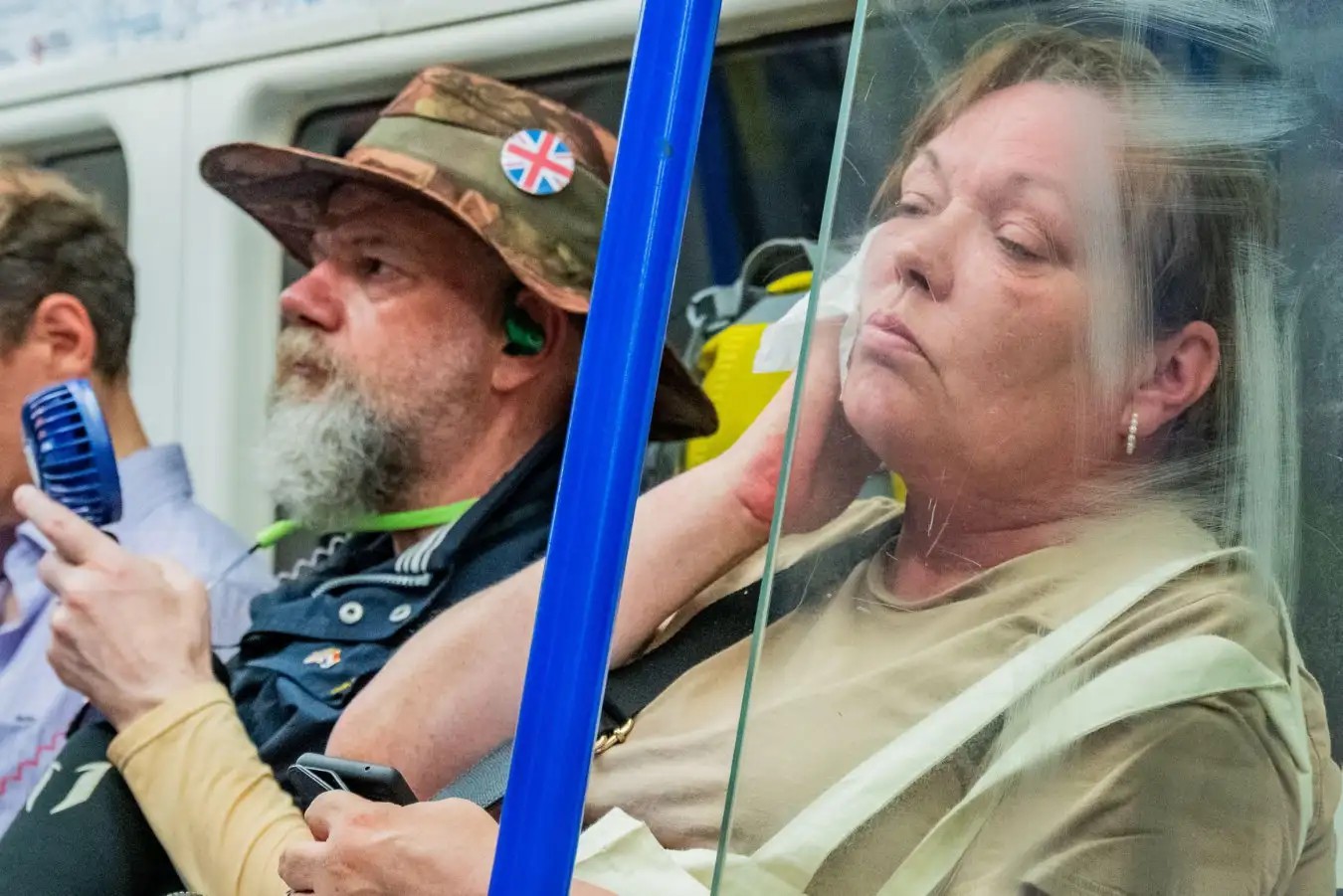
The numbers don’t lie. June’s heatwave was the hottest Europe has ever recorded. It hit less than a month after May broke its own records. Now? Another wave is coming. It will last longer. It will bring 34°C to the UK.
I wanted to see what it actually feels like. Not on paper. In person. So I went to the University of Brighton. Their Environmental Extremes Lab sits across a field from Brighton & Hove Albion’s stadium. The football club uses the lab to check player fitness. I used it to check mine. Or rather to find out just how unprepared I am. You probably are too.
Just ten minutes inside. That’s all it took.
Inside the Chamber
The heat chamber looks like a small room with windows. Inside the air is controlled. Temperature. Humidity. Oxygen levels. It can mimic the thin air of a Mexico City stadium or the stifling grip of a European city in summer.
“Heatwaves are here to stay,” Neil Maxwell, the lab director, told me. “We need people preparing for this regularly. Not occasionally.”
They cranked the dial to 35°C. Humidity hit 50%. Roughly London in June. I clipped a monitor on my finger to track heart rate and blood oxygen. They aimed an infrared pistol at my skin for temperature readings. Then I was asked to rate the heat.
The air inside didn’t feel like air. It felt solid. A wall.
I felt nervous. Why am I doing this? For science. Obviously.
To simulate walking outside they put me on a treadmill. One percent incline. Moderate pace. I started sweating. But the humidity was thick. The sweat just sat there. No evaporation means no cooling. My body struggled.
After five minutes the numbers told a grim story.
Skin temperature rose from 33°C to over 36°C. Maxwell explained what was happening. My core was hot. The body is trying to move that heat to the skin to dump it. Blood flows outward.
My heart joined the panic.
Resting heart rate was 72. It jumped to 81. Sweating loses water. Blood thickens. The heart has to push harder. Harder. By minute ten my heart hit 95 beats per minute I was dizzy. Tired. Maxwell helped me off the machine. I collapsed into a chair outside.
“You’re not heat-adapted,” Maxwell said.
He didn’t say it to hurt me. It’s a fact. Even healthy people are at risk.
Cool Down Fast
He handed me a strawberry ice lolly. It tasted divine. But more importantly it cooled me from the inside. Then came the real test.
Dip your hands in cold water.
Feet, ears, hands. These areas are packed with arteries and veins. Cooling the blood in these spots cools the rest of the body. Fast.
“We drop their temperature so much quicker this way.”
Shower under cool water. Not ice cold. If the water is too cold your blood vessels shrink. You trap the heat inside. Keep it temperate.
It’s simple advice. Yet surveys show only a tiny fraction of Brits take any steps to protect themselves from the sun. Maxwell pointed at my bag. No water bottle. On a warm day.
Embracing the Warmth
We need to train our bodies for this. Maxwell thinks aerobic exercise helps. Jogging makes the heart efficient at pumping blood to the skin for cooling. Then comes exposure.
There is a sauna tent in the lab corner. One-person. Small. Hot.
Regular sauna sessions change you. Blood vessels learn to dilate. Sweat glands get smarter. The sweat itself becomes less salty. You keep your electrolytes.
“We view heat as the enemy,” Maxwell noted. “It doesn’t have to be.”
He wants us to rewrite the narrative. Safe heat is therapeutic.
I left the lab with a headache. I was hot. Thirsty. I knew exactly what I needed to do. More sauna time. Maybe some jogging eventually. That part will be harder.
The Climate Emergency Briefing
No sugar coating the facts. New Scientist podcast editor Rowan Hofer sat down with three leading scientists: Nathalie Seddon, Kevin Anderson, and Paul Behrens.
They talk about the nature crisis. The climate crisis. There is no fixing the problems without understanding the scale first. It is an emergency. The data doesn’t wait.