It is usually dark water. That is how most people remember the Black Sea, sitting between Europe and Asia with its deep, moody hue. But not in summer. Not in late spring. Then the water changes.
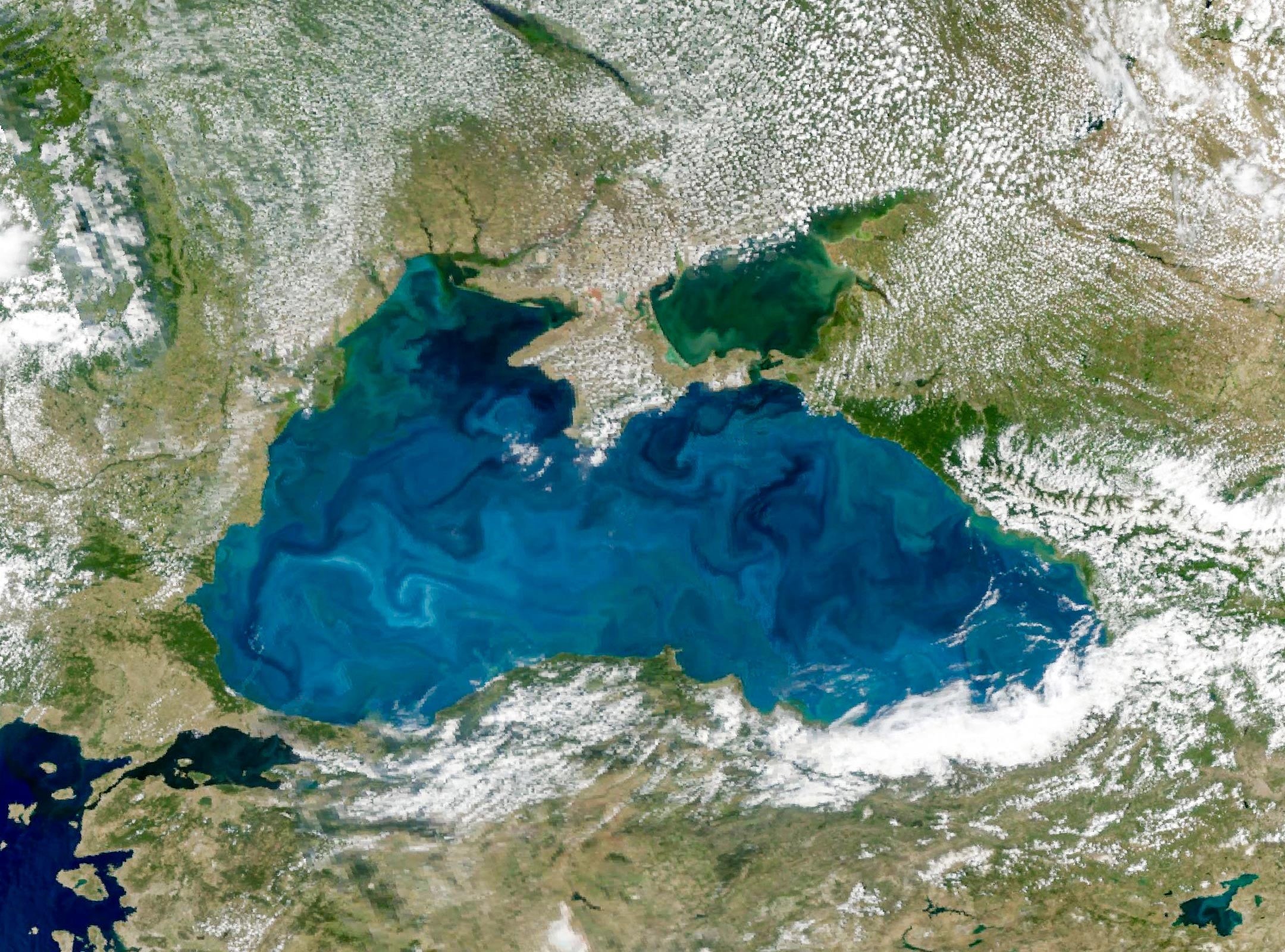
On June 22, 2026, the ocean looked less like a sea and more like a giant, swirling piece of artisanal ice cream. Bright blues. Turquoise streaks. Almost unnatural neon patterns stretching across the surface.
NASA saw it all from space.
How PACE Sees the Unseen
A month before that stunning image was logged by satellite, something else had been watching.
On May 2026, an astronaut on the International Space Station looked down at Istanbul and its famous waterway, the Bosphorus Strait. Below them, the narrow channel linking the Black Sea to the Sea of Marmara was bleeding color. North was at the bottom of that frame. Currents moved. Phytoplankton followed.
Fast forward a month.
The NASA PACE (Plankton Aerosol Cloud Ecosystem) satellite had the shot. Its OCI (Ocean Color Instrument) snapped the massive bloom on the 22nd. This isn’t just pretty scenery, either. It is a data goldmine for researchers trying to track marine ecosystems that are impossible to sample by hand in these depths.
The PACE satellite mission specifically targets these biological signatures. It detects the specific wavelengths of light bouncing off the surface to tell scientists what is growing down there. In this case? A lot of reflective microbes.
Coccolithophores vs. Diatoms
Why blue instead of green or brown?
You can blame calcium. Or rather, microscopic organisms that love it. These are called coccolithophores. They are phytoplankton, yes, but they wrap themselves in tiny, diamond-dust-like plates made of calcium carbonate.
When you have billions of these things clustered together in a massive phytoplankton bloom, those calcium plates act like billions of tiny mirrors. They reflect sunlight back out of the water column.
The result is that cloudy, milky, luminous turquoise. It looks soft. It feels like a pastel painting. In reality, it is a biological riot.
This doesn’t happen all year. Not because the sea hates color, but because of the roster of plankton changes. In the winter, diatoms take over. These guys have silica shells, not calcium carbonate plates. When they bloom, they soak up the light. They turn the sea dark. Dense. Green-brown.
But in the heat of June? Coccolithophores win the war for light. And the water glows.
The Bosphorus Connection
The bloom wasn’t isolated to open ocean. It bled into the straits.
The May 2026 astronaut photography of the Black Sea shows the dye-like spread of color following the current dynamics of the Bosphorus. This matters for understanding marine carbon cycles in the Black Sea. If you can see the bloom, you can map it. You can predict where it moves.
Why is mapping it so important for this specific body of water?
The Black Sea is isolated. It connects to the Mediterranean, yes, but only through narrow choke points. It is sensitive. Fragile. Tracking annual plankton blooms here helps scientists understand how localized climate shifts impact larger regional food webs.
A Carbon Sink in Colorful Guise
It is easy to look at those swirling turquoise patterns and see just a spectacle for satellites.
It is more than a show.
Coccolithophore blooms are key players in the global ocean carbon cycle. While these microbes grow, they pull carbon dioxide out of the air. They use it to build those calcium carbonate plates. Think of it as the ocean building limestone.
When these organisms die—and billions of them do at the end of their life cycle—they sink. They drag that captured carbon down with them. Into the deep dark.
Where it might stay for millennia.
This biological pump is slow. It is silent. But without it, the atmospheric CO2 levels would likely be even more critical than they already are. So, the next time you see an image of the turquoise Black Sea, remember: it is beautiful. It is rare. And it is helping regulate the planet’s breath.
For now, though, the PACE data just shows the beauty. The ice-cream swirls. The unnatural clarity. The water looking like it belongs on a postcard rather than a scientific log.
The bloom fades, as they all do. The diatoms return in the chill. But the question remains: as the climate warms, will these turquoise events become more common? Or rarer?
Satellites keep watching. We keep wondering.