Bergmann’s Rule says it plain: animals get bigger in the cold. Smaller in the heat. Simple, right?
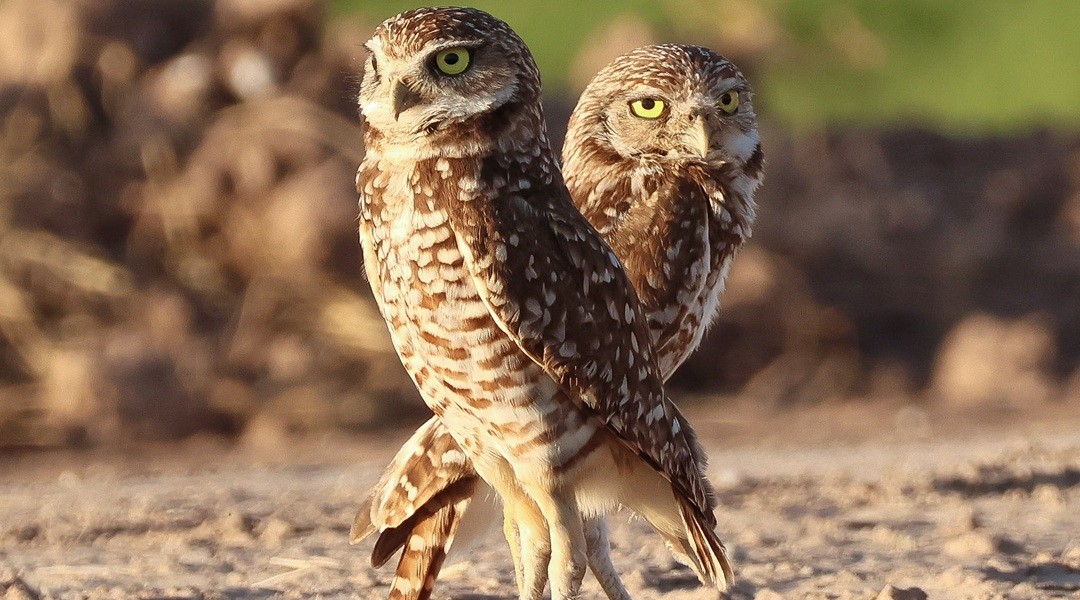
It’s a rule that has held water for nearly two centuries. But for burrowing owls across North America, the story is messier. Much messier.
New data from the Conway Lab at the University of Idaho shows these birds aren’t just products of slow, steady evolution. They are also victims of their own early years. And their current plate.
Geography matters. But so does what happens to an owl chick when the summer burns hot.
Testing the Gradient
Why burrowing owls?
It wasn’t because they are the most glamorous raptors. It was because the dataset was massive. Courtney Conway and her team have been watching these arid-grassland predators for decades. They had numbers. Lots of them.
“We initially selected for this investigation… largely because of the sheer geographic extent,” says first author Kurt Ongman.
They wanted to know if this specific bird follows the classic latitudinal trend. The answer? Yes.
Owls in the cooler northwest are heavier. They have longer wings. The pattern is there, clear as day. But patterns don’t explain mechanisms. You can see that a tree is tall without understanding why the roots grew deep.
The team needed to know: is this size difference genetic? Or is it developmental? Or just a reaction to what they ate last week?
The Three Theories
To figure out the driver, researchers had to separate time scales.
They looked at:
- Heritable adaptation to local thermal extremes (long-term).
- Developmental stunting from early-life stress (mid-term).
- Reversible weight fluctuations from recent food (short-term).
The data came from 5,597 individual owls. That’s a lot of bones. And mass.
Measurements spanned 54 sites across the western US. 1600 kilometers of latitude. From sea level to over 2,000 meters up. From 2000 to 2200. They mixed this with drought data from the National Centers for Environmental Information. Vegetation greenness from NASA. Climate data from Oregon State.
It was an environmental cross-section.
What Sticks and What Fluctuates
The results broke the traits down by how “fixed” they seemed.
Tarsus length—the leg bone—didn’t wiggle much. It’s a structural element. It tends to stay the same. And sure enough, it tracked closely with long-term average temperatures. This suggests heritable adaptation. The birds in the north have grown legs suited for the cold over generations.
Adult body mass and wing length told a different story.
These traits are plastic. They change. And they tracked with 21-year average temperatures just like the legs, but with a twist.
For every degree Celsius rise in temperature, adult body mass dropped by 0.41%. Wings got shorter by 0.16%.
This wasn’t just weather. This was a local, heritable shift toward smaller size in warmer zones. Nature is pruning the size down where it gets hot.
The Juvenile Trap
But here is where it gets sticky.
Juvenile body mass? It didn’t care about the 21-year average. It cared about last year’s drought.
If the breeding season the year before hatching was hot and dry, those owls were smaller. Why?
Resource availability. Heat affects the bugs. Fewer bugs mean stressed females. Stressed females lay eggs or raise chicks that start life with a deficit. It’s a carry-over effect.
And it hit adults too.
Extreme heat and drought in the previous year resulted in shorter leg bones in young adults. Thermal stress and resource limits actually shaped their structural growth. It wasn’t just a weight gain; it was bone development stunted by hunger and heat.
The Six-Month Window
Then there is the short-term game.
Six months prior to measurement, strong rain showers hit. Suddenly, resources spiked. And the owls reacted.
Both wing growth and body mass in adults shifted rapidly.
It proves that these birds are not locked in stone. They can bulk up when the food hits. They can shrink when it dries up. It is a reversible fluctuation driven by immediate availability.
So, Who Is Winning?
The takeaway is nuanced.
Bergmann’s rule holds. But the engine driving it is a hybrid.
You have the genetic backbone—leg length, baseline size—set by long-term thermal adaptation. Then you have the soft tissue and some structural elements—mass, wings—wobbling with short-term resource shocks. And you have the juvenile generation, carrying the scars of their parents’ bad year.
“Overall, while we found general support for bergmann’s rule, the underlying mechanisms differed depending on if a trait was plastic… or more fixed,” writes Ongman.
Future work will need to track individual birds over their full lives. Aging owls reliably is hard. But without it, we can’t fully separate developmental plasticity from pure adaptation.
We also need to understand migration. Do owls that move respond differently than those that stay put? Movement strategies interact with morphology in ways we are just starting to see.
Climate change isn’t just a temperature graph. It’s a recipe for drought. It’s a disruption of the prey chain. And it’s hitting these birds at the most vulnerable stage: the start of life.
Which populations are most vulnerable? Probably the ones in the driest zones, where a bad summer means a smaller generation that might never recover its size.
The rule holds. But the owl? The owl is complicated.