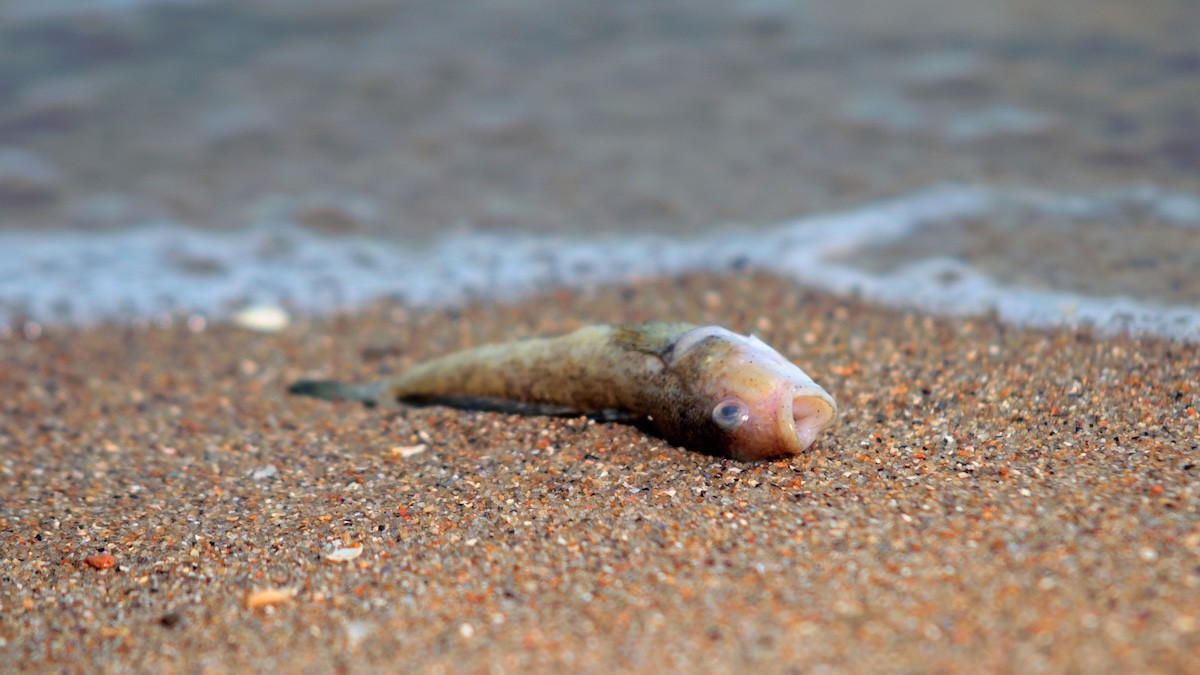
They’re suffocating.
Almost 80% of Earth’s rivers have lost significant oxygen over the last few decades. The trend isn’t stopping. If anything it’s accelerating.
Satellite data from 1985 to 2023 paints a grim picture. More than 16,000 waterways show declining dissolved oxygen levels. The math is specific, if not dramatic on its own: rivers lose an average of 0.04 milligrams per liter each decade.
Small numbers matter. Not all fish need the same air intake but a shift of 0.1 mill grams per liter changes the game. That is roughly the amount lost over the last 40 years. It disrupts the ecosystem. It stresses the plants and plankton. It puts the bacteria under pressure.
Without this dissolved oxygen life underwater falters. And by life I mean everything from microscopic plankton to the massive catfish people pay to catch. The communities depending on these resources get hurt too.
The surprise location
Scientists were expecting trouble up north. High-latitude regions are climate hotspots, after all. That’s where they thought deoxygenation would bite hardest.
They were wrong.
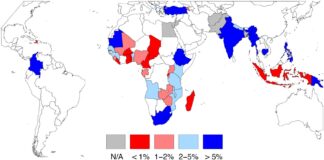
Tropical rivers are taking the biggest hit. The Amazon and the Ganges are bleeding oxygen rapidly. The Ganges, in particular, is losing oxygen 20% faster than the global average? No, twenty times faster.
Why the tropics? Simple physics. Warm water holds less oxygen than cold water. These rivers started out closer to hypoxia—that’s the medical term for oxygen-starved conditions—because their waters are naturally hot. They have less margin for error. When the planet warms up tropical rivers don’t just warm up. They drop oxygen faster than anyone expected.
Qi Guan led this analysis at the Chinese Academy of Sciences. Her team combed through 3.4 million satellite snapshots. They built models to forecast what happens under different climate scenarios.
“Deoxygenation is a slow process… the negative impact will attack river ecosystems,” Guan told reporters.
She’s not being melodramatic. It’s a quiet crisis. A slow suffocation that compounds over time.
What is actually happening
So what strips the oxygen? Heat is the primary villain. Warmer temperatures reduce oxygen solubility. This means the water’s physical capacity to hold gas molecules drops. Heat gives molecules enough energy to escape the water entirely.
Climate change accounts for roughly 63% of this global drop in river oxygen.
Then come the dams. Then come the heatwaves. Then come us.
Shallow dams choke water flow. No flow means less agitation. No agitation means less oxygen from the atmosphere mixes in. It’s that simple.
We also alter the water composition itself. Adding solutes—salt, excess nutrients, organic matter from waste—makes it harder for oxygen to stay dissolved. We’re loading the river with things that fight against oxygen staying in solution.
It creates a feedback loop that tastes terrible and looks worse. When oxygen drops, fish die. Dead fish decay. Decay requires oxygen. Bacteria eat the dead fish and breathe up whatever oxygen remains.
The river turns into a dead zone.
The future forecast
The models are bleak. Assuming CO2 emissions continue at current rates—ignore the worst-case nightmare for a second, even this medium scenario hurts—rivers in South America, India, the US East Coast, and the Arctic could lose another 10% of their dissolved oxygen by 2100.
Some regions are on track to lose four or five more percent in the next seventy years alone.
Is this the point where we panic? Probably should be. But panic doesn’t fix chemistry.
Guan suggests systematic management. Better strategies to protect these fragile fluvial systems. The science is clear. The mechanism is understood. The solution is harder because it requires humans to change how we treat heat, how we dam water, and how we pollute it.
We’re watching the lungs of the planet shrink.
Slowly.
Almost unnoticed.