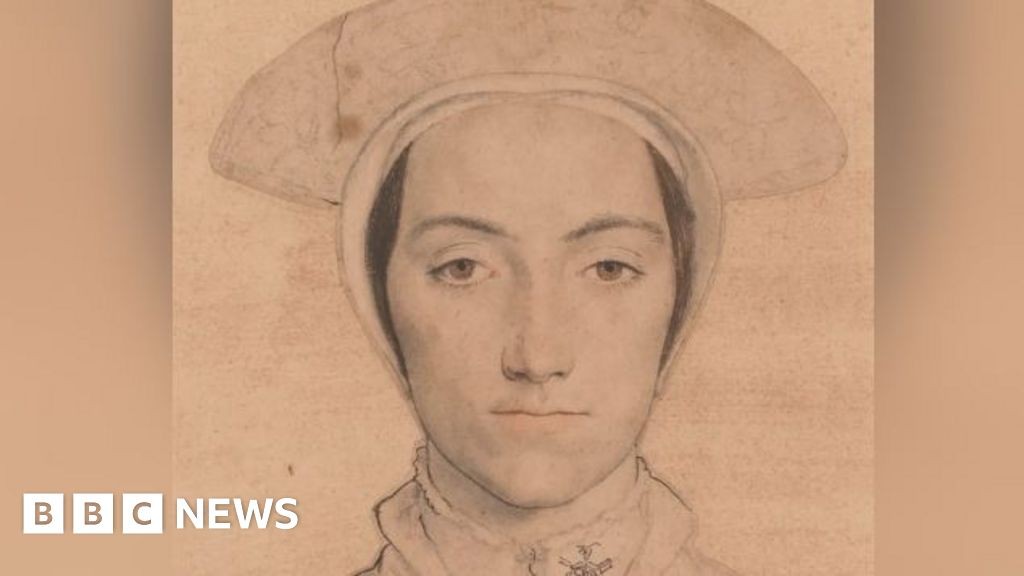
A controversial new study suggests that computer algorithms have identified a previously unknown sketch of Anne Boleyn, challenging centuries of art historical consensus. By applying facial recognition technology to a collection of Tudor-era drawings, researchers claim to have found a likeness of the executed queen that had been mislabeled as an “unidentified woman” for hundreds of years.
However, the findings have drawn sharp criticism from art historians, who argue that the methodology is flawed and that the results ignore the nuanced context of 16th-century portraiture.
The Mystery of Anne Boleyn’s Face
Anne Boleyn, the second wife of King Henry VIII and mother of Queen Elizabeth I, remains one of history’s most enigmatic figures. Her reign lasted only three years before she was accused of adultery, incest, and treason, leading to her execution in 1536. Because no confirmed painted portraits of Boleyn survive from her lifetime, her true appearance has been a subject of intense debate among scholars and the public alike.
The Royal Collection Trust holds a famous series of preparatory sketches by the master artist Hans Holbein the Younger, which depict members of the Tudor court. Among these is a drawing explicitly labeled “Anne Boleyn.” While some modern historians accept this label as accurate, others have long disputed it. Critics point out inconsistencies: the figure wears informal dress, has light-colored hair and a full chin (contradicting contemporary descriptions of dark hair and a thin neck), and bears an inscription in an 18th-century hand, long after Boleyn’s death.
A New Digital Detective Method
The new research, led by Dr. Karen Davies, an independent historian, and Professor Hassan Ugail from the University of Bradford, sought to bypass human bias by using machine learning. The team fed digital copies of the Holbein sketches into a facial recognition algorithm. Instead of relying on labels, the software compared key facial features across the drawings to identify similarities.
To validate their approach, the researchers compared the sketches to known portraits of Boleyn’s relatives, including her daughter Elizabeth I and her first cousins. The algorithm identified a cluster of facial similarities—such as eye shape and nose structure—linking certain “unidentified” figures in the Holbein collection to Boleyn’s family tree.
According to the study, the sketch most closely matching Boleyn’s familial features was not the one labeled with her name, but another drawing previously dismissed as an unidentified woman. Professor Ugail stated that the results were “shocking” and suggested that this technology could be replicated for other historical mysteries.
Skepticism from Art Historians
Despite the study being peer-reviewed, it has faced immediate backlash from the art history community. Dr. Bendor Grosvenor, a prominent historian, dismissed the findings as “a load of rubbish,” arguing that the methodology is fundamentally flawed. He contends that art cannot be treated like modern photography, as Holbein’s sketches were stylized preparatory works, not literal records.
Dr. Charlotte Bolland, a senior curator at the National Portrait Gallery, offered a more measured critique. She noted that Boleyn’s short reign did not allow for an established “iconography” or official portrait style to develop. Furthermore, she suggested that some images of Boleyn may have been deliberately destroyed by her enemies, making any single definitive likeness unlikely to survive.
Dr. Grosvenor defends the traditional view that the labeled sketch is indeed Boleyn. He argues that the informal dress was a sign of high status, the dark topcoat over blonde hair explains the color discrepancy, and the original identification by someone who knew her holds more weight than an algorithm’s interpretation.
Why This Matters
This controversy highlights a growing tension between digital humanities and traditional scholarship. As AI tools become more sophisticated, they offer new ways to analyze historical data, but they also risk oversimplifying complex cultural artifacts.
“The incredible emotional tragedy of her life is this story that people want to revisit,” says Dr. Bolland. “There is this curiosity and I think that drives ongoing research – people throwing different methodologies to try and answer a question that has been thought about for hundreds of years.”
While the facial recognition study provides an intriguing new perspective, it does not settle the debate. Instead, it underscores the enduring fascination with Anne Boleyn and the challenges of reconstructing history from fragmented evidence. The search for her true face continues, driven by both technological innovation and human curiosity.