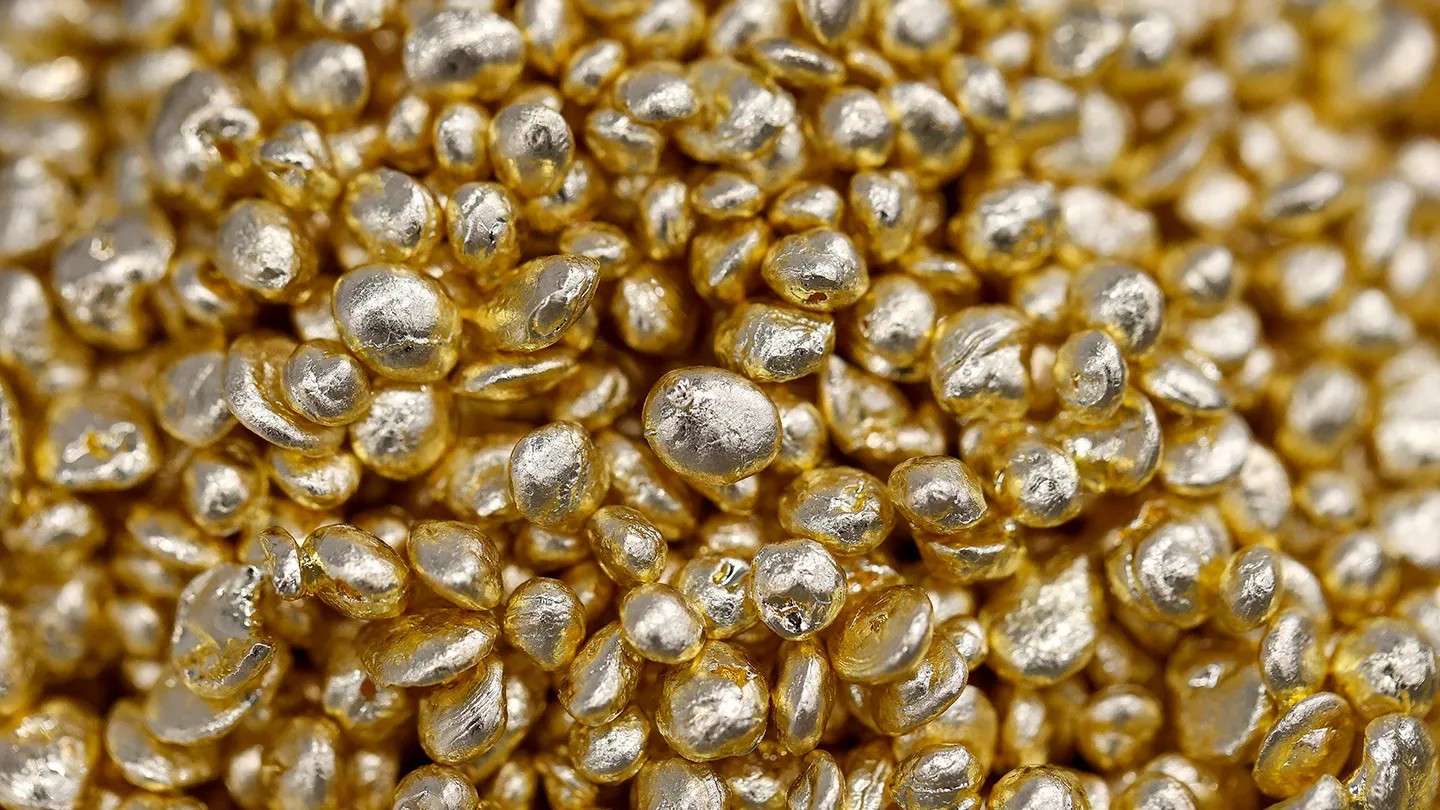
Gold doesn’t rust.
That’s not a trick question or a metaphor for emotional durability. It is a physical fact, grounded in how atoms behave. We expect metals to decay. Iron turns to red dust. Silver gets black spots. We watch this happen every day and assume it’s just how nature works. Metals degrade. They fade.
But gold refuses.
It stays shiny for centuries, maybe millennia, if you leave it on a desk. You find a necklace buried under a rock from three hundred years ago. Brush off the dirt. The gold is still gold.
Why?
The answer lies in oxidation. That’s the thief in the machine.
Oxidation is a chemical reaction where one molecule steals an electron from another. Simple theft. The victim gets stripped down; it loses an electron and becomes “oxidized.” The thief gains that electron and gets “reduced.” It sounds passive but it is violent. In living cells, oxidative reactions can kill the cell outright.
For metals, the culprit is usually oxygen. That gas making up roughly 21% of the air we breathe? It wants your electrons. It grabs them.
Take iron.
Iron reacts easily. The oxygen attacks the atoms, bonds with them, and forms a new compound : iron oxide. We call that rust. It’s a different substance entirely. The metal structure crumbles because the new geometry of the molecule is loose, flaky. The metal is gone. Replaced.
Now look at copper.
Copper sits in the same family as gold. It conducts electricity beautifully. It is widely used in your devices, your wiring. But it’s not inert. Oxygen touches copper. It forms a thin layer called tarnish. A corrosion skin. It doesn’t crumble like iron but it changes the look. The surface distorts. You see the age in the dark spots.
Gold?
Gold is lazy. Chemically speaking.
Its atoms are so stable, so tightly bound by their own electrons, that oxygen isn’t interested. There’s no easy way for an oxygen atom to steal an electron from a gold atom. The nucleus holds tight. The outer cloud is full. No transaction occurs. No reaction. No oxide forms.
Because gold won’t react, it doesn’t change form. It stays as pure element gold. Not a compound. Not rust. Not tarnish. Just Au on the periodic table.
Gold is noble because it ignores the rules of chemistry that destroy other metals.
Materials scientists love this property. A materials scientist studies how atomic structure dictates the world around us. They look at density, strength, melting point. But gold’s main party trick is this stubborn refusal to bond.
Is that bad?
Depends. If you are an engineer trying to wire a house, pure gold is too soft and too expensive. You want copper for conductivity but you plate it with gold at the connection points. Why? So the connection never tarnishes. Signal loss is the enemy. A catalyst like platinum might speed up reactions in a car, but in an electronic contact, you want zero reaction. You want the geometry of the hexagonal crystal lattice to remain untouched by air.
We use gold for jewelry, yes. But we also use it because it is permanent.
Other metals are transient. They participate in the chaos of chemistry. Gold stands still.
It is shiny. It is heavy. And it is utterly alone.