The Pressure Cooker
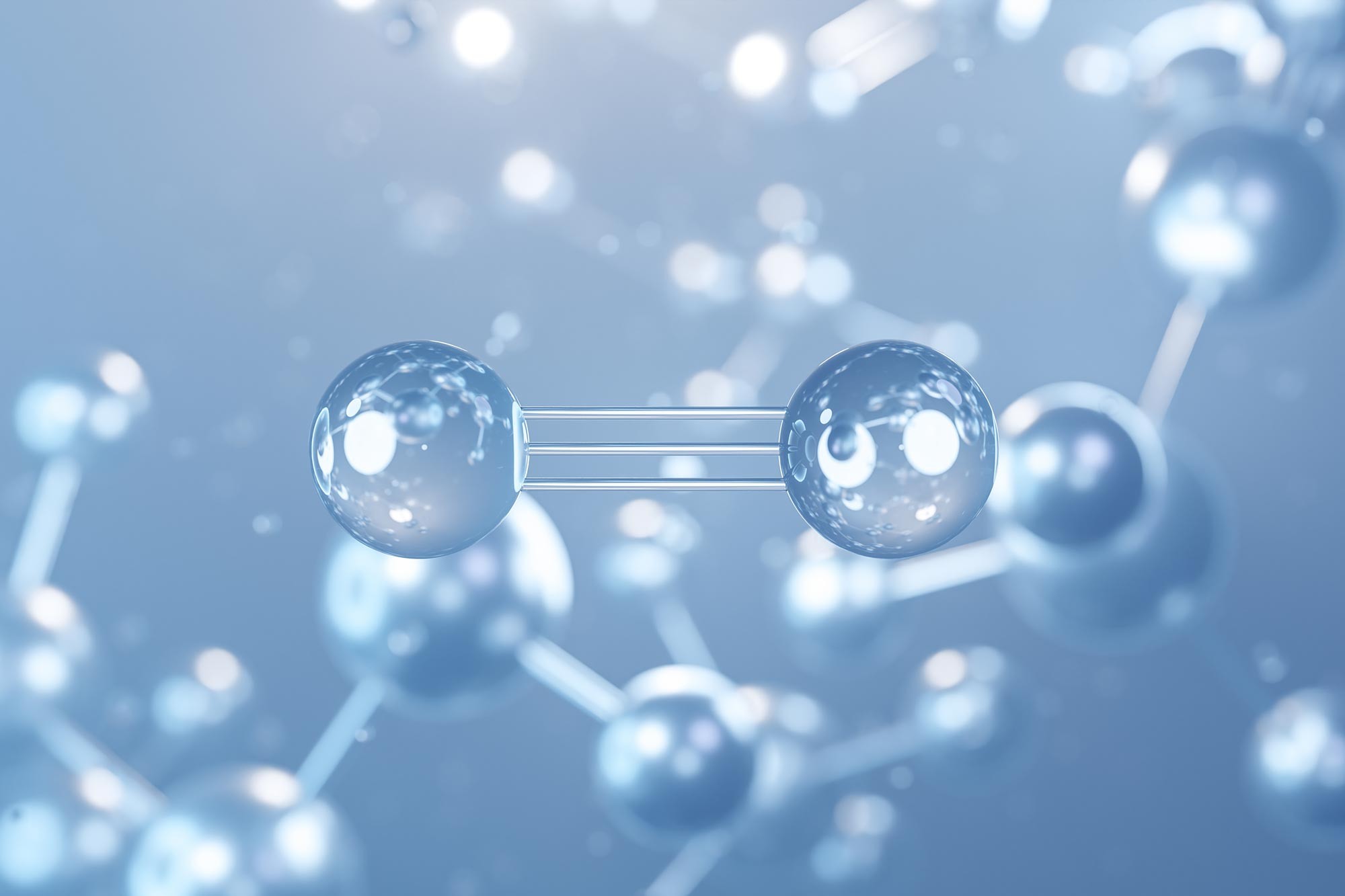
Nitrogen breathes on Earth. It is everywhere. But squeeze it. Hard. Drop the temperature. It stops acting like a gas and turns into a solid with a structure nobody really knew. Not for fifty years.
This specific phase. γ-N2. It haunted physicists. They looked. They modeled. They guessed. The data was always slightly off, messy, inconclusive. Now it’s done. The mystery is solved.
A team led by Xiaodi Liu from the Chinese Academy of Sciences, joined by researchers from Edinburgh and others, has pinned it down. Published in Matter and Radiation at Extremes. They found the missing pieces.
γ-N2 isn’t random chaos. It adopts a monoclinic $P2_1/c$ structure. Two nitrogen molecules sit in each unit cell. Sounds boring. It matters. This phase occupies more of the pressure-temperature map than anyone thought. The theoretical prediction from decades ago? Finally confirmed.
Cracking the Code
Single crystals. That’s what you usually want for clear structural analysis. Nitrogen won’t do that in this phase. It gives you powder. Poor quality, difficult powder. Trying to read structure from powder is like reading a book through frosted glass.
So they cheated. Well, not cheated. Adapted.
The team combined everything available. Synchrotron X-ray diffaction. Raman spectroscopy. Infrared spectroscopy. Density functional theory calculations. They let the data fight each other. Then they listened to what agreed.
The agreement was loud enough to kill off competing models. $P2_1/c $ stood alone.
The Isotope Whisper
But there was a ghost in the machine. A previous Raman measurement showed a weird extra vibration. It didn’t fit the theory. Was the model wrong? Was there a different crystal form hiding in plain sight?
No. It was a trick of isotopes.
Natural nitrogen has a rare cousin: nitrogen-15. Most nitrogen is nitrogen-14. The study found that those few, scattered N-15 molecules were singing out of tune. As pressure went up, that weak, odd vibration slid closer to the strong, standard vibration.
They bumped into each other. Interfered.
The researchers called it a Fermi-like resonance. Not a structural failure. Just molecular physics doing what it does when you crush it.
The extra signal was linked to rare nitrogen-15 isotopes interacting under pressure.
γ-N2 turns out to be close friends with θ-N2. Different birth conditions, very different pressures, yet their molecular arrangements and Raman signatures look alike. Siblings separated at birth.
The reference? Yan et al. (May 13, 2026). DOI: 10.1065/5.0316531.
Science moves in jumps. Sometimes it waits half a century for an answer. Then it gets one. In one fell swoop. What other solid is holding secrets this tight?