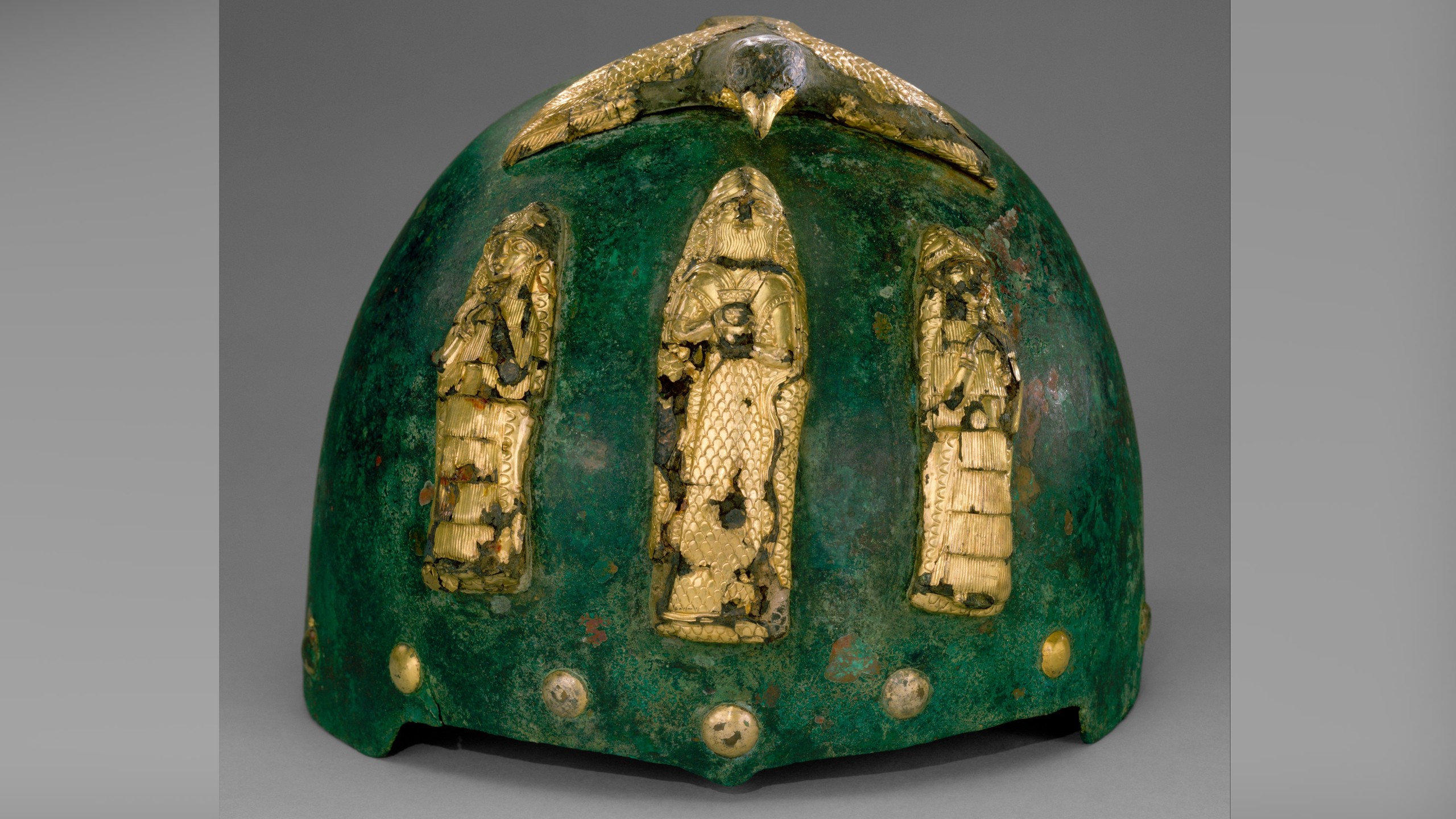
It’s old. Really old.
Three millennia gone. Maybe more. This piece of bronze armor comes from the Elamites, a civilization that held down what is now Iran for nearly 3,0000 years before fading out. It wasn’t just metal. It was power. Specifically, it was the helmet of a warrior-king who walked the earth over 3,500 years ago.
Elamite culture wasn’t passive. They warred. Constantly. Neighbors in Mesopotamia? Ur, Babylon, you name it, they fought them. But while other soldiers wore standard issue gear, this king wore art.
“A masterpiece of ancient art.”
Archaeologist Oscar White Muscareлла said that back in 1988. He noted something unsettling: there are no parallels for it. Nothing in the Near Eastern archaeological record looks quite like this dome of bronze and gold.
The craftsmanship
Let’s look at the specs. It’s small, really. Only 8.5 inches wide. Thin. It sits over the brow. Back in the day, a spike probably jabbed down to cover the nose too. The back held a tube. Feathers or hair would’ve stuck out of that, blowing in the wind during battle. Gold-covered silver studs rim the edge. It wasn’t just functional. It screamed wealth.
The artisans here were masters. We’re talking late Bronze Age metallurgy. The detail is insane for something meant to be banged around.
Gods and predators
But here’s the kicker. The decoration isn’t random. It’s narrative.
Three deities sit on the front. Gold. Two goddesses. One god. They aren’t fighting. They’re praying. Their hands are raised, pleading. The male figure carries a vessel pouring out water. An Elamite water god, perhaps. He’s vulnerable. Or maybe just benevolent.
Looming over him is a raptor.
It swoops. Vertical. Dominating the composition. Curator Charles K. Wilkinson saw this in 1965. He thought the bird was the predator of the battlefield. Waiting. Watching the victims fall. It’s a dark twist for a piece of protective armor.
Does it protect you? Or does it mark you?
Symbolic seems likely. The gods are there to ward off evil. To confuse the enemy. But the raptor suggests death. The helmet is a statement. I have divine backing. But I bring death too.
We know who wore it. High rank. Obviously. But the Met Museum doesn’t have much of the actual armor these warriors wore in the dirt. They have weapons. Shields. But this helmet stands alone. It is unique.
Why it matters
We often think of ancient artifacts as static. Cold. This isn’t. You can almost feel the heat of the forge. The tension in that raptor’s wings. It’s not a smooth narrative of history. It’s a jagged piece of evidence. A reminder that kings liked to look dangerous, even when praying for safety.
The Elamites fell in 539 B.C., conquered by Persia. The helmet survived. We’re lucky, I guess. Or just careful.
Check out the other finds if you have the stomach for it. Or just sit with the image of the bird. Waiting.