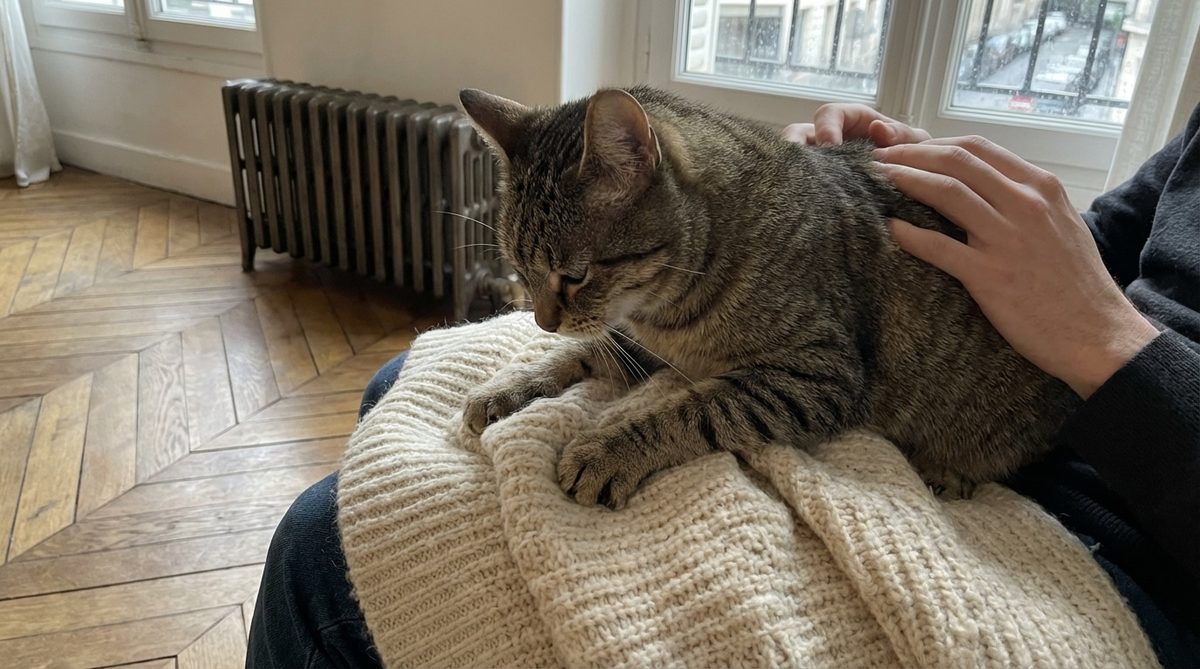
It is winter. You are buried under a heavy quilt. Then it happens. Your cat climbs onto your stomach. It starts to purr like a small diesel engine. Its paws begin to work. Up and down. The concentration is intense. The eyes go glassy.
We call this “making biscuits.” We call it kneading. We call it patounage in French, though the meaning is universal. Most people think this is pure love. It looks sweet. It feels comforting. But it is not always just affection. Sometimes it is a glitch in their programming. Sometimes it is a cry for help.
To understand why your cat is attacking your belly with rhythmic precision, you have to look at their biology. It is not a complex philosophical statement. It is a memory.
The Neonatal Root of Kneading Behavior
Rewind to the first few hours of a kitten’s life. The kitten is blind and deaf. It is fragile. Its only job is survival. To survive, it must eat.
The mother cat produces milk. But the milk doesn’t just flow. The kitten must stimulate the mammary glands. It presses its front paws against her belly. This pressure triggers the let-down reflex. It is a vital, neonatal reflex.
This action is associated with three things: warmth. Safety. Food.
When the kitten does this, its brain floods with endorphins. Chemical relief. The behavior becomes wired into the animal’s identity. It is a shortcut to peace.
As the cat grows, the need for milk fades. But the need for that chemical reset remains. Kneading is an adult method of self-soothing. It is a form of regressive comfort.
Why Kneading Means Safety (And Sometimes Stress)
There is a common myth that wild ancestors flattened grass to make beds. Maybe. Maybe not. But the primary driver today is emotional regulation.
When a cat kneads a soft blanket or your thigh, it is entering a state of neoteny. This is a retention of juvenile traits. The cat is mentally returning to the safety of the nest. It is signaling that it feels secure. It is preparing for sleep. The rhythmic motion lowers its heart rate. It is a biological switch for relaxation.
However, there is a line.
The line between comfort and compulsion is thin. If the kneading becomes frantic, it is no longer a gift. It is a symptom.
When Kneading Becomes Pica or Obsession
Watch your cat closely. Is the motion steady? Or is it jerky?
If the cat begins to suckle on fabric, skin, or clothes, you have crossed into problematic territory. This is often a sign of early weaning.
If a kitten is separated from its mother before eight weeks, or weaned abruptly, it misses critical developmental stages. The oral need for stimulation never resolves. In adulthood, this can evolve into pica disorder.
Pica involves ingesting non-food items. Wool. Plastic. Fabric.
When a cat kneads obsessively, it may be in a trance. It might drool excessively. It may become aggressive if you try to stop it. This is not love. It is anxiety. It is a frantic attempt to fill an emotional void created by early separation. The cat is trying to self-medicate with behavior.
It is a cry for stability. Not cuddles. Stability.
How to Enrich Your Cat’s Environment
The human reaction to obsessive kneading is usually wrong. We push the cat away. We yell. We say “no.”
This increases stress. It confirms the cat’s fear that the world is unstable.
The solution is environmental modification. You need to redirect that nervous energy. You need to enrich the environment for your feline.
Boredom is the enemy. Stimulation is the cure.
- Use food puzzles. Make the cat work for treats. Balancing balls. Tug mats. This satisfies the predatory instinct without the physical aggression.
- Add synthetic pheromone diffusers. These mimic the calming signals cats produce naturally. They create a chemical bubble of safety in the room.
- Play actively before bed. Use a wand toy. Make them hunt. Make them sweat. Burn off the excess energy so sleep comes naturally, not as a escape from anxiety.
By providing structure, you give the cat a new way to decompress. The kneading should become occasional. A pre-sleep ritual. Not a coping mechanism for chronic stress.
Restoring Calm to Your Cat’s Night
Understanding the “why” changes how you react. You stop seeing it as a nuisance. You start seeing it as communication.
Not every paw press is a disorder. If your cat kneads gently before dozing off, let them. Enjoy the bond. It is a sign of trust.
But if the behavior becomes wet, destructive, or compulsive, act on the environment. Not on the cat.
A little playful modification can transform a stressed, improperly weaned adult cat into a relaxed companion. The goal is coexistence. Understanding each other’s needs. Beyond the myths of independence. Beyond the simple idea of affection.
The cat is still just a kitten inside, looking for its mother. Give it the tools to find peace.