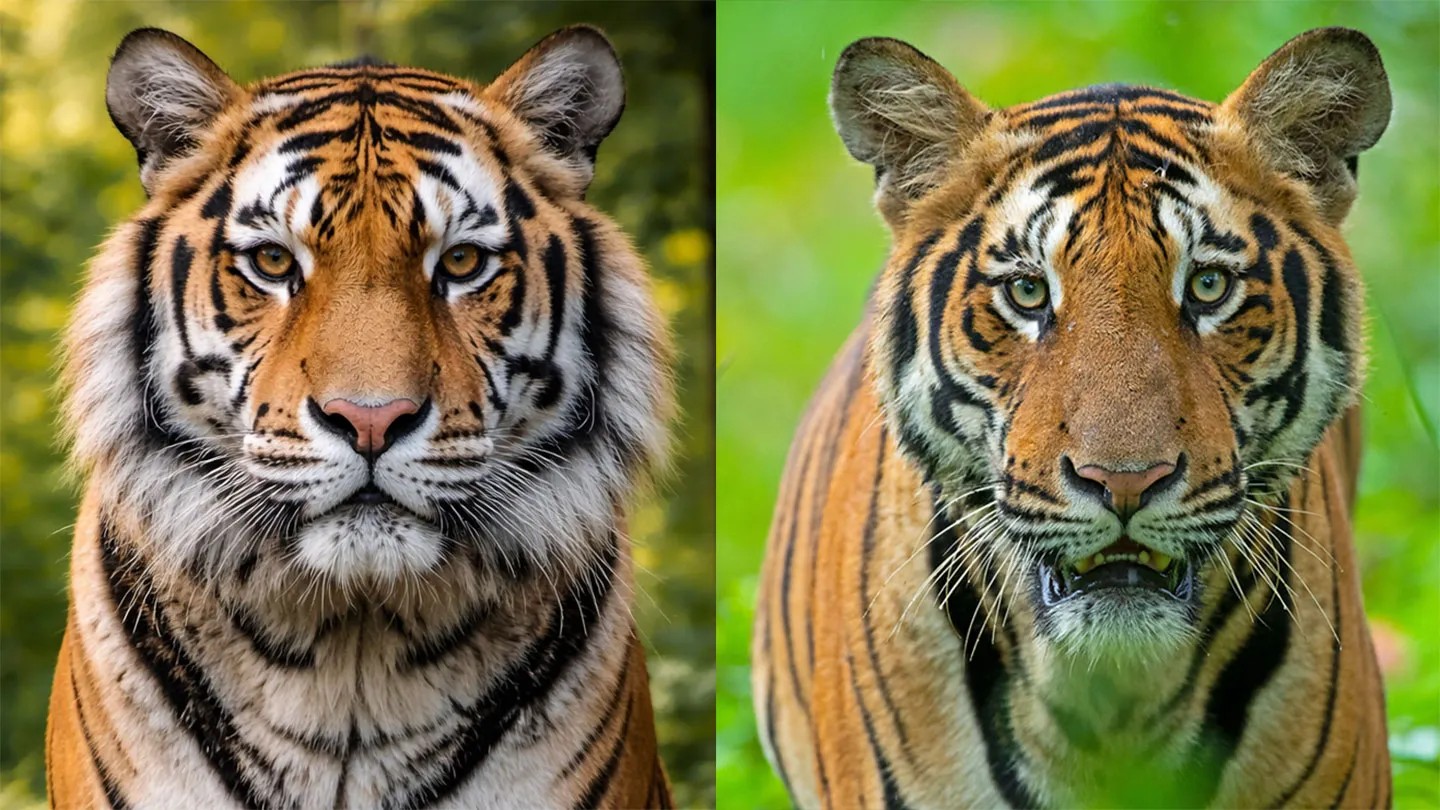
The internet is flooded with AI art. It’s everywhere. Hard to tell what’s real, harder still to trust what you see.
Old school digital art? Slow work. Painstaking. A painter’s digital brush, still needing human hands, still requiring hours of tedious tweaking for movies, games, TV. But that changed. AI came in. It didn’t knock. It kicked the door down.
Now? Type “tiger in grass” into a box. Click generate. Pop. An image appears. Photo-realistic. Deceptively perfect. Or close to it. The problem isn’t the tech, really. It’s the trust. Deepfakes are the shadow here. Lies made visual, instantly, effortlessly. Fake news used to require a photoshop layer stack. Now it requires a prompt.
So the question sits there, heavy and awkward: Can we tell the difference?
The Setup
You don’t need a lab coat for this. Just a phone and some free time. The goal is simple. See if people can spot the fake from the real.
Grab ten real photos. Any subject. Dogs. Clouds. Cars. Label them. Organize them. If you find them online, be sure they’re genuine. No one likes accidental variables.
Next, generate ten AI images. Same subjects. Search “AI image generator”—there are dozens. Some free, some pricey. Doesn’t matter which one, just make them look real. No paintings, no cartoons. We are testing photorealism, not style transfer. Save them. Keep track. This is key. You need to know which is which. The volunteers definitely do not.
The Experiment
Shuffle them. Twenty images total. Real. Fake. Mixed together like dirty laundry. Number them 1 to 20.
Show them one by one to a person. Ask the question:
Real or AI?
Write it down. Yes. No. Move to the next person. Repeat until you have a data set that looks like actual science and not just a guess.
Tabulate it. Did they guess right? Calculate the percentage for each image. See where the eyes fail. See where they succeed.
“If you can’t spot it, is it a lie or just art?”
Maybe. But it feels like a lie when you can’t trust the source. The numbers will tell you something about human perception, about bias, about how our brains pattern-match reality. Or they might just show us that we are terrible at it.
Why It Matters
It’s not just an academic curiosity. It’s a practical test. We are moving toward a world where video is text, where photos are predictions. If you can’t spot the fake today, you certainly won’t tomorrow when the tools get sharper, faster, cheaper.
Run the experiment. Print the results if you want. Keep it on a screen. It doesn’t matter how you see it. It matters that you looked.
What do the percentages say about us? Probably not much. Just that we are waiting to be fooled.