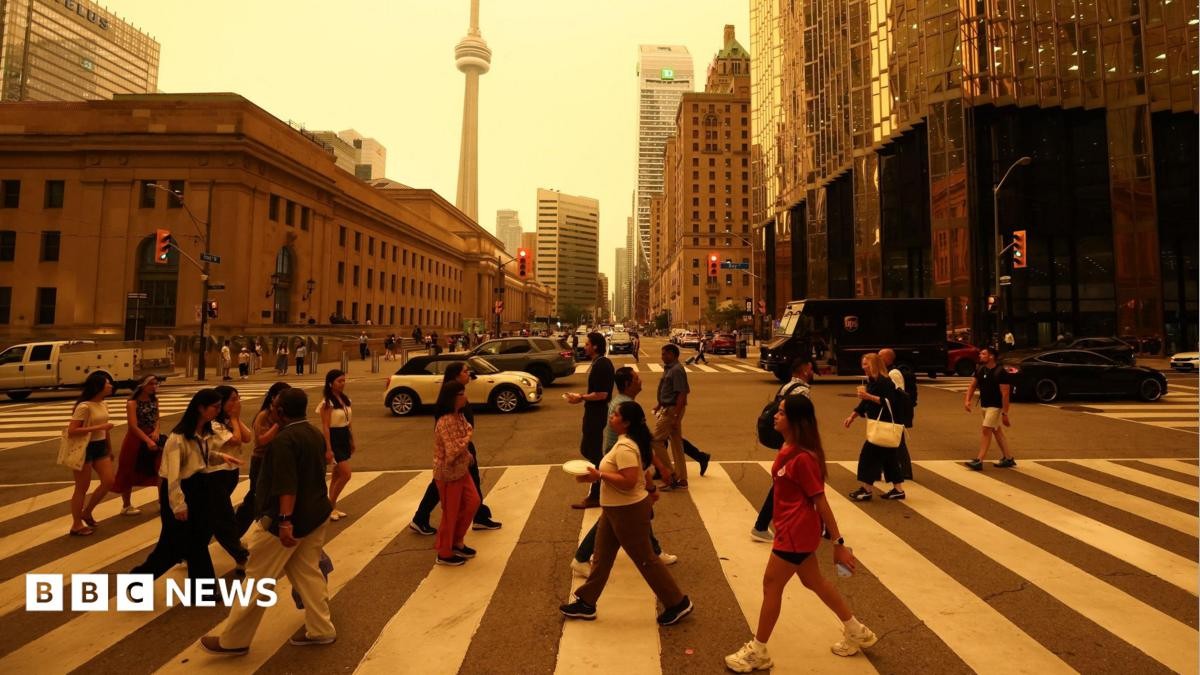
The air doesn’t taste good today. If you’re in Boston, New York, or Toronto, you already know that. A thick blanket of smoke from wildfires burning across Ontario and Minnesota has rolled south. It’s not just hazy; it’s dangerous. Authorities are telling residents to stay inside and keep the exercise bikes stationary.
The numbers are stark. 858 fires are actively burning in Canada right now. Nearly 200 of them are in Ontario alone. Down in Minnesota, 17 blazes along the northern edge have triggered emergency declarations. Suppression efforts are underway, but the ground is dry.
These aren’t remote blazes affecting nowhere people go. At least.
In Ontario, the fire sits north of Lake Superior. Close to national parks. Closer to First Nation communities. Six communities are under evacuation orders now. Properties are gone.
Grand Council Chief Linda Debassige spoke for the Namaygoosisagagun community in northern Ontario. Their town was devastated. Fast-moving flames took homes. Took community buildings. Left ruins in their place.
Is this normal for Canada? Sure, fires are part of the landscape here. But the speed of this outbreak isn’t. The volume isn’t either.
Experts point to the weather. Specifically, a lack of rain at the end of June followed by relentless heat. A “heat dome”—high pressure trapped over the land—is sitting like a lid. It traps the warm air. It traps the smoke too.
Heat dries out soil. It turns plants into tinder. Then, unstable air kicks in. Storms form. Strong winds rip through. The fires jump.
The result? Detroit, Toronto, and Minneapolis recently held the dubious honor of having the worst air quality on the entire planet, according to IQAir.
Why does this hurt so much? It’s not just soot. It’s PM2.5. Tiny particles that slip right past your defenses. Jim McDonald, health commissioner for New York State, explained it bluntly on social media. These particles travel deep into your lungs. Into the tiny breathing tubes. They cause inflammation.
The World Health Organization notes the broader impact too. Respiratory issues worsen. Heart conditions flare up. Eyes sting. Kids are in extra danger since they play close to the ground, where smoke sinks. Emergency workers breathing hard outside are next on the risk list.
Governments are issuing color-coded alerts. An orange alert isn’t a suggestion. It’s a directive:
– Cancel the outdoor workout.
– Seal your windows.
– Wear a proper N95 mask.
– Watch for wheezing or chest pain. If it happens, see a doctor.
Those masks need to filter out 95%of the particulates. But don’t just grab any mask from Amazon. Fraudulent copies are everywhere. Check for government certification. Many cities are handing out masks at local centers now. Check local resources for Canada or the US if you’re worried.
This isn’t a new problem. It’s an old one getting louder. Wildfires are natural in boreal forests, which Canada has in spades. But look at the scale.
In 2023, 15 million hectares burned. That’s larger than England. This year, it’s already hit 8.3 million hectares in early months. Lightning sparks about half of them. Humans spark the rest. But dryness makes both scenarios likely.
And the dryness isn’t accidental. Climate change is turning up the thermostat. Heatwaves are getting stronger. Winters are getting milder. Milder winters mean earlier plant growth. More fuel on the ground. Less snow.
Snow is white. It reflects sun. It keeps things cool. No snow? No reflection. Just heat. The ground absorbs it. The plants dry out. The fire waits.
It’s a loop we’ve known for years. The science is clear. The smoke is here now. You can’t argue with what you can see outside your window. Just mask up, close the curtains, and try to breathe.