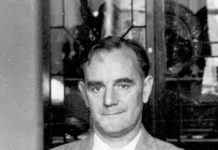
Gerard K. O’Neill is not your typical academic. Although he was born in Brooklyn in 1927 and died in California in 1992, the trajectory of his life suggests that he lived in the future while his peers were still trying to understand the present. He was an American physicist who did two seemingly unrelated things. He invented a device that helped us understand the components of matter. In his later years, he convinced people to move their entire lives to space.
He attended Swarthmore College and received his Ph.D. He received his PhD from Cornell University in 1954 and then attended Princeton University. His research there was more than theoretical. making particle accelerators punch harder. The biggest problem at that time was energy production. O’Neill solved this problem with a colliding-beam storage ring.
Here’s how it works: Instead of smashing particles into a stationary target, he placed them in a toroidal chamber. They move in opposite directions. When they collide, a huge amount of energy is released.
He’s not just theorizing about it. He built it with Wolfgang Panofsky at Stanford University. In 1959, they built two such storage rings at Stanford University. It worked. This technology was quickly adopted in high-energy plants around the world. Thanks to O’Neill’s ring design, we know about subatomic particles today.
High Frontier and space colonization
But by the late 1960s, O’Neill’s thinking had changed. He stopped looking down at the atoms and started looking up at the stars. In particular, he observed the gap between the Earth and the Moon.
He asks a simple but fundamental question. Why do we live in an increasingly populated and polluted planet?
His answer was a huge sealed cylinder. The length will be 1 kilometer. It rotates to create artificial gravity. built using materials mined from the Moon. Powered by solar energy. It is located at a stable point in space, far away from Earth’s gravity.
In his 1978 book, The High Frontier, he laid out this plan. He believed that these space colonies were the only viable solution to the Earth crisis. Overpopulation? Leave Earth. Lack of energy? Build large solar panels in space. Pollution? Leave the dirty factories behind.
Critics called it a dreamer’s fantasy. O’Neill called it a survival strategy.
He believes that humans can survive in these habitats indefinitely. They become independent ecosystems. They become cities in the void.
When O’Neill died, he was already thinking about his next big idea. He was working on a high-speed vehicle. It uses magnetism to move in a vacuum. No friction. There is no air resistance. It is pure magnetic propulsion.
He died before realizing his dream of space. The technology to mine the moon on a large scale does not exist. The economics were impossible. The politics were non-existent.
But the ideas stuck. When someone talks about building habitats on Mars or in lunar orbit, they are echoing O’Neill. He showed that space is more than a place to put flags and footprints. It was a