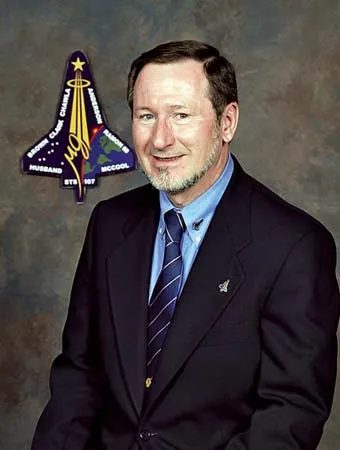
Douglas Osheroff was born in Aberdeen, Washington, on August 1, 1945. He didn’t grow up planning to study quantum mechanics. He just liked physics. That curiosity eventually led him to the heart of low-temperature science. It also earned him a spot among the most famous physicists of his generation.
In 1996, Osheroff shared the Nobel Prize in Physics. He didn’t win it alone. He split the honor with David Lee and Robert Richardson. The trio received the award for a single, mind-bending discovery. They found superfluidity in helium-3.
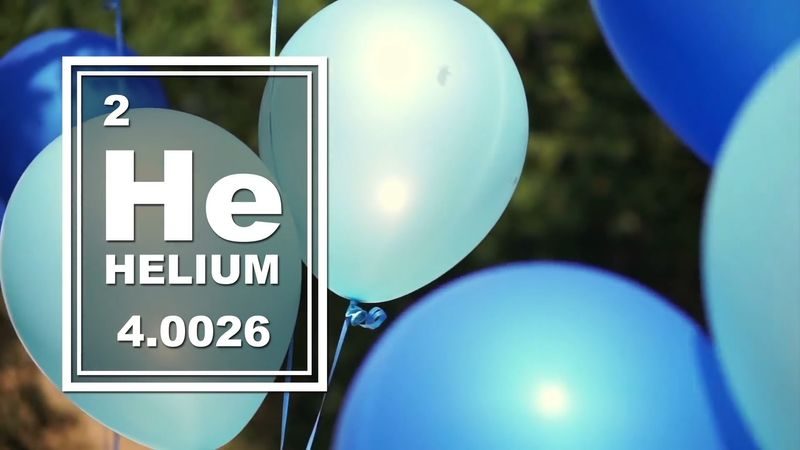
Most people think of helium as the gas that makes balloons float. It’s light. It’s inert. It’s boring. But helium-3 is different. It’s a rare isotope. It behaves in ways that defy everyday logic. When cooled to near absolute zero, it stops acting like a normal liquid. It becomes a superfluid.
The Mystery of Superfluidity
Superfluidity isn’t just about flowing smoothly. It’s about flowing without any resistance. Imagine pouring honey. It drags. It creates friction. Now imagine pouring water through a pipe so perfectly that it never slows down. That’s superfluidity.
Osheroff, Lee, and Richardson didn’t just observe this. They proved it happened in helium-3. This was huge. Helium-4 was already known to be a superfluid. But helium-3? No one expected it to behave that way. It’s a fermion. Fermions usually don’t pair up. They don’t condense. They don’t become superfluids. At least, that’s what theory said.
The team showed that theory was wrong. Or incomplete. They proved that helium-3 atoms could pair up. They acted like Cooper pairs. These pairs are the same ones found in superconductors. But seeing them in a liquid? That was new. That was groundbreaking.
Why This Matters Beyond the Lab
You might wonder why anyone cares about liquid helium-3. The answer is simple. It’s about understanding matter. Quantum mechanics isn’t just abstract math. It describes how the universe works at its smallest scales.
Superfluidity in helium-3 opened doors to other fields. It helped physicists understand high-temperature superconductors. It gave clues about neutron stars. Those dense stellar remnants might contain superfluid matter. If we can model it in a lab, we can model it in space.
Osheroff’s work also paved the way for better quantum sensors. These devices detect tiny changes in gravity or magnetic fields. They’re used in everything from mineral exploration to navigation. The principles started with a jar of helium-3 cooled to a fraction of a degree above absolute zero.
The Human Side of Discovery
Osheroff wasn’t a lone genius. He worked in teams. Collaboration was key. Lee and Richardson weren’t just co-winners. They were essential parts of the puzzle. The Nobel Prize often highlights individuals, but science is rarely a solo act.
The discovery took years. It required patience. It required failing. It required cooling things to temperatures colder than outer space. But the payoff was worth it. A new state of matter. A new way of thinking about how particles interact.
The He-3 Breakthrough at Cornell
David Osheroff’s path to a major physics discovery started in the classroom and ended in a cryogenic lab. He earned his undergraduate degree from Caltech in 1967. Then he moved to Ithaca, New York, for a doctorate at Cornell University. It was there, in 1972, that he worked alongside Lee and Richardson in their low-temperature laboratory.
They were studying helium-3. The conditions were extreme. The sample sat just a few thousandths of a degree above absolute zero. That is −273° Celsius. The team was looking for subtle shifts in how the liquid behaved.
Osheroff spotted something others might have missed. Minute jumps in the internal pressure. Small deviations. He pointed them out.
The team dug deeper. They realized the helium-3 was changing state. It had become a superfluid. This isn’t just cold liquid. It is a phase transition where atoms lose their randomness. They move in lockstep. Coordinated.
“Such a substance lacks all internal friction, flows without resistance, and behaves according to quantum mechanical laws.”
This matters. Classical fluid mechanics couldn’t explain it. Quantum mechanics could. For the first time, scientists could see quantum effects in a macroscopic system. Visible to the eye. Before this, these effects were hidden inside molecules or subatomic particles. You had to infer them indirectly. Now, you could watch them happen on a larger scale.
From Cornell to Bell Labs
The discovery didn’t stay at the university. Osheroff moved to Bell Telephone Laboratories in 1972. He stayed there for a decade. By 1982, he was heading the solid-state and low-temperature research division. He led that effort until 1987.
After Bell Labs, he took a teaching position at Stanford University. The work continued. The understanding of quantum systems in bulk matter deepened. And the implications for technology and theory kept growing.