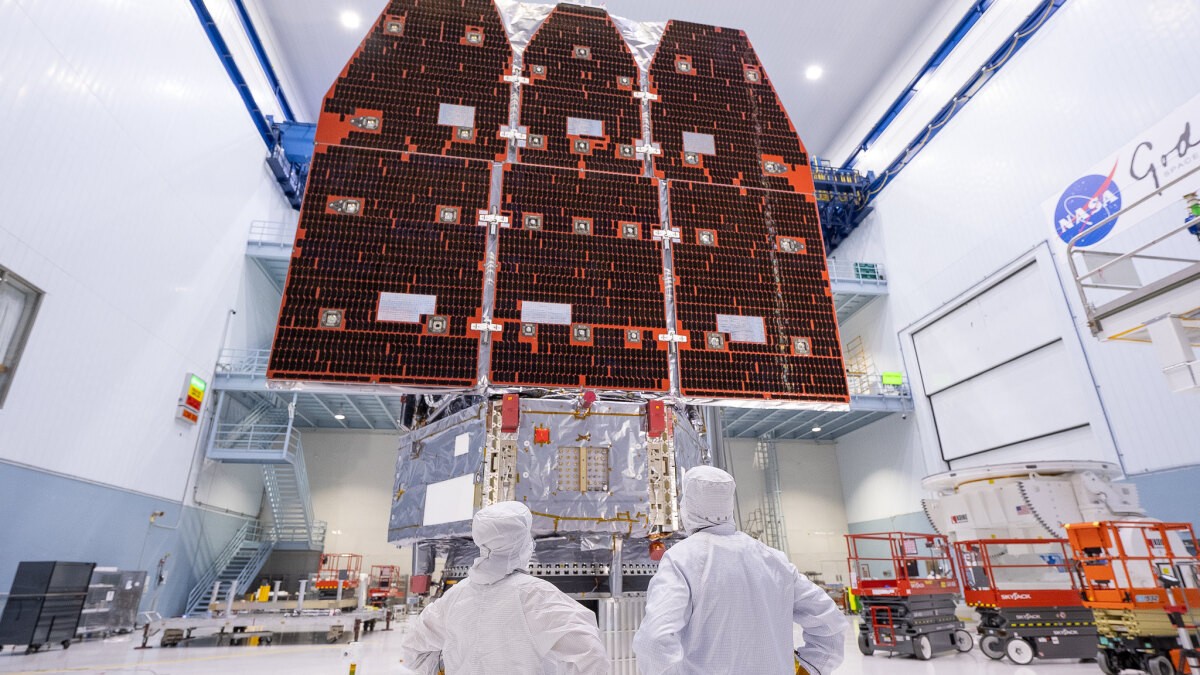
NASA is accelerating its timeline to launch the Nancy Grace Roman Space Telescope, a mission designed to move beyond the “close-up” snapshots of modern astronomy and instead provide a sweeping, panoramic view of the cosmos.
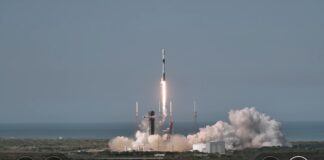
Currently undergoing final prelaunch testing at the Goddard Space Flight Center, the observatory is expected to launch as early as September, roughly eight months ahead of its original schedule. Once deployed, Roman will travel approximately 1 million miles from Earth to a stable orbit near the sun, joining the ranks of the Hubble and James Webb Space Telescopes.
The “Big Picture” Partner
While the Hubble and James Webb telescopes are famous for their ability to zoom in on specific, distant objects with incredible detail, they have a limited field of view. They see the universe through a “keyhole.”
The Nancy Grace Roman Space Telescope changes this dynamic. While it features an eight-foot mirror similar in size to Hubble’s, its camera is a powerhouse of wide-angle vision.
– Efficiency: To capture a massive object like the Andromeda Galaxy, Hubble requires roughly 400 individual images stitched together. Roman can achieve the same result in just two shots.
– Scale: Roman can image areas of the sky roughly 100 times larger than Hubble, providing the “scaffolding” or structural context that isolated deep-space images lack.
Unveiling the “Dark Universe”
The primary scientific driver for this mission is the mystery of the “dark universe.” Current cosmological models suggest that everything we can see—stars, planets, and galaxies—accounts for only about 5% of the universe. The rest is composed of two invisible entities: dark matter and dark energy.
Because these substances do not emit light, scientists must study their influence on visible matter to understand them. Roman will tackle this through three main methods:
1. Galaxy Mapping: By charting the positions and shapes of hundreds of millions of galaxies, Roman will show how cosmic structures have evolved over time.
2. Gravitational Lensing: The telescope will observe how invisible clumps of dark matter bend light from distant galaxies, effectively “mapping” the invisible.
3. Supernova Tracking: By monitoring Type Ia supernovas—exploding stars with predictable brightness—Roman will help scientists measure the rate at which the universe is expanding.
“Current observations hint that our standard model of the universe is incorrect,” says senior project scientist Julie McEnery. “Roman will be able to confirm these and set us on the path to understanding what’s right.”
A New Census of Exoplanets
Beyond dark energy, Roman will act as a sophisticated hunter of exoplanets (planets outside our solar system). Unlike previous missions that focused on planets orbiting close to their stars, Roman will use a technique called microlensing to find planets in the cooler, outer reaches of solar systems—similar to the positions of Jupiter and Saturn.
By monitoring dense star fields in the Milky Way, Roman will watch for the subtle gravitational “blips” that occur when a star carrying a planet passes in front of a distant background star. This could reveal thousands of new worlds, including “rogue planets” that drift through space without a host star.
Furthermore, the telescope will test an advanced coronagraph —a device designed to block a star’s overwhelming glare. If successful, this technology could eventually allow future telescopes to directly image Earth-like planets orbiting distant suns.
A Living Atlas of the Cosmos
Finally, Roman will serve as a temporal library for astronomers. By repeatedly scanning the same regions of the sky, it will create a “before and after” record of the universe. It will capture:
– The sudden ignition of supernovas.
– The feeding flares of black holes.
– The fluctuating brightness of millions of stars in the Milky Way.
This massive dataset will act as a new “Atlas of the Universe,” providing a permanent reference point that other telescopes can use to investigate sudden cosmic events.
Conclusion
The Nancy Grace Roman Space Telescope represents a fundamental shift from studying cosmic objects in isolation to understanding the universe as a connected, evolving system. By mapping the invisible forces of dark matter and dark energy, it aims to correct our fundamental understanding of how the cosmos works.