In a small terraced house in East Belfast, a grassroots mission is attempting to rectify a historic oversight in space exploration. Artist Deby McKnight has launched an ambitious, unconventional project: to enable 100 women to walk on the Moon —all without ever leaving Earth.
While NASA’s Apollo missions between 1969 and 1972 successfully landed 12 astronauts on the lunar surface, every single one of them was male. McKnight’s project aims to bridge this gender gap through a creative, localized recreation of the lunar experience.
From Meteorite to Moonwalk
The project began with a geological curiosity. After acquiring a small piece of the Bechar 003 lunar meteorite, McKnight realized the symbolic weight of her purchase. Because the meteorite shares the same composition as the lunar samples brought back by Apollo astronauts, it serves as a tangible, scientific link to the Moon itself.
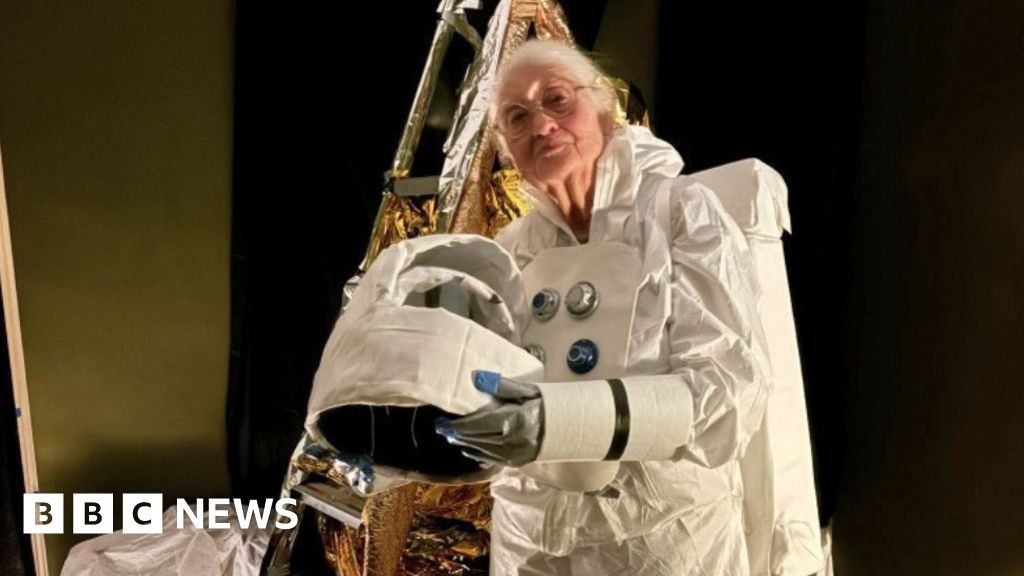
The idea for the “moonwalk” was born from a simple realization: if women had never walked on the Moon, they could at least do so in her living room. Using resourceful materials, McKnight transformed her home into a lunar landing site:
– The Lunar Lander: Constructed from a stepladder and foil blankets.
– The Lunar Surface: The meteorite sits at the base of the ladder, allowing participants to step near it as they “descend.”
– The Gear: Custom-made spacesuits and boots designed by her niece, Jane McKnight.
Breaking Barriers at Any Age
The project has already seen 44 women complete their “giant leap.” Among them was Betty Campbell, who celebrated her 90th birthday by donning a spacesuit and moon boots. For Campbell, the experience was more than just a novelty; it was a moment of profound connection and vitality.
“I thought I was going to have a happy, quiet birthday but little did I know what a lovely thing was planned,” Campbell said. “I almost feel 21 again.”
Other participants, such as Dawn Watson, described the experience as “wild and bold.” Despite the humble setting of a Belfast living room, the emotional impact of the project is significant. For many, it represents a shared moment of reclaiming a piece of history that has traditionally excluded them.
Why This Matters
This project highlights a fascinating intersection between community art and historical reflection. While space agencies like NASA are currently working on the Artemis missions to return humans to the Moon (with an increasing focus on lunar diversity), McKnight’s initiative operates on a human, grassroots level.
It raises an interesting point about how we perceive “monumental” achievements. By bringing the Moon into a domestic space, McKnight democratizes the experience of exploration, turning a feat of high technology into a communal, accessible act of empowerment.
Looking Ahead
The mission is far from over. Jane McKnight is preparing to participate in the milestone event that will mark the 100th woman to complete the walk. For those interested in joining the movement, McKnight has established a website to coordinate future participants.
Conclusion: By blending scientific fragments with creative storytelling, this Belfast project turns a living room into a symbolic frontier, ensuring that the history of lunar exploration is finally shared by women.