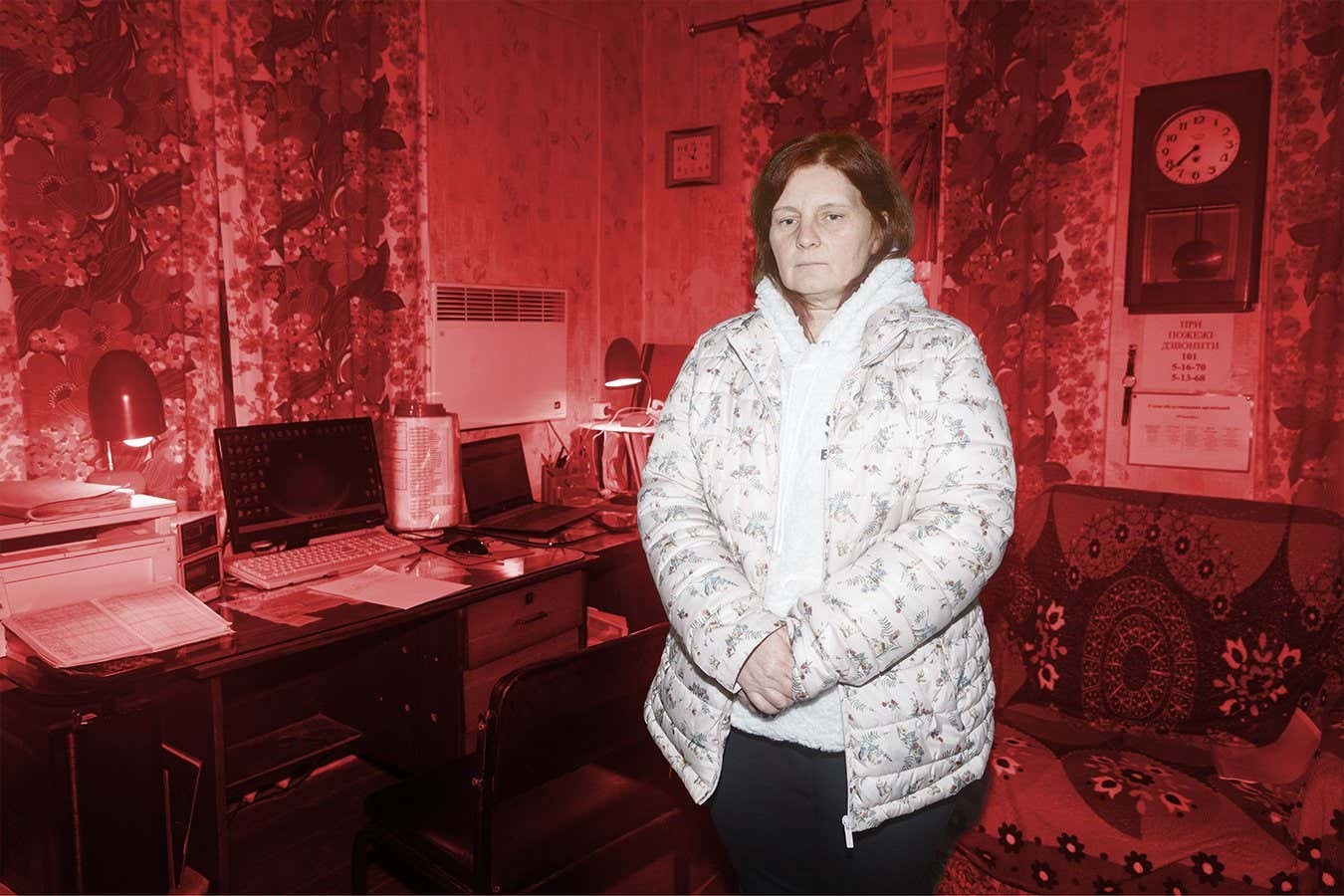
When Russian forces crossed the Belarusian border into Ukraine in February 2022, the fate of the Chernobyl Exclusion Zone became immediately uncertain. For Lyudmila Dyblenko, head of the Chernobyl Meteorological Station, the initial instinct was survival: she ordered her staff to flee. However, the rapid advance of Russian troops sealed the zone, leaving her trapped in a high-stakes environment where scientific duty collided with the realities of war.
Science Under Siege
The work at the Chernobyl Meteorological Station is critical for regional safety. By monitoring radiation levels, wind patterns, temperature, and precipitation, scientists can track how radioactive particles might move through the atmosphere—a vital task given the area’s history.
While these readings are typically automated, the occupation quickly stripped away the station’s infrastructure. By early March, the electricity was cut, rendering modern digital systems useless and leaving the station without heat or light. Faced with a total blackout, Dyblenko made a pivotal decision: she would continue her work manually.
To ensure the continuity of scientific data, Dyblenko adopted a high-risk routine:
– Manual Measurements: Without automated sensors, she performed readings by hand.
– Guerrilla Communications: Using an old mobile phone with a superior antenna, she bypassed modern smartphone limitations.
– Signal Hunting: She navigated the landscape to find specific “dead zones” where a signal could penetrate, such as a local church and a lorry park, to transmit her findings.
– Tactical Timing: She meticulously studied Russian patrol schedules to minimize the risk of detection while moving between observation points.
A Dangerous Balancing Act
The occupation was not merely a technical challenge; it was a constant physical threat. Dyblenko faced direct confrontations with soldiers, including one instance where an armed soldier entered her home demanding alcohol. Through sheer force of personality, she managed to repel the intruder.
Even more chilling was the realization that she was being watched. After spotting a red laser dot from a sniper or lookout in the bushes near her instruments, Dyblenko chose to ignore the threat and focus on her data. This decision was driven by the understanding that a gap in the data is a gap in our ability to monitor the safety of the region.
Why the Data Matters
In scientific monitoring, “missing time” is a significant problem. If radiation levels spike during a period where no measurements are recorded, scientists cannot accurately model the spread of contaminants or assess the level of danger to the public.
Because of Dyblenko’s persistence, the scientific record for the Chernobyl Exclusion Zone remains unbroken. There is no “black hole” in the data during the occupation, allowing for seamless long-term analysis of the zone’s environmental health.
For her courage in maintaining vital scientific continuity under fire, Ukrainian President Volodymyr Zelenskyy awarded Dyblenko a medal—a rare distinction for a meteorologist, but a fitting tribute to a frontline worker in a scientific war.
Conclusion
Lyudmila Dyblenko’s actions ensured that the environmental monitoring of one of the world’s most sensitive areas remained uninterrupted. Her resilience turned a potential scientific blackout into a testament to the importance of data integrity during conflict.