


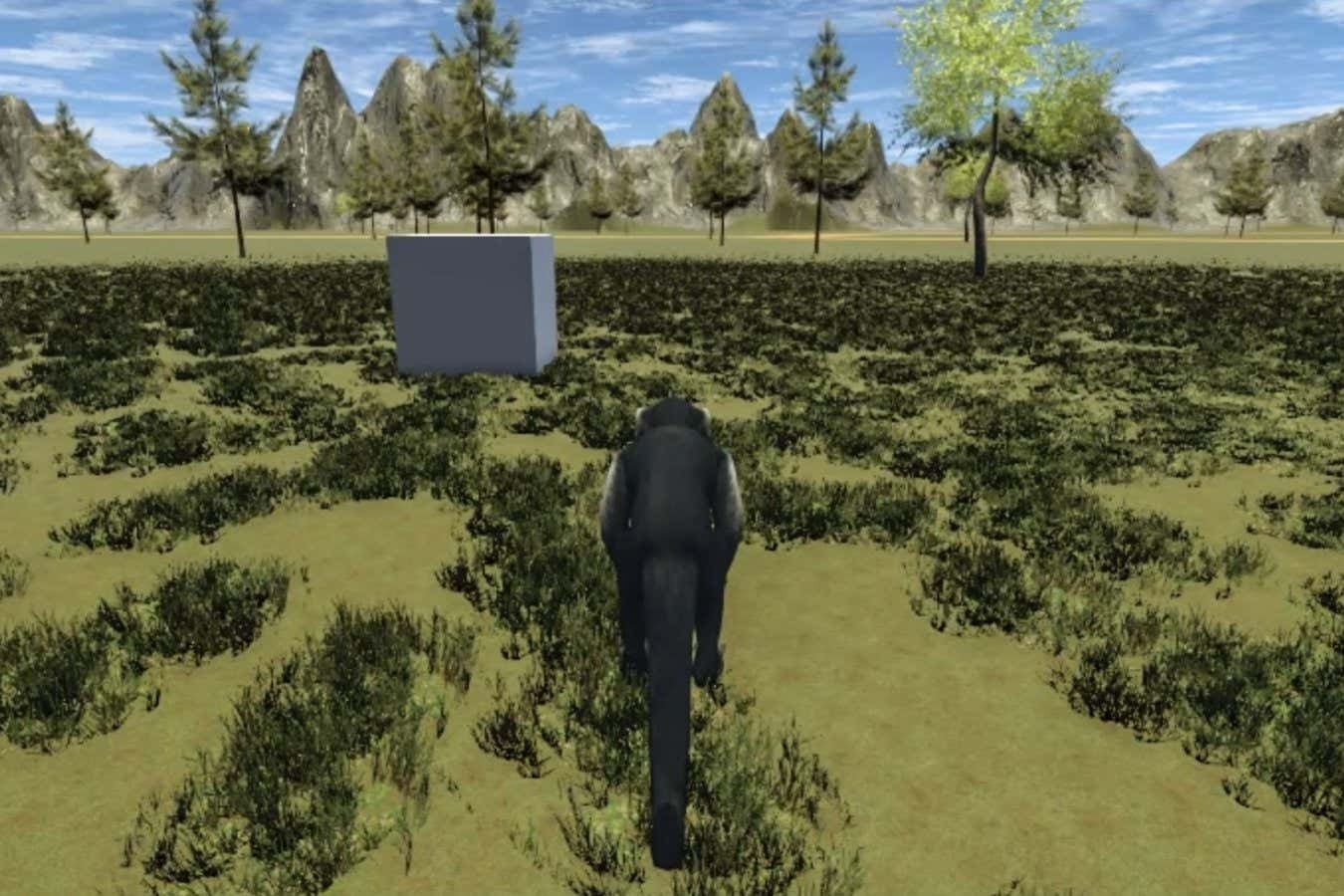
Researchers have achieved a significant milestone in Brain-Computer Interface (BCI) technology: rhesus macaques have successfully navigated complex virtual environments using only their neural signals. Unlike previous methods that required subjects to mimic specific physical movements, this new approach taps into the brain’s higher-level planning centers, potentially revolutionizing how people with paralysis interact with the world.
The Breakthrough: Moving Beyond “Moving Your Ears”
Traditional BCI technology often relies on a process of physical substitution. For example, a user might be asked to imagine moving a specific finger to move a cursor on a screen. As researcher Peter Janssen from KU Leuven notes, many users find this process unintuitive—likening it to the frustrating sensation of “trying to move your ears.” It is a foreign task that requires immense mental effort and long periods of training.
The study led by Janssen changes this paradigm by targeting different areas of the brain. The team implanted three rhesus macaques with high-density electrode arrays (96 electrodes each) in three distinct regions:
– The Primary Motor Cortex: The area responsible for executing physical movement.
– The Dorsal and Ventral Premotor Cortices: Areas believed to be involved in the abstract planning of movement.
By tapping into these “planning” centers, the researchers aim to capture the intent to move, rather than just the mechanical command of a muscle twitch.
Versatility in a Virtual Environment
The implications of this “intent-based” control were demonstrated through several increasingly complex tasks. Using an AI model to interpret electrical signals, the monkeys were able to:
1. Control a sphere moving across a 2D landscape from a fixed perspective.
2. Maneuver animated avatars from a third-person viewpoint, similar to modern video games.
3. Navigate through virtual buildings, including the complex task of moving from room to room and opening doors.
Andrew Jackson of Newcastle University highlighted the most impressive aspect of these results: contextual flexibility. The monkeys could apply the same neural commands across different perspectives and environments. This suggests the BCI has tapped into a “universal” movement language in the brain, much like how a human can use a standard game controller to play many different types of games without relearning how to hold the device.
From Primates to Human Application
While the results are groundbreaking, the transition to human use is not immediate. The primary challenge lies in neuroanatomical precision. While we understand the motor cortex well, the exact boundaries of the higher-level planning areas vary between species and individuals.
“There’s a bit of work necessary to know exactly where to implant a human because a lot of these areas are not very well known in humans,” Janssen explains.
Once these precise locations are mapped, the potential benefits for humans with paralysis are profound. Instead of struggling to master clunky, movement-mimicking interfaces, users could:
– Navigate virtual worlds for recreation or social interaction.
– Control electric wheelchairs through intuitive, thought-driven movement.
– Interact with digital interfaces more naturally, reducing the cognitive load required to operate assistive technology.
Conclusion
By targeting the brain’s abstract planning centers rather than just its motor execution zones, researchers have moved closer to creating BCIs that feel like natural extensions of the mind. This shift from “mimicking movement” to “expressing intent” could eventually provide people with mobility impairments a much more seamless and intuitive way to navigate both digital and physical realities.


