


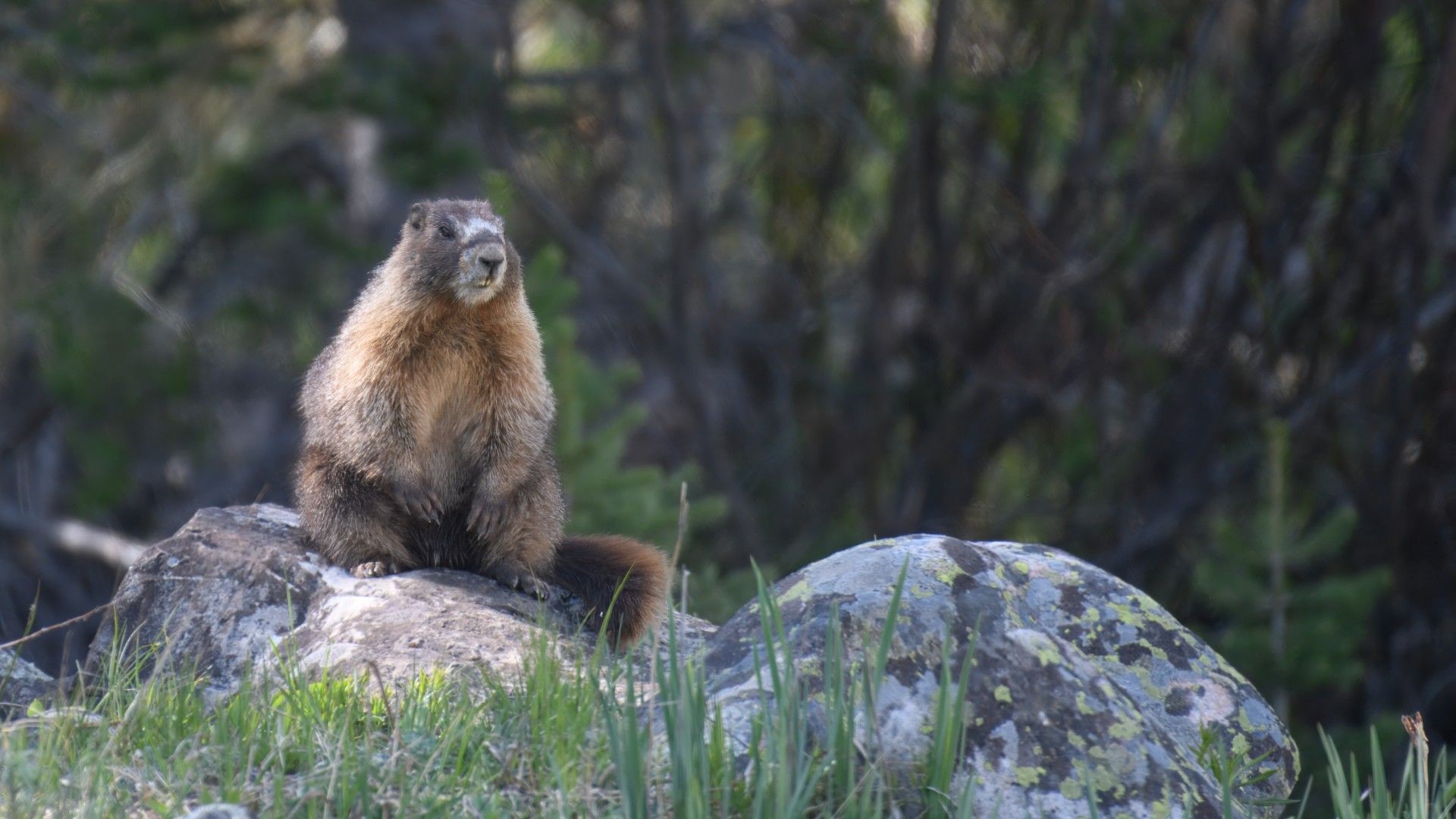
Funding for American science is shrinking. Fast. So a UCLA team did what any rational academic would do when faced with a budget vacuum: they turned to OnlyFans.
But don’t expect anything spicy.
The account, dubbed OnlyMarms, features nothing but wholesome footage of yellow-bellied marmots. It is a desperate, creative hack to keep a decades-long ecological study alive in an era of federal austerity.
Why long-term marmot data matters
Daniel Blumstein, the UCLA ecology and evolutionary biology professor leading this peculiar pivot, didn’t come up with the idea in a boardroom. He came up with it while staring at a screen.
“I spend a lot of time waiting for mymots to do things,” he told Live Science. “Had the idea one slow morning.”
His graduate student’s reaction was immediate: “We MUST do this!”
Why marmots? Why now?
The Rocky Mountain Biological Laboratory (RMBL), situated near Crested Butte, Colorado, has been watching yellow-bellied marmots (Marmota flaviventer ) since 1962. This isn’t a new fad. It is the second oldest continuous study of its kind on Earth. Researchers have up to 65 years of granular data on population dynamics, social structures, and anti-predator behaviors.
They are answering questions that matter: How do animals respond to a rapidly changing environment?
The yellow-bellied species is widespread across the Rockies and parts of California. They are cat-sized ground squirrels. They are diurnal. They live in social groups. These traits make them ideal subjects for behavioral observation that spans generations.
The funding cliff
Long-term research is expensive.
Collecting data over 60-plus years requires equipment, travel, maintenance, and salaries. It is not cheap.
With federal budgets slashed and science grants drying up, the “challenging funding environment” forced Blumstein’s hand. He needed cash for supplies. He needed overhead coverage. Traditional grant cycles are too slow for the current crisis.
So, on June 17, the project announced on Instagram:
“the state of funding is so bad we am turning to OnlyFans… ‘OnlyMarms’.”
What’s on OnlyMarms?
If you are hoping for risqué content involving burrowing rodents, stop now.
Blumstein was blunt about the expectations.
“It’s almost all G-rated content,” he said. “Marmots playing. Being cute. Digging. Bringing plants to their burrows.”
It is their normal routine. Occasionally, a scuffle might push the rating to PG. But that’s it.
Emily Renkey, another researcher on the project, noted they hope to soon add footage of marmot pups. The goal isn’t to titillate. It is to engage.
“We’re letting folks have free subscriptions and asking for tips,” Blumstein explained. The economics are brutal, though. OnlyFans keeps 20%. Taxes take another bite.
The revenue is minimal. “Not much,” Blumstein admitted. It certainly won’t replace the federal dollars that have driven U.S. scientific discovery since the 1950s.
Is it working?
Financially? Barely.
Engagement-wise? Maybe.
Since launching over a month ago, the OnlyMarms page has seen 735 visits and accumulated 44 paying fans. That is not a viral sensation. It is a start.
But there is a secondary benefit here that money doesn’t capture directly: public awareness.
Renkey argues the platform serves as an educational tool.
“Overall I think this can be an amazing ways to teach people more about animal social behaviour,” she said. “Which can sometimes be hard to observe.”
Through the game cameras that feed the subscription, even the researchers are learning more. They get close-up glimpses they might miss during casual field observation.
A pragmatic compromise
Let’s be clear: no mammal signed a contract.
Blumstein acknowledged the absurdity of getting consent from marmots. But the alternative is silence. No data. No discovery.
The funds raised, however meager, go back into the study. They help protect these creatures in a world that is warming, changing, and becoming less hospitable to wildlife.
“We are using these funds to help continue study,” Blumstein said. “Which provides valuable information about them.”
The federal funding model is breaking. Researchers are improvising. They are posting cute animal videos to keep the lights on. It is funny. It is frustrating. And right now, it is the only way to keep the longest-running marmot study in the world running.
The sun is setting on the Rocky Mountain field station. The camera rolls. A marmot digs.


