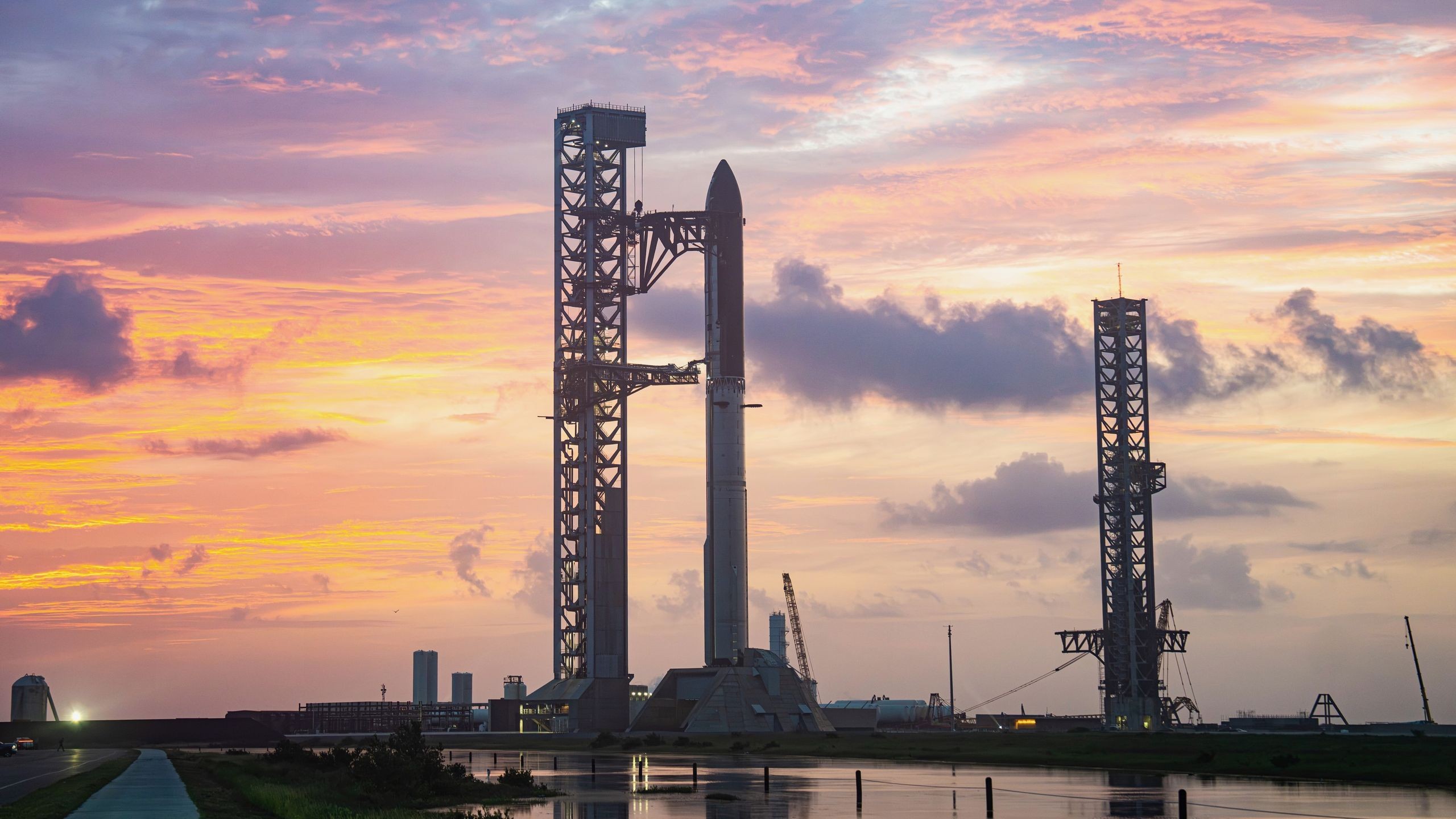
SpaceX is moving again.
The giant reusable rocket known as Starship is targeting Thursday, July 23, for its next test flight. This isn’t just another launch. It’s Flight 13. A crucial milestone for the vehicle Elon Musk’s company is building to carry humans to the Moon and, eventually, Mars.
The window opens at 6:45 p.m. EDT. That’s 22:45 GMT. Or 5:45 p.m. in Texas.
You can watch the attempt live on Space.com if you’re interested in seeing 408 feet of metal defy gravity. But first, you need to know why we are starting over so soon.
Why was Flight 13 aborted?
It didn’t go as planned last time.
On July 16, the first attempt for this specific mission ended in an abort. Just as the Super Heavy booster was firing up its 33 Raptor engines, the sequence stopped. The rocket never left the pad.
Musk explained the problem shortly after via X.
“To be confident of a good flight, two Raptors will be removed and replaced,” he wrote.
That’s a significant repair for such an early test. It implies underlying issues with those specific engines or their integration points. SpaceX originally hoped to relaunch by July 20. By Sunday, July 19, that date was pushed back. The new target: “no earlier than Thursday.”
This makes sense. You don’t rush repairs on a rocket that weighs millions of pounds.
Starship Version 3 and the Artemis Connection
This isn’t the first time Starship has flown. It debuted in April 2023, and we’ve seen a handful of suborbital hops since. But Flight 13 carries Starship Version 3.
The latest iteration.
Version 3 is the variant NASA is betting on for its Artemis program. It’s the one that will likely land astronauts on the lunar surface. It’s also the vehicle SpaceX hopes will ferry the first humans to Mars. If the engineering holds up, this flight helps validate the design that will eventually change how we operate in space.
All current flights are suborbital. They don’t reach orbit yet. They test systems, heat shields, and engine performance. But the stakes keep rising.
The Mission Profile: Two Booms, One Splashdown?
The plan for Flight 13 mimics the approach taken in Flight 12 on May 22, but with higher expectations.
Here is the breakdown of what SpaceX is aiming for this time:
- Super Heavy Boost Stage: The first stage aims to steer itself back toward Earth. Instead of crashing, it will target a controlled splashdown in the Gulf of México. This is a hard sell. During Flight 12, engine issues caused the booster to slam into the water rather than land gently. SpaceX wants to see if the engine replacements fix the stability problems.
- Starship Upper Stage: The ship itself will fly halfway around the world. It will aim for a controlled splashdown off the coast of Western Australia, in the Indian Ocean.
Flight 12 actually succeeded in the latter part. The Starship upper stage managed to reach Western Australia and land in the water as intended. The booster was the bottleneck. Fixing the booster’s return trajectory is likely the primary engineering focus here.
Carrying the Future of Internet
There is another payload this time. A novel one, actually.
Starship will carry 20 next-generation Starlink V3 satellites into space. These satellites have never flown before. SpaceX is building a massive constellation of 100,00 of them for low Earth orbit, and Starship is the only vehicle capable of deploying them at scale.
But don’t expect them to stay up there.
Since Starship is on a suborbital flight profile, these satellites won’t enter permanent orbit. According to the Flight 13 mission description, they will re-enter and burn up about 20 minutes after deployment.
Why carry them at all?
It’s a test. A real-world stress test for the Starlink V3 hardware inside a Starship environment. It proves the integration works. It proves the release mechanisms function. And it gives SpaceX data on how the satellites behave during launch and initial re-entry.
The Road to Orbit
We are still a long way from a Starship that stays in space.
Every test is a learning cycle. An abort in July means two Raptors get swapped out. A push in schedule means more time to ensure those engines fire correctly. A splashdown in the Gulf of México instead of on a launch tower is a victory, even if it’s wet.
The goal is clear. Get the booster back intact. Get the ship back intact. Repeat until one of them doesn’t have to come down at all.
Flight 13 is another step on that jagged path. Thursday night will tell us if the repairs held.
Will the Raptors behave? Will the Super Heavy float? Or will the Gulf of Mexico claim another booster?
We’ll know in a few days. Until then, just wait for the lights.