She wasn’t just pretty. She was dangerous.
Lee Remick knew how to make a woman in trouble look irresistible. While her father owned a department store in Quincy, Massachusetts, she was busy plotting her escape to New York City. Divorce happened early. Her mother, an actress named Patricia, raised her there. Remick went to an exclusive private school. She studied dance. She wanted the spotlight.
By 1952, she was working summer stock in Hyannis. Two years later, she hit Broadway in Be Your Age. Television followed. Then came the big break.
In 1957, Elia Kazan cast her in A Face in the Crowd. It was a small start. But her next role changed everything. The Long, Hot Summer (1958) made her a star. She played a flirtatious wife opposite Paul Newman and Joanne Woodward. Martin Ritt directed. The film was based on a William Faulkner novel. Remick had arrived.
The Academy Award Nomination That Defined Her Career
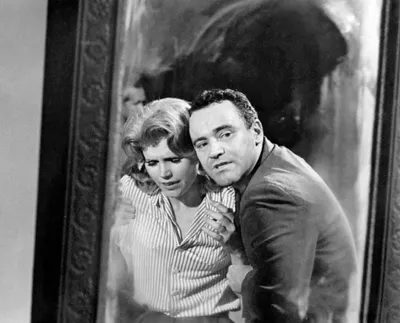
You don’t get nominated for an Academy Award by being nice. Remick earned her only Oscar nod for Days of Wine and Roses (1962). She played a housewife who spirals into alcoholism. Blake Edwards directed. Jack Lemmon was her co-star. The performance was praised. It was raw. It was real.
Before that nomination, she had already proven she could handle dark material. In Otto Preminger’s Anatomy of a Murder (1959), she played a dubious rape victim. The film was controversial for its explicit handling of sexual assault. Three years later, she starred in Sanctuary (1961), based on two Faulkner novels. She was playing dubious victims again. It was a pattern.
Then came Wild River (1960). Montgomery Clift co-starred. Remick played an uneducated widowed mother. Elia Kazan directed again. The chemistry was electric. The roles were complex. Remick specialized in sensual, often erotic women in crisis.
Broadway Returns and Later Roles
The 1960s kept her busy. She worked with James Garner in The Wheeler Dealers (1963). She starred with Steve McQueen in Baby the Rain Must Fall (1965). This film was based on a play by Horton Foote.
She also returned to the stage. In 1964, she appeared in the musical Anyone Can Whistle. Two years later, she was in Wait Until Dark. The drama featured a blind woman being terrorized by three criminals in her own home. The role earned her a Tony Award nomination.
“Remick became a star with her next movie role, a flirtatious wife in The Long, Hot Summer.”
The 1970s brought a shift. The roles got weirder. In The Detective (1968), she played a sexually voracious wife. In Sometimes a Great Notion (1971), she was an embattled logger’s wife. Then there was The Omen (1976). She played the adoptive mother of a devil-child.
She wasn’t done with genre work. In Telefon (1977), she was a secret agent. In The Europeans (1979), she played an impecunious baroness.
Television and Final Years
Film roles became fewer. Television took over. During the 1970s and ’80s, Remick appeared in many TV movies and miniseries. She played the title role in Jennie: Lady Randolph Churchill (1975). She played Kay Summersby, the “other woman” in Ike: The War Years (1979). She portrayed an adulterer in The Letter (1982).
Her final credits came in 1989. She played Sarah Bernhardt in the miniseries Around the World in 80 Days.
It ended in illness. Remick battled kidney and lung cancer for two years. She died in Los Angeles, California, on July 2, 1991. She was 55.
She left behind a filmography of women who didn’t just suffer. They seduced. They fought. They broke. That was Lee Remick.