


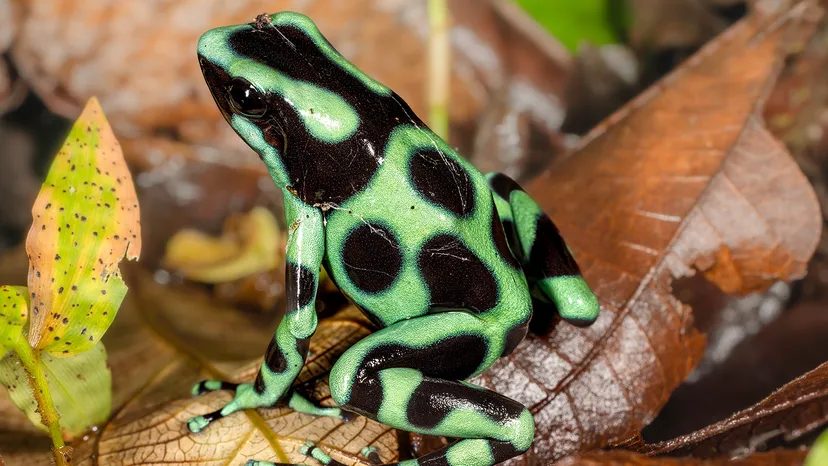
Most frogs hide. They blend into the mud or the leaf litter, hoping not to be noticed. The Green and Black Poison Dart Frog does the opposite. It stands out. Its skin is a high-contrast mix of jet black and neon lime. This isn’t an accident. It is a billboard.
These amphibians live in the humid rainforests of Central and South America. Specifically, you will find them in countries like Colombia, Ecuador, and Peru. They prefer the damp floor of the forest, near streams. But their habitat doesn’t matter as much as their appearance. Their colors scream danger.
Why Bright Colors Matter
You might think bright colors are for mating. For many species, that is true. But for the Green and Black Poison Dart Frog, it is primarily a warning. This is called aposematism. It tells predators, “Do not eat me.”
The frog’s skin contains potent alkaloids. These chemicals are derived from the insects they eat, particularly ants and mites. The toxins affect the nervous system. They are not lethal to humans if touched carefully, but they are deadly to many small predators. Birds. Snakes. Smaller frogs. They learn quickly to avoid the flashy patterns.
A Study in Contrasts
The specific shade of green can vary. Some individuals are more yellow. Others are a deeper teal. The black patterns are equally diverse. Some have spots. Others have stripes. This variation helps researchers track populations and understand genetic diversity.
But the main point remains constant. The brighter the frog, the more toxic it tends to be. This correlation is not perfect, but it is strong. Predators use the visual cue as a shortcut. They do not need to taste the frog to know it is bad news. They just need to see the green and black.
Conservation Concerns
Despite their striking beauty, these frogs face threats. Habitat destruction is the biggest one. Rainforests are being cleared for agriculture and urban development. This reduces the available space for the frogs to live and breed.
Pollution is another issue. The alkaloids in their skin depend on their diet. If the insect population changes due to pesticide use, the frogs’ toxicity levels might drop. This makes them more vulnerable to predators. It also affects their role in the ecosystem.
The Green and Black Poison Dart Frog is a vivid reminder of nature’s ability to combine beauty with danger.
Their presence in the wild is a sign of a healthy ecosystem. When you see them, you are seeing a complex web of interactions. Predator. Prey. Toxin. Color. All of it in one tiny, jumping body.
Why They Are Not Pet Store Staples
You might wonder why they are not as common in the pet trade as other dart frogs. The answer lies in their care requirements. They need specific humidity levels. Temperature control is critical. Their diet must be supplemented with calcium and vitamins to maintain their health.
Moreover, their wild-caught status is a major ethical issue. Removing them from the wild disrupts local populations. It also introduces diseases. Captive-bred specimens are available, but they often lack the vibrant colors of their wild counterparts. The diet difference is key. Wild frogs eat a diverse range of insects. Captive frogs often eat only crickets and fruit flies. The nutritional gap shows in their skin.

The Deadly Beauty of Aposematic Coloration
Native to the lush rainforests of South America, the poison dart frog is a study in lethal contrast. Those vivid hues aren’t just for show; they are a biological warning label. This visual strategy, known as aposematic coloration, screams to potential predators: I will kill you if you eat me. It is one of nature’s most direct forms of communication, stripping away the need for camouflage.
The source of this danger is dietary. Unlike many other amphibians, these frogs synthesize their potent toxins from the specific ants, mites, and beetles they consume. In captivity, where this diet is unavailable, the frogs become harmless. It is a stark reminder that their power is borrowed, not innate.
Shifting Gears to the Red-Eyed Tree Frog
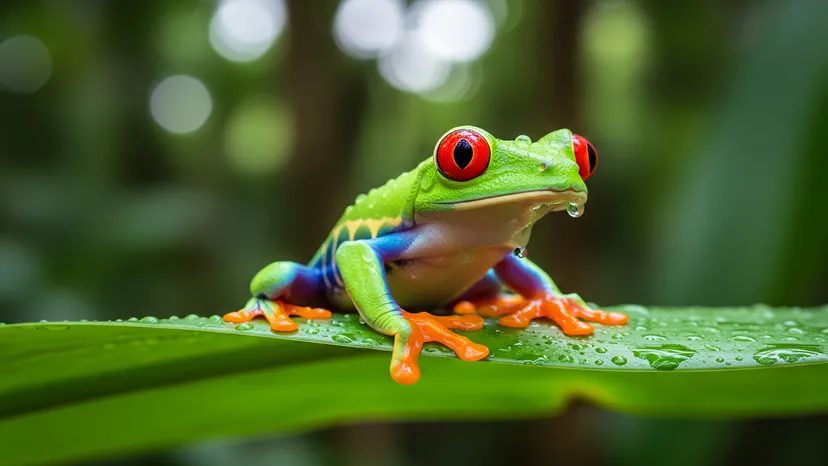
While the dart frog relies on being seen to survive, the Red-Eyed Tree Frog (Agalychnis callidryas ) employs a different trick. Native to Central American rainforests, this amphibian is famous for its startling eyes. When threatened, it flashes its bright orange-red eyes and bright blue-and-orange sides. This sudden burst of color, called startle coloration, confuses predators for just a split second. Enough time for the frog to jump away.
“Camouflage keeps you hidden. Startle coloration keeps you alive when you’re found.”
The Red-Eyed Tree Frog’s survival strategy highlights a key evolutionary divergence. One species shouts danger. The other blinks in surprise. Both are effective. Both rely on color. But only one carries a chemical death sentence.
How Diet Dictates Toxicity
Why do some frogs carry toxins while others do not? The answer lies in the food web. Poison dart frogs lack the ability to produce toxins themselves. They sequester alkaloids from their prey. If you move a poison dart frog to a lab and feed it fruit flies, it loses its toxicity within weeks. This dependency makes them vulnerable to habitat loss. If the specific ants they eat disappear, the frog’s defense mechanism vanishes.
This contrasts sharply with the Red-Eyed Tree Frog, which is non-toxic. Its defense is purely behavioral and visual. It hides during the day, clinging to the undersides of leaves. Only at night does it venture out to feed on smaller invertebrates. Its bright colors are reserved for display, not warning.
Where These Frogs Thrive
Both species are tied to humid, tropical environments. Poison dart frogs inhabit the understory of South American rainforests, often near streams or in leaf litter. The Red-Eyed Tree Frog prefers the canopy of Central American forests, from southern Mexico to Panama. Their geographic separation is significant. It explains why their evolutionary paths diverged so sharply.
“Habitat loss doesn’t just kill frogs. It removes the specific prey that makes some frogs deadly.”
Which Strategy is More Effective?
Neither. Evolution doesn’t seek perfection. It seeks sufficiency. Aposematic coloration works because predators learn quickly. A bird that eats a toxic frog gets sick. It remembers the bright colors. Startle coloration works because predators hesitate. That hesitation is all the frog needs.
The Illusion of Toxicity
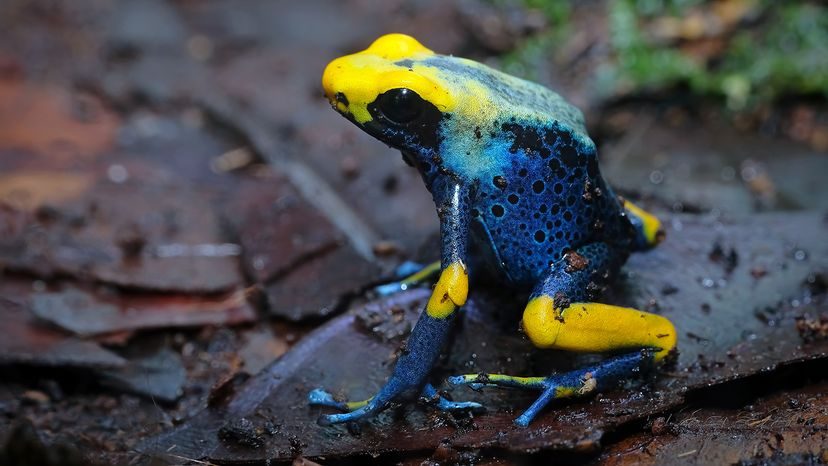
Most people assume that if something looks this good, it must be poisonous. The Dyeing dart frog (also known as the Dendropsophus ebraccatus or similar species depending on regional taxonomy, though often confused with the more famous poison frogs) flips that script. It is a master of deception. While it lacks the potent alkaloids found in its toxic cousins, it wears their wardrobe.
The strategy is simple but effective. Flash bright-red eyes. Show off a neon green body. Flash blue-and-yellow flanks. Predators see the colors, hesitate, and in that split second of confusion, the frog is gone. It is a visual panic button.
Where It Lives and How It Breeds
You will find this species in the humid forests of Central America. The habitat is specific. It needs the canopy. The frog lays its eggs on leaves overhanging water. When the tadpoles hatch, they do not drop into a pond below immediately. They wait. They ride the leaf down into the water, or the water rises to meet them, ensuring the next generation starts life in a safe, contained environment.
No Poison, All Performance
It is not toxic. This is a key distinction. In the world of amphibians, toxicity is a shield. The Dyeing dart frog uses speed and surprise instead. It startles predators with a sudden burst of color and then springs away. The colors are not a warning to eat me; they are a distraction to let me go.
The frog’s colors are not a warning. They are a distraction.
How It Confuses Predators
Why red eyes? Why neon green? The combination breaks up the frog’s outline. It makes it hard to track. When the frog leaps, the flash of color lingers in the predator’s vision. By the time the brain processes the image, the prey has already cleared the danger zone. It is biology as performance art.
Comparison to Toxic Relatives
How does this compare to the Dyeing Dart Frog ’s more dangerous relatives? The difference is chemical vs. behavioral. Toxic frogs rely on their bodies to do the talking. This frog relies on movement. One is a fortress. The other is a ninja. Both survive. Both thrive. But the mechanism is entirely different.
Which Species Is Which?
Identifying this frog can be tricky. Many look similar. The key is the behavior. If it stays still and looks bright, it might be toxic. If it flashes and runs, it is likely the deceptive species. Look for the specific pattern of blue and yellow on the flanks. Notice the sudden eye movement. Watch for the leaf-laying behavior near water sources.
Why It Matters
Understanding this frog changes how we view defense mechanisms. It is not just about being poisonous. It is about being unpredictable. In a world full of eyes watching for movement, sometimes the best way to hide is to show off. The Dyeing dart frog proves that survival is not always about strength. Sometimes it is about the right flash at the right time.
It is hard to look away from the Amazon milk frog. The skin is a canvas of deep, midnight blue or black, slashed with jagged veins of white that look like milk spilling across dark stone. That is where the name comes from. It is not about the taste of dairy. It is about the visual shock of those stark, milky lines against the dark body.
Why the Colors Matter
Most frogs rely on camouflage. Green blends into leaves. Brown hides in bark. The Amazon milk frog does the opposite. It broadcasts. The high-contrast pattern acts as an aposematic signal. It tells predators: do not eat me.
This is not just a pretty face. The frog produces a toxic secretion from glands in its skin. It is a chemical defense. The bright colors are the billboard. The toxins are the message. Predators learn quickly. A bad experience with one brightly colored frog is often enough to avoid all similar-looking prey in the area.
A Legend of Dyeing Feathers
The scientific name, Trachycephalus resinifictrix, hints at its habitat and behavior. But the common name ties back to indigenous knowledge of the Amazon. Local legends speak of the frog’s secretions being used to dye bird feathers. The bright yellow or white patterns on certain birds were said to be influenced by this amphibian’s natural chemistry.
Whether the dyeing is literal or metaphorical, the association sticks. The frog is a natural pigment producer. Its colors are vivid enough to seem artificial. Yet they are entirely biological. The melanin creates the dark background. Structural elements in the skin reflect the lighter hues. It is a masterpiece of evolution.
Where to Find Them
These frogs live in the upper canopy of the Amazon rainforest. They are arboreal. They do not spend much time on the forest floor. You will find them on leaves and branches, often near water sources. The humidity is key. Their permeable skin requires a moist environment to function properly.
They are not aggressive. But they are not shy about their presence. If you hike through the lowland tropical forests of Brazil, Peru, or Colombia, you might spot them. They are often more visible than they are common. Their brightness makes them stand out against the green backdrop.
How They Survive
The Amazon milk frog spends its days resting. It is nocturnal in many aspects. At night, it becomes active. It hunts insects and small invertebrates. During the day, it relies on its camouflage—or lack thereof—to deter attacks.
The toxicity varies. Not all populations have the same level of poison. It depends on diet and location. Some frogs are more dangerous than others. Predators in the region have adapted. Some snakes can resist the toxins. Others avoid them entirely. The frog’s survival strategy is a delicate balance of chemistry and color.
It is a reminder that nature does not always hide. Sometimes it screams. The Amazon milk frog does not whisper. It announces its presence with every step across a broad leaf. And in the dense, shadowed understory of the rainforest, that announcement is a matter of life and death.
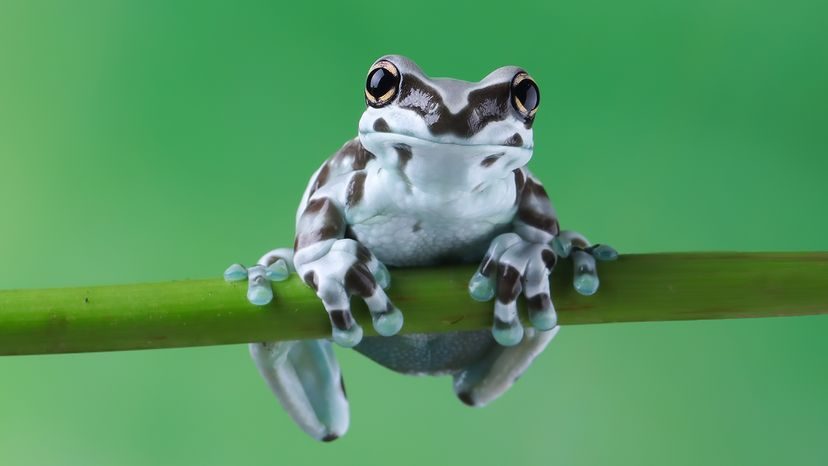
It looks like it belongs in a jewelry box rather than the rainforest floor. Large, glossy, and undeniably full of character, the Amazon milk frog (Leptopelis laticeps ) is a visual paradox. While it shares the dart frog family tree, it sits slightly lower on the toxicity ladder than its brighter, more notorious cousins. But don’t let that mislead you. It is no less striking.
Its armor is a study in contrast: gray skin slashed with bold black patches. This pattern isn’t just for show. It helps the amphibian vanish against wet, dark tree bark, a clever disguise in the humid depths of the Amazon. They thrive in these damp environments, hiding in plain sight among the foliage.
To many, it is simply one of the most adorable amphibians you will encounter in the wild. The large eyes, the smooth texture—it’s cute in a way that feels almost wrong given the context. But nature rarely offers cuteness without a warning label.
5. Golden Poison Frog
If the Amazon milk frog is a cautionary tale wrapped in gray, the Golden Poison Frog (Phyllobates terribilis ) is a scream in yellow.
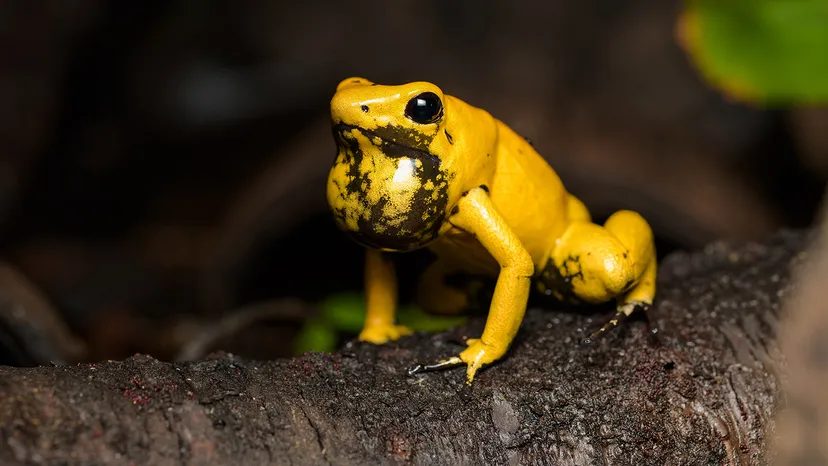
The Golden Poison Frog: A Tiny Titan of Toxin
You wouldn’t guess it by looking, but the golden poison frog (Phyllobates terribilis ) is essentially a walking biohazard. Native to the humid forests of Colombia, this creature is roughly the size of a thumbnail. Its skin is a bright, warning yellow. That color is the first clue. In nature, bright usually means stay away.
The toxin it carries is called batrachotoxin. It’s one of the most potent non-protein neurotoxins known to science. A single frog has enough poison on its skin to kill ten adult humans. Or, depending on how you phrase it, several large animals. Indigenous groups in Colombia have used the frog’s secretions to tip blowgun darts for centuries. The poison paralyzes the prey by locking sodium channels in the nerves. The heart stops. Breath fails. It’s efficient. Brutal.
But scientists aren’t just fascinated by the lethality. They’re looking for uses. How does such a small animal produce so much power? And can we harness it?
Research into batrachotoxin is opening doors to potential medical applications. Understanding how it interacts with nerve cells could lead to new painkillers or treatments for neurological disorders. It’s a paradox. A creature so deadly it can end a life in seconds is also a key to unlocking new therapies.
Beyond the Kill: Why Study the Deadly?
The study of these frogs isn’t about glorifying death. It’s about decoding nature’s chemistry. The frog doesn’t produce the toxin itself. It gets it from its diet, specifically certain beetles and ants. This dietary link is crucial. Captive-bred golden poison frogs are not poisonous. Their diet is different. They eat fruit flies and other insects that don’t carry the necessary precursors.
This distinction matters. It proves that the danger is environmental, not inherent to the frog’s biology in a static sense. It also raises questions about conservation. If their habitat is destroyed, their food source changes. If their food source changes, their toxicity changes. The ecosystem is tightly wound.
Harlequin poison frogs, like the golden variety, share similar habitats and ecological roles. They are part of a larger group of dendrobatids. Many are studied for their colorful skin and potent defenses. The golden poison frog is just the most famous, and the most dangerous.
The real intrigue lies in the “how.” How do these tiny amphibians store such high concentrations of toxins without harming themselves? Their bodies have evolved resistance mechanisms. Specific mutations in their sodium channels prevent the toxin from binding to their own nerves. It’s a molecular lock-and-key system perfected over millions of years.
The Medical Promise in the Poison
Why does this matter to you? It matters because pain is a universal human experience. Current painkillers, especially opioids, come with severe side effects and high addiction potential. Batrachotoxin offers a different pathway. By studying how it blocks nerve signals, researchers are exploring non-addictive pain relief options.
It’s not a simple swap. The toxin is too dangerous to use directly. But understanding its structure helps design synthetic analogs. Molecules that mimic its action but lack the lethal edge. Think of it as stripping away the bomb while keeping the engine.
The golden poison frog is a reminder that nature’s solutions are often radical.
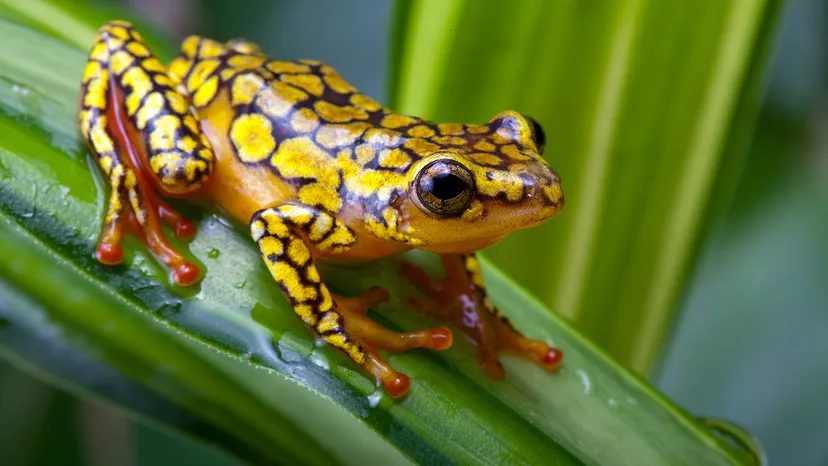
If you’ve ever seen a harlequin poison frog, you probably did a double-take. They don’t just have color; they have a personality made of neon. Their skin is a chaotic, beautiful mix of oranges, blacks, reds, and blues that looks less like animal pigment and more like someone spilled a box of watercolors on a rock. These frogs are native to the humid, dense understories of Central and South America. But that vibrancy serves a darker purpose. It’s a billboard screaming, Do not eat me. They are packing toxic alkaloids in their skin, a defense mechanism evolved to keep predators away.
Unfortunately, their flashy appearance doesn’t shield them from the real world. Habitat destruction is tearing up their forest homes, turning lush rainforests into barren land. Plus, they are vulnerable to chytrid fungus, a disease that has decimated amphibian populations globally. They are living in a shrinking, sickening world, their bright colors fading into extinction.
The Blush of the Tomato Frog
Just as striking, though in a completely different way, is the tomato frog. Found primarily in Madagascar, these little round balls of amphibian are named for their resemblance to the fruit when they puff up. But it’s their coloration that catches the eye. They can range from a pale, creamy beige to a deep, angry rust-red. The brighter they are, the more toxic they generally are—a classic example of aposematism, or warning coloration.
Tomato frogs are terrestrial, preferring leaf litter and moist soil over water. This makes them particularly susceptible to changes in ground-level humidity. When they feel threatened, they don’t just hide. They inflate their bodies, making themselves look larger and more difficult to swallow. It’s a bluff, sure, but one backed up by bitter-tasting, toxic skin secretions.
Why Color Matters More Than You Think
We often look at these frogs and see beauty. Conservationists see data points in a declining graph. The bright colors of both the harlequin and tomato frogs are not just aesthetic quirks; they are survival strategies that are failing against human-driven changes.
The harlequin frog’s specific color patterns can vary by region, which helps scientists track genetic diversity. But when populations drop, that diversity vanishes. You lose the specific blue variant in one valley, and that genetic thread is cut forever.
For the tomato frog, the challenge is different. They are often kept as pets because they are hardy in captivity. This popularity has led to over-collection in the wild, further stressing populations that are already dealing with habitat loss.
The Intersection of Beauty and Decay
It’s hard to reconcile the joy of seeing a harlequin frog’s rainbow back with the sadness of knowing their forests are burning. It’s equally jarring to think of a tomato frog, so plump and cute, being pulled from the earth to fill an aquarium.
The decline of these species is a symptom of a larger issue. Amphibians are bioindicators. They breathe through their skin. They need clean water, stable temperatures, and intact ecosystems. When they start disappearing, it’s a signal flare.
We are losing species before we’ve even fully studied them. The harlequin frog’s specific alkaloid profiles might
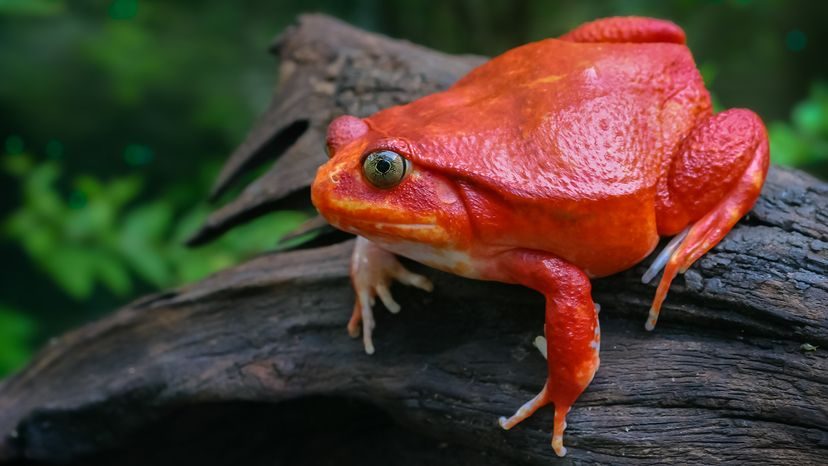
The Red Warning of Madagascar’s Swamps
Look closely at the swampy undergrowth of Madagascar. There, tucked away in the humidity, you might spot a small, round amphibian. It is bright red-orange. Almost too bright for nature. When threatened, this frog doesn’t run. It inflates its body, puffing up to look larger and more formidable.
But the real defense is chemical. The frog secretes a sticky, gluey substance from its skin. Predators get a mouthful of adhesive and quickly learn to leave the red frog alone. It is a crude, messy, but effective deterrent.
Toxicity is lower than its cousins. The famous dart frogs of South America pack a lethal punch. This Madagascar resident does not. Its poison is mild. Yet, the bright colors still work. They serve as a universal warning sign in the animal kingdom. Look here. I am not a snack. The color tells the story the chemical defense cannot fully tell on its own. It is a visual shout in a silent swamp.
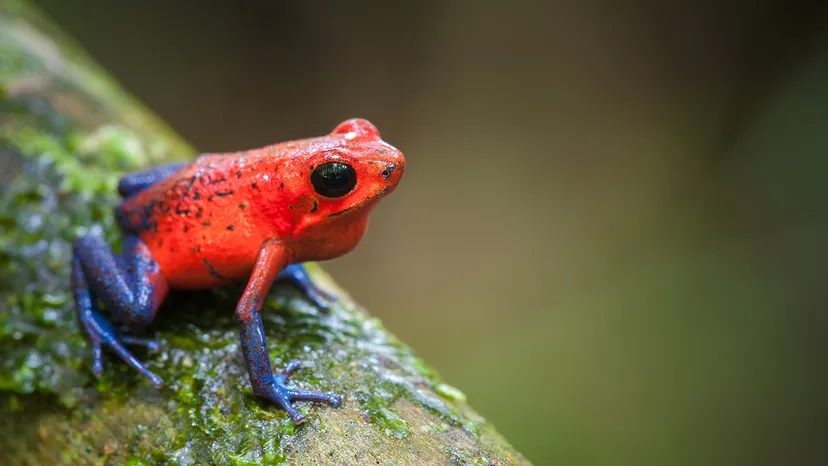
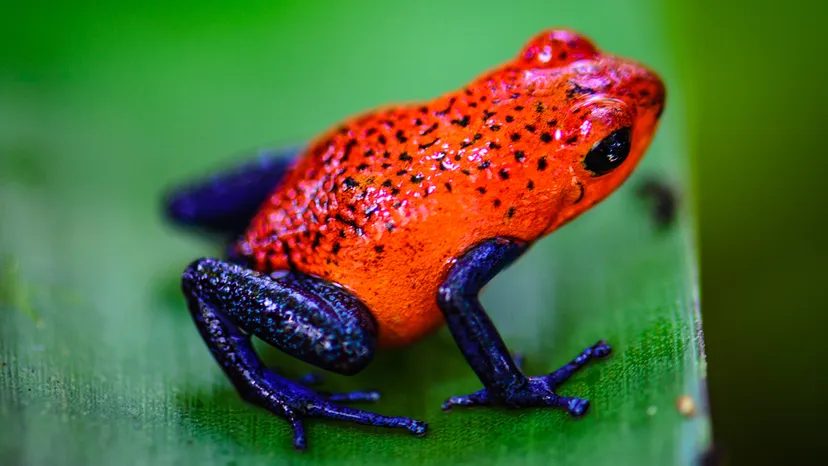
8. Strawberry Poison Dart Frog
Despite the geographic difference, this frog shares a name with its more venomous relatives. The Strawberry Poison Dart Frog is the common name for Oophaga pumilio ’s red morphs, though technically, the true poison dart frogs are a different genus. The name sticks because the resemblance is striking. Small. Bright. Deadly to inexperienced touchers, even if not instantly lethal to a determined jaguar.
In the wild, these frogs hide among leaf litter and low-hanging vines. Their red hue blends oddly with the decay, offering camouflage that only works if the predator assumes red equals “bad taste.” It is an evolutionary gamble. A gamble that pays off when the gluey secretion does its job.
The frog’s life is a delicate balance. It needs moisture. It needs cover. It needs predators that have not yet evolved immunity to its specific cocktail of alkaloids. For researchers, studying these frogs helps us understand how chemical defense evolves. How bright colors can be both a beacon and a shield.
“Bright colors in nature are rarely just for show. They are a language.”
We often think of toxicity as a binary state. Dead or alive. The reality is a spectrum. The strawberry dart frog sits somewhere in the middle. Warning enough to deter the casual predator. Not poisonous enough to be a human emergency room case. It is a survivor. Adapting. Changing colors across different islands. Red here. Blue there. Green in the mountains.
Why does it matter? Because every drop of poison in a frog’s skin is a potential clue for medicine. Alkaloids from these tiny amphibians are being studied for pain relief and cancer treatment. The gluey secretion might hold secrets for bio-adhesives. Nature’s pharmacy is open right now. We just have to know where to look.
In the swamps, the red frog sits. Waiting. Inflating. Gluing. The swamp does not care about our scientific categories. It only cares about who eats whom. And for now, the red frog stays on top of the food chain. At least as far as the small snakes and lizards are concerned.
A Study in High-Contrast Warning
If the strawberry poison-arrow frog is the playful wildcard of the arboreal world, the blue poison dart frog (Dendrobates tinctorius ) is the polished professional. It is arguably the most recognizable amphibian on the planet, boasting a coat of electric blue that seems to glow even in the dimmest rainforest understory.
This is not a natural accident. The vibrant hue serves as a stark, non-negotiable signal to predators: do not eat me. The toxicity is real, derived from the ants, mites, and beetles these frogs consume in the wild. When kept in captivity, however, their color can fade or shift, proving that their beauty is inextricably linked to their specific diet and environment.
Where to Find the Blue Giant
Unlike many of its smaller cousins, the blue poison dart frog is relatively large for a dart frog, reaching up to two inches in length. You won’t find them everywhere in Central America, though. Their range is actually restricted to parts of South America, specifically the Guiana Shield region, including parts of Guyana, Suriname, and French Guiana.
They prefer humid, low-lying tropical forests. The dense canopy ensures the humidity stays high, which is critical because their permeable skin requires constant moisture to breathe and regulate body temperature. A dry leaf is a death sentence for a dart frog.
Why the Blue Color Matters
The specific shade of blue isn’t just for show. In the dappled light of the rainforest, high-contrast colors like cyan and black are easily spotted by other animals. This is aposematism in its purest form. The pattern is unique to each individual, much like a fingerprint, which helps researchers track population health and genetic diversity.
But why blue? Evolutionary biologists suggest that in environments with plenty of green and brown foliage, a bright blue body stands out sharply. This ensures that potential predators learn the lesson quickly: blue equals bad taste, and potentially fatal levels of batrachotoxin.
Breeding and Care in Captivity
For herpetoculturists, the blue poison dart frog is a cornerstone species. Their care requirements are more demanding than many other amphibians, which is why they are often considered intermediate to advanced pets.
- Humidity: Must be maintained above 80%.
- Temperature: Between 75°F and 80°F (24°C–27°C).
- Substrate: Requires a deep, moist leaf litter layer to mimic their natural forest floor habitat.
- Enclosure Size: They are active climbers, so vertical space is just as important as floor space.
Breeding them in captivity has been successful, but it requires precise control over water quality and food sources. The tadpoles must be moved from land-based egg-laying sites to small, shallow water containers to develop, a process that mirrors their wild behavior but demands careful monitoring by the keeper.
The Bigger Picture
The blue poison dart frog is more than a pretty face in a terrarium. It is an indicator species. Their health reflects the health of the forest floor. As deforestation and climate change threaten their limited habitat, these bright blue sentinels are among the first to disappear.
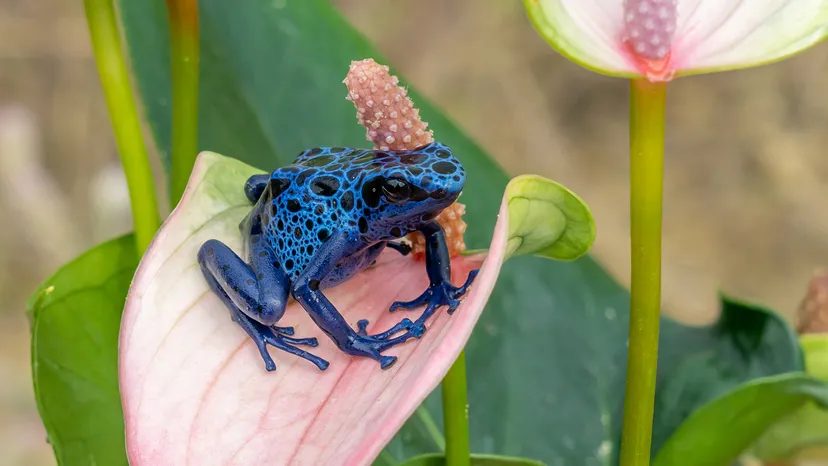
If you’ve scrolled through nature feeds, you’ve likely seen it. Bright electric blue skin. Bold black spots. It looks less like an animal and more like a splash of wet paint hopping through the rainforest floor. Native to the wilds of Suriname and Brazil, this amphibian is a favorite subject for photographers and conservationists alike. But its striking appearance hides a dangerous reality.
### Identifying the Waxy Monkey Tree Frog
This species is scientifically known as Phyllomedusa bicolor, though most people know it by its descriptive common name. The “waxy” in its title comes from a unique biological defense mechanism. Unlike many frogs that secrete mucus to stay moist, this one produces a waxy substance from glands on its back.
Why does this matter? In the humid tropics of South America, dehydration is a constant threat. The wax acts as a barrier, locking in moisture. It allows the frog to remain active on land for longer periods without needing to return to water. This adaptation is key to its survival in the dense canopy and forest floor habitats of the Amazon basin.
The visual contrast is immediate. The bright blue skin is not just for show. It serves as aposematic coloration—a warning signal to predators that this frog is toxic. The black spots break up its outline, offering a bit of camouflage against the dappled light of the forest, but the blue is unmistakable.
Understanding the Toxicity
The toxicity of the Waxy Monkey Tree Frog is a complex chemical defense. Researchers have identified several alkaloids in its skin secretions. These compounds can cause intense pain, muscle spasms, and in some cases, more severe physiological reactions in potential predators.
For humans, the risk is generally low unless there are open wounds or if the secretions come into contact with mucous membranes. However, handling these frogs in captivity requires care. The waxy coating and skin secretions can cause irritation. It’s a reminder that in the rainforest, beauty is often a shield.
The frog’s behavior also plays a role in its defense. It is arboreal, meaning it spends much of its time in trees and bushes. This reduces encounters with ground-based predators. When threatened, it may flatten its body against a leaf, making itself harder to spot and swallow.
Conservation and Habitat
While not currently listed as critically endangered, the Waxy Monkey Tree Frog faces threats from habitat loss. The expansion of agriculture and deforestation in Suriname and Brazil encroach on its natural range. Protecting these forested areas is essential for the species’ long-term survival.
The frog’s role in the ecosystem is that of both predator and prey. It feeds on insects and other small invertebrates, helping to control their populations. In turn, it serves as food for birds, snakes, and larger amphibians that have evolved resistance to its toxins.
Seeing this frog in the wild is a rare treat. It’s a testament to the biodiversity of the Amazon. Every bright blue hop is a reminder of the intricate and often dangerous balance of life in the rainforest.
Why It Captivates Us
The Waxy Monkey Tree Frog captures attention because it defies expectations. It looks fragile, yet it is armed with chemical defenses. It appears delicate, yet it is adapted to survive in harsh conditions. It

The Chaco Glass Frog’s Dry Survival Strategy
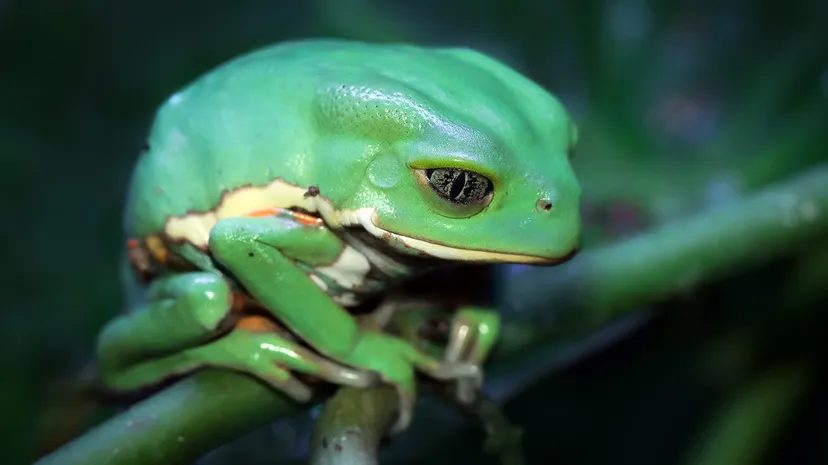
Most frogs are bound to the water. They need it to breathe, to lay eggs, to keep their skin from cracking. This species breaks that rule. Its skin isn’t just moist; it’s coated in a waxy layer that seals in moisture. This adaptation lets it survive in air that would desiccate a typical amphibian.
The color is understated. A soft, muted green. It doesn’t scream for attention. It blends into the leafy canopy of the Chaco region. Here, it shares territory with both humid rainforests and adjacent dry forests. This dual habitat use is rare. Most tree frogs stick to one environment. This one navigates the transition between wet and dry without losing its grip.
It hides in plain sight. The waxy coating is a shield against dehydration. The green hue is a shield against predators. Together, they allow this frog to occupy a niche that most of its relatives cannot touch.
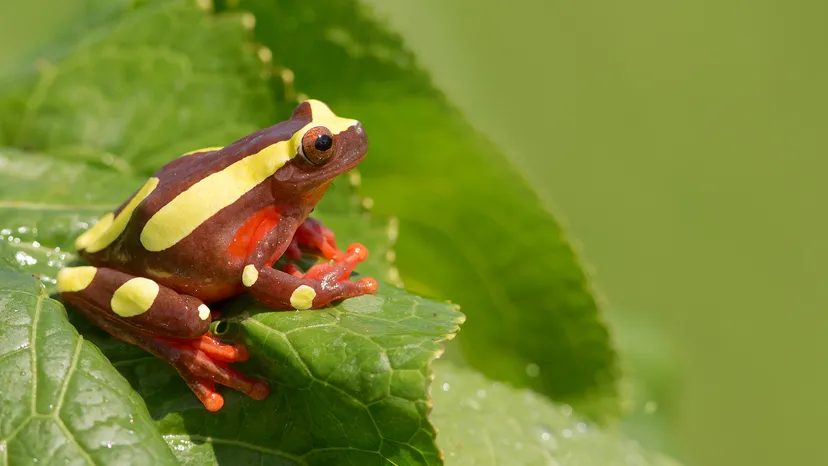
11. Clown Tree Frog
The Vivid Warning of the Splendid Leaf Frog
If you stumble upon this tiny amphibian in northern South America, your first instinct is probably to pick it up. Don’t. That white skin, dappled with vibrant orange or yellow spots, isn’t just for decoration. It’s a biological billboard.
This small and adorable frog from northern South America has a white body splashed with orange or yellow spots. Its bright coloring and tiny size make it look almost toy-like. Like other frogs in tropical regions, it helps keep insect populations under control.
The Splendid Leaf Frog (Phyllomedusa bicolor ) uses that high-contrast palette to signal something dangerous to predators. In the wild, bright colors often mean “I taste terrible” or “I’m poisonous.” It’s an evolutionary shortcut. Why waste energy hiding when you can stand out and say, “Stay back”?
This strategy works for the Splendid Leaf Frog because it lives in environments where visual predators are abundant. Birds and snakes are always watching. The white base acts like a flash paper, drawing the eye, while the orange spots add complexity. It’s not just a splash of color; it’s a message.
But why does this matter to you? Beyond the aesthetic appeal, these frogs are indicators of ecosystem health. They are sensitive to changes in water quality and habitat loss. When their populations thrive, the rainforest is likely doing well too. When they vanish, it’s a red flag.
So next time you see a picture of this frog, remember: it’s not just cute. It’s a survivor. And its bright colors are a shield.
“In the rainforest, being pretty can be deadly if you’re not prepared.”
The Splendid Leaf Frog doesn’t prepare with claws or speed. It prepares with chemistry. And with color.
It’s a reminder that nature’s most beautiful things are often the most dangerous.
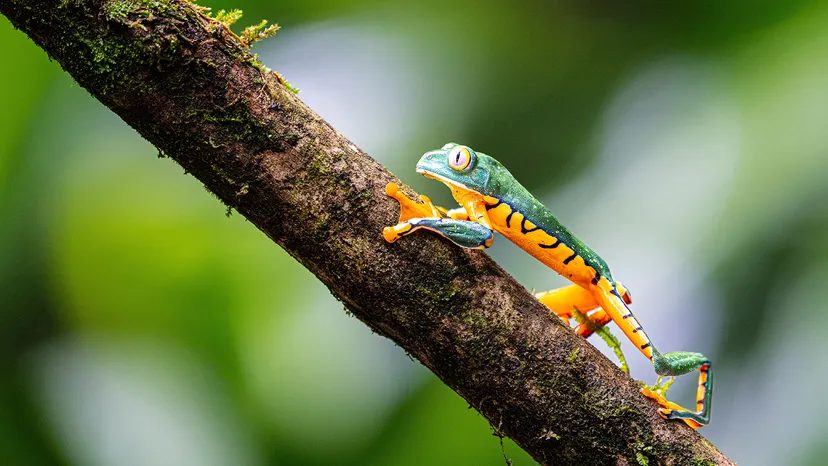
The Lime-Green Ghost of the Canopy
*
It is hard to spot something that refuses to be seen. That is the reality for Cruziohyla calcarifer, a frog so elusive it might as well be part of the rainforest’s architecture rather than its wildlife. You know it is there because of the flashes of color that interrupt the green gloom. Lime green skin. Blue limbs. A bright yellow stripe running down the side. It looks like a mistake by nature, a splash of neon paint left on the brush by an impatient artist.
But it is not a mistake. It is a survival strategy.
Most people never see this frog. It stays up high in the rainforest canopy, far away from the ground where the heavy boots and broken branches live. This vertical distance keeps it safe from many predators. It also keeps it hidden from humans. Conservationists have started focusing on it precisely because it is rare. If we lose it, we lose a piece of the puzzle that keeps the canopy healthy.
Amphibians as Living Art
Frogs are often treated as background noise in the jungle. They are just the distant cousins of reptiles. Chorus. Silence. Chorus. But look closer and they are living art. Their colors are not just for show. They are signals. Warnings. Invitations.
Yet, many of these colorful species are facing extinction. The habitat shrinks. The climate shifts. The water dries up. When a frog like Cruziohyla calcarifer disappears, it takes more than just a pretty face with it. It takes a role in the ecosystem. It takes a genetic thread that might have held the forest together.
Learning about them is not just an academic exercise. It is an act of protection. You cannot save what you do not know exists.
Fact-Checking and Creation
This story was not written in a vacuum. It was created in conjunction with AI technology. The algorithm can pull facts. It can structure sentences. It can suggest connections. But it does not know the weight of a disappearing species. That is where the human element steps in.
A HowStuffWorks editor reviewed every detail. They checked the sources. They verified the scientific names. They ensured the tone was right. The result is a piece that is fast, accurate, and real. Not a corporate press release. Not an academic paper. Just the truth, told clearly.
Why does this matter? Because the canopy is collapsing. Piece by piece. If we want to keep the art alive, we need to look up. We need to see the lime green. The blue limbs. The yellow sides. We need to recognize that rarity is not just a curiosity. It is a cry for help.
The forest is quiet. But if you listen closely, you can hear the splash of color.


