


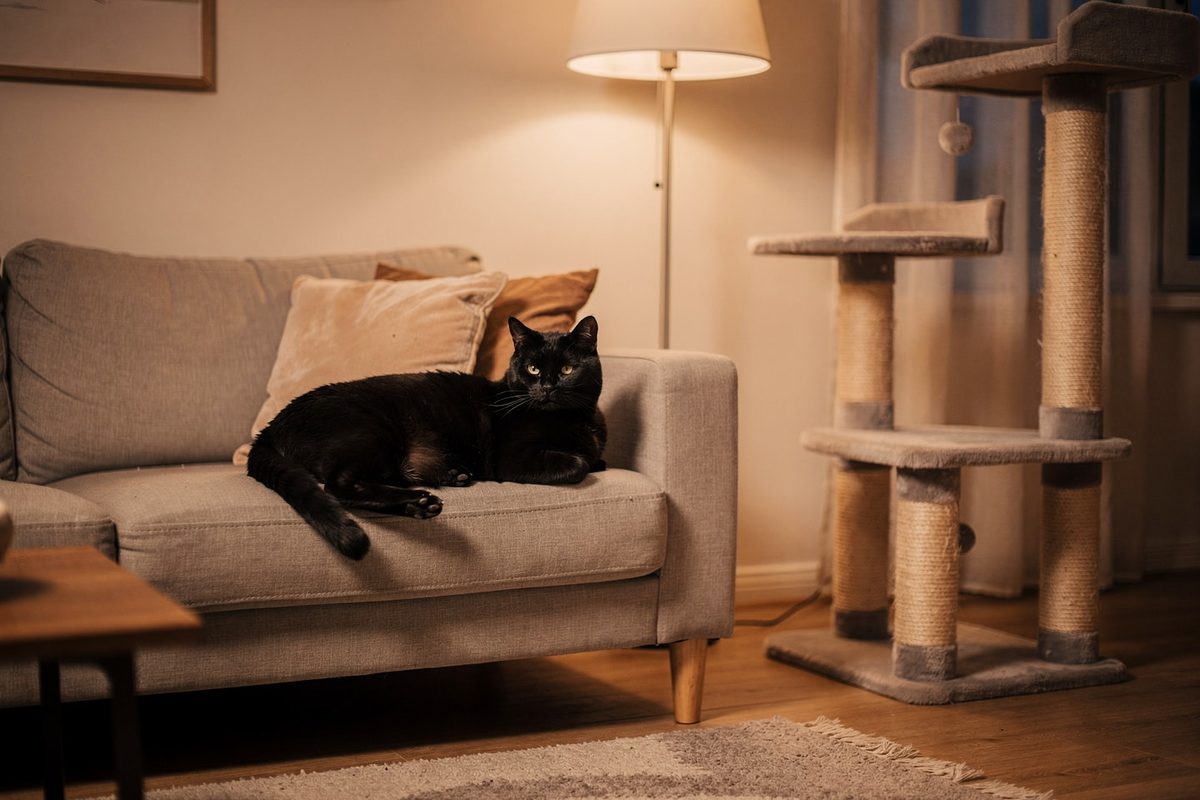
Christmas is approaching. The urge to buy your cat a multi-level palace with hanging nooks and plush cushions is overwhelming. You imagine the Instagram-worthy shot of your tabby lounging on a sisal-wrapped perch.
Then you set it up.
It sits there. Perfectly assembled. Undisturbed.
Meanwhile, your cat is sprawled across the living room sofa, looking bored and regal. Why does this expensive furniture fascinate owners but fail to interest the actual user? It’s not a mystery. It’s a mismatch of needs.
The cat tree vs. sofa preference debate
Buying a cat tree does not guarantee adoption. Many owners are shocked by this reality. They expect their pet to be thrilled by new furniture. It doesn’t work that way.
All cats do not find their satisfaction in these trendy items.
The problem is often a failure to target the animal’s natural instincts. Cats are individuals. Their preferences are subtle and vary wildly. If the object doesn’t align with their specific behavioral drive, they will ignore it.
When furniture fails feline instincts
A cat tree only works if it triggers specific instincts: climbing, high-vantage observation, scratching, and hiding.
If the structure is too small, wobbly, or lacks hiding spots, it gets rejected. No hesitation.
Material matters, too. A synthetic trunk never feels like a real rug or the familiar fabric of a couch. Cats need texture that satisfies their tactile needs. If it feels fake, they don’t want it.
Location and scent dominance
We forget that cats are attached to their sensory markers.
An isolated cat tree in a cold corner remains decorative. It is just an object. Scent is as important as sight.
The sofa smells like “family.” It holds the warmth of the hearth and the repeated contact of humans. It is saturated with familiar pheromones. A brand-new tree coming out of a cardboard box lacks this history. It smells like strangers.
It takes time to tame a new object. Most cats won’t wait. They go where the scent is familiar.
Routine and conservativism
Cats are routine-driven animals. They are often conservative.
Habits formed in kittenhood stick. Introducing a large, unfamiliar object can be jarring. Some cats simply prefer flat surfaces or spots that retain human heat and odor.
Every cat has its own territory. Some choose the tree. Many choose the couch. Neither is wrong. It’s just preference.
Alternatives that actually work
You don’t need a massive structure to satisfy a cat’s need for elevation and security.
Existing furniture often does the job better. A windowsill ledge, a sofa back, or an accessible shelf can become a haven. Add a thick blanket or a soft cushion, and you’ve created a safe zone.
Why the sofa becomes the favorite territory
The sofa is the ultimate winter sanctuary for cats. It offers:
- Proximity to family (crucial during holidays).
- Soft fabric soaked in reassuring scents.
- A central vantage point to observe foot traffic.
It requires no learning curve. It is already the heart of their territory. Why complicate things with new gear?
Creating stimulation without buying gear
Behaviorists suggest working with what you have. You can create an enriched environment without spending a fortune.
Try these adjustments:
- Create multiple levels: Install sturdy shelves near a window. Let them climb.
- Offer hiding spots: Use open boxes, baskets under furniture, or fabric tunnels.
- Encourage scratching: Place thick rugs, wooden logs, or doormats near high-traffic areas or the sofa.
- Respect boundaries: Never force a cat to use an object. Drop treats or an old sweater with their scent on it near the new item to encourage discovery.
Every cat needs its own kingdom
The trend is clear. Don’t spend a fortune on sophisticated accessories if the cat shows no interest.
The goal is to provide opportunities for climbing, hiding, and observing. You can achieve this by repurposing existing furniture, using cardboard boxes, or positioning cushions strategically.
Signs your cat is happy without a tree
A content cat is easy to recognize. It plays. It climbs. It kneads different surfaces. It sharpens its claws in varied locations. It alternates between hiding and watching. It approaches humans without stress.
It sleeps deeply and calmly.
There is no need to worry if the tree is ignored. Feline happiness relies on diversity and comfort, not specific furniture.
The final word
Between holiday stress and couch laziness, it might be time to rethink your interior design choices.
A cat tree is not mandatory. Not if your cat has other ways to climb, hide, and express itself.
The secret lies in observation. Understand your cat’s needs. Give them what they actually want. That is how you build a harmonious life together.
Or don’t. If they prefer the sofa, let them have it.


