In hospitals across Nigeria and much of sub-Saharan Africa, a silent crisis unfolds daily. Children arrive with severe diarrhea, a condition that can rapidly lead to dehydration and death. Clinicians act quickly to treat symptoms, but they often do so blind to the cause. Without affordable, accessible diagnostic tools, doctors are forced to guess at the underlying infection, leaving treatment decisions incomplete and outbreak tracking nearly impossible.
“Most of the time, we just treat,” says virologist Margaret Oluwatoyin Japhet. “We do not really know what caused the infection because diagnosis is difficult.”
Japhet, a researcher at Obafemi Awolowo University in Nigeria, is changing this landscape. She has developed a rapid, low-cost diagnostic kit designed to identify rotavirus—the leading cause of severe diarrheal disease in young children—without the need for complex laboratory infrastructure. This innovation addresses a critical gap in global health: the disconnect between vaccine availability and the diagnostic tools needed to monitor their effectiveness and manage outbreaks.
The Rotavirus Burden in Africa
Despite the existence of vaccines, rotavirus remains a major killer of children under five. According to the World Health Organization, rotavirus caused an estimated 128,500 deaths globally in 2016, with over 100,000 of those deaths occurring in sub-Saharan Africa.
In Nigeria alone, rotavirus accounts for nearly half of all diarrhea-related hospitalizations in children under five and contributes to an estimated 48,000 deaths annually. While vaccination coverage has improved—with 38 out of 47 WHO African region countries introducing the vaccine by 2023—access remains uneven. Many children miss doses, and vaccines cannot fully eliminate transmission.
This creates a dangerous blind spot for health systems. Without widespread testing, it is difficult to:
– Track the spread of outbreaks in real-time.
– Assess how well vaccines are performing against circulating strains.
– Identify why some children become severely ill despite vaccination.
Designed for the Frontlines
Traditional rotavirus diagnostics, such as ELISA (enzyme-linked immunosorbent assay), require stable electricity, refrigeration, trained personnel, and reliable supply chains. These resources are scarce in many Nigerian hospitals.
“In developed countries, when people are producing kits, they already have it at the back of their mind that there is electricity, that there is a refrigerator,” Japhet explains. “But in Nigeria, you can count how many homes even have a mini freezer.”
Japhet’s solution is built specifically for low-resource settings. The kit uses cotton swabs and nanobeads coated with antibodies that recognize the rotavirus. The process is simple:
1. A user dips a prepared cotton swab into a stool sample.
2. The swab is then dipped into a solution containing the antibody-coated nanobeads.
3. If rotavirus is present, it binds to the antibodies, causing the nanobeads to attach and the swab to turn blue.
The kit requires no complex machinery, minimal training, and can be stored in a standard cooler at about 4°C. It is designed to be used at the child’s bedside, providing rapid results without sending samples to a distant lab.
Superior Sensitivity and Real-World Validation
A key challenge with many rapid diagnostic tests is low sensitivity—they often miss infections where the virus load is low. Japhet’s team addressed this by testing their nanobead-based kit against standard methods, including ELISA and PCR (polymerase chain reaction).
In a study published in Methods and Protocols in 2025, the team found that their kit performed comparably to or better than existing tests:
– Japhet’s Kit: 88% sensitivity (correctly identifying infected children).
– Standard ELISA: 60% sensitivity.
The test has also been validated in real clinical settings across three Nigerian hospitals, ensuring it works outside the controlled environment of a research lab. Chukwubike Chinedu, a rotavirus specialist at the University of Nigeria Teaching Hospital, notes that the kit is faster and easier to use than ELISA. However, he cautions that while it is an innovative tool for detection, it may not detect all rotavirus types and thus should complement, rather than fully replace, other diagnostic methods.
Beyond the Lab: Mentoring the Next Generation
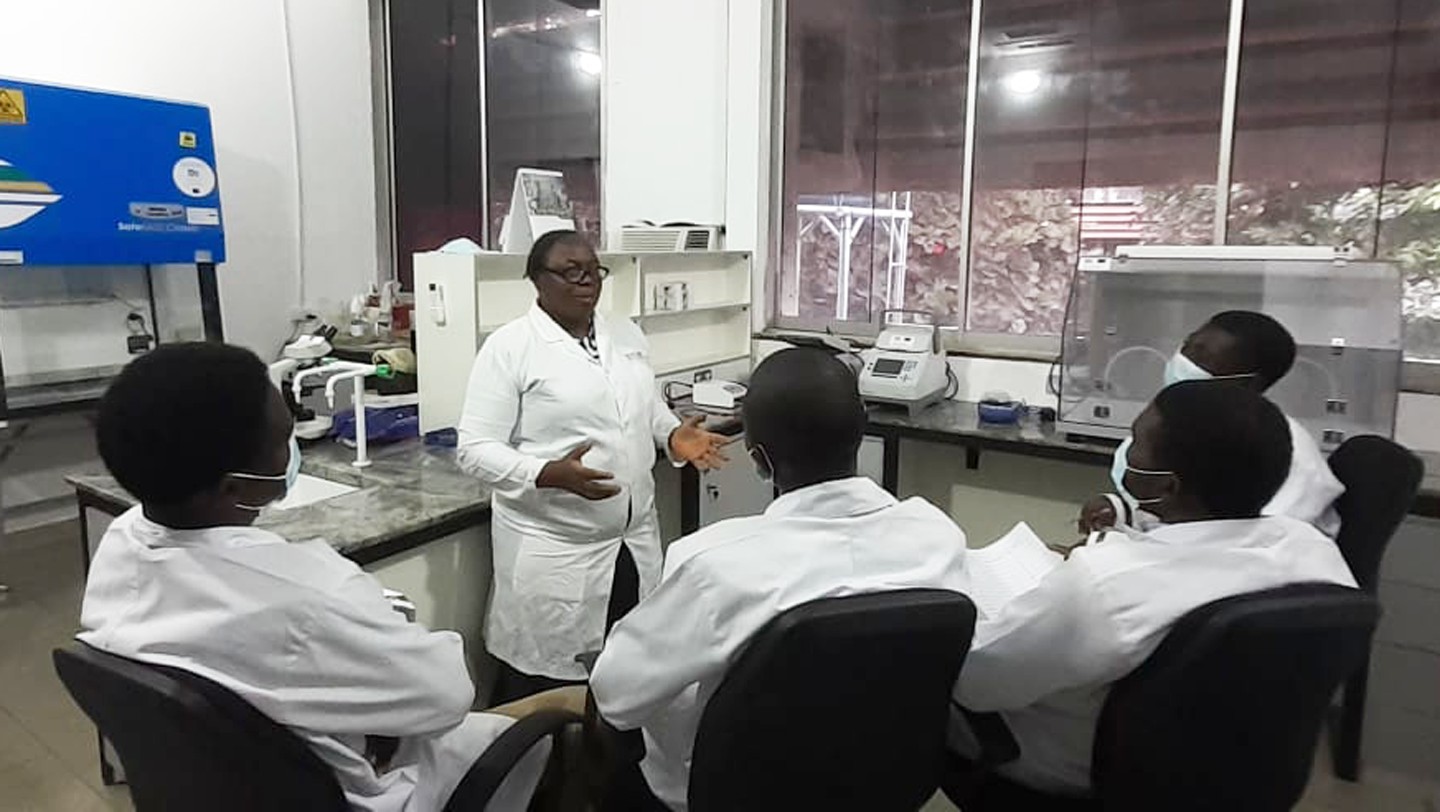
Japhet’s impact extends beyond her invention. She has established a molecular research lab in Nigeria and is actively training a new generation of scientists to tackle infectious diseases in low-resource settings.
Her students, such as Adebola Owolabi and Temiloluwa Omotade, credit Japhet with fostering scientific resilience and integrity. Owolabi, now a Ph.D. student at SUNY Upstate Medical University, recalls how Japhet’s belief in her potential transformed her career. Omotade, a Ph.D. student at the University of New Mexico, highlights Japhet’s commitment to rigorous problem-solving and honest reporting.
“She doesn’t give up easily,” Omotade says. “Even when initial attempts failed, Japhet remained committed to finding solutions.”
The Path Forward
While the technology is promising, scaling it requires significant investment and partnerships. Japhet notes that securing a steady supply of antibodies is crucial for keeping the kit affordable for local clinics and district hospitals. Furthermore, post-pandemic supply chain disruptions have made standard tests like ELISA more expensive and harder to access, increasing the urgency for local alternatives.
Testing is not a substitute for prevention, but it is essential for understanding the disease landscape. As Japhet emphasizes, “Without testing, health systems lack the data needed to understand how rotavirus is behaving.”
The development of this low-cost diagnostic kit represents a vital step toward closing the gap between vaccination and surveillance in Africa. By enabling accurate, bedside detection of rotavirus, this tool empowers clinicians to make informed decisions, helps public health officials track outbreaks, and ultimately supports the fight to reduce child mortality from diarrheal diseases.