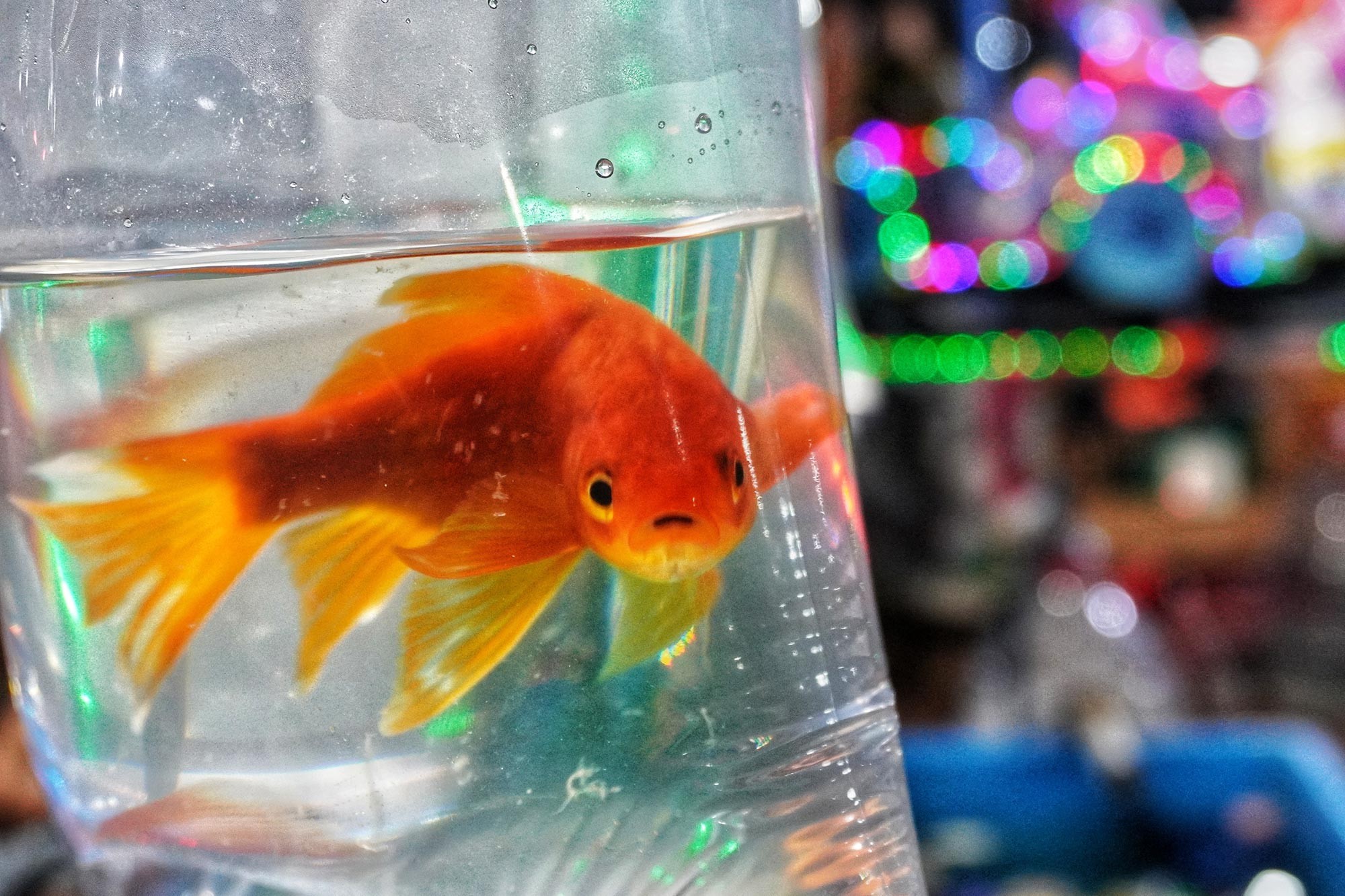
While often viewed as gentle, ornamental pets, goldfish (Carassius auratus ) possess the potential to act as powerful ecological disruptors. New research published in the Journal of Animal Ecology warns that when these fish enter wild waters, they can trigger a “regime shift”—a process where an entire ecosystem collapses and reorganizes into a degraded, less stable state.
The Science of Ecological Disruption
Researchers from the University of Toledo and the University of Missouri conducted controlled outdoor experiments known as mesocosm studies. By simulating real-world lake environments, the team was able to observe how goldfish interact with different water types: oligotrophic (nutrient-poor) and eutrophic (nutrient-rich) systems.
The findings reveal that goldfish do not merely inhabit an ecosystem; they actively transform it through several destructive mechanisms:
- Degradation of Water Quality: Goldfish stir up bottom sediments, leading to increased turbidity (cloudiness) and a rise in suspended particles. This is particularly severe in nutrient-rich waters.
- Collapse of the Food Web: The study found a significant decline in essential small organisms, including snails, amphipods, and zooplankton. These invertebrates are the bedrock of aquatic life, providing food for countless other species.
- Competition with Native Species: Goldfish compete directly with local fish for food and habitat. This competition results in a decline in the “body condition” of native fish—a critical metric that indicates their ability to survive, grow, and reproduce.
- Universal Impact: Crucially, the research showed that no freshwater environment is immune. Whether a lake is nutrient-poor or nutrient-rich, the presence of goldfish leads to measurable ecological damage.
Understanding the “Regime Shift”
One of the most alarming aspects of this research is the concept of the regime shift. In ecology, this occurs when an ecosystem reaches a “tipping point.” Once goldfish push an environment past this threshold, the system undergoes a rapid, fundamental change.
Once an ecosystem has shifted into this new, degraded state, it becomes incredibly difficult—and often prohibitively expensive—to restore it to its original health.
Why This Is Happening
The rise of goldfish as an invasive threat is driven by two main factors:
1. The Global Pet Trade: Goldfish are among the most widely distributed ornamental fish in the world, making them highly mobile across continents.
2. Human Intervention: The “act of kindness” of releasing a pet into a local pond or river can inadvertently introduce a high-impact predator into a fragile environment. Additionally, flooding events can wash aquarium fish into natural waterways.
Moving Toward Prevention
To combat this growing issue, scientists and experts are calling for a multi-pronged approach:
- Policy Changes: Natural resource managers are urged to classify goldfish as a high-priority invasive species to trigger better monitoring and control efforts.
- Public Education: There is an urgent need to inform pet owners that releasing aquatic animals is not a harmless gesture, but an ecological risk.
- Responsible Rehoming: If you can no longer care for a goldfish, experts recommend returning them to a pet store, finding a new owner within the hobby, or contacting local wildlife agencies rather than releasing them into the wild.
“Releasing a goldfish into the wild might be seen as an act of kindness, but it can turn into a major ecological threat,” warns Dr. William Hintz, lead investigator of the study.
Conclusion
Goldfish are highly efficient disruptors capable of fundamentally altering freshwater habitats and decimating native biodiversity. Protecting our natural waterways requires both proactive management by scientists and responsible decision-making by pet owners.