Astronomers have successfully mapped a colossal galactic structure that has remained largely invisible for years. The Vela Supercluster, once a mysterious “unknown land” hidden behind the thick veil of our own galaxy, has been revealed to be one of the most massive entities in the known universe.
The “Zone of Avoidance” Problem
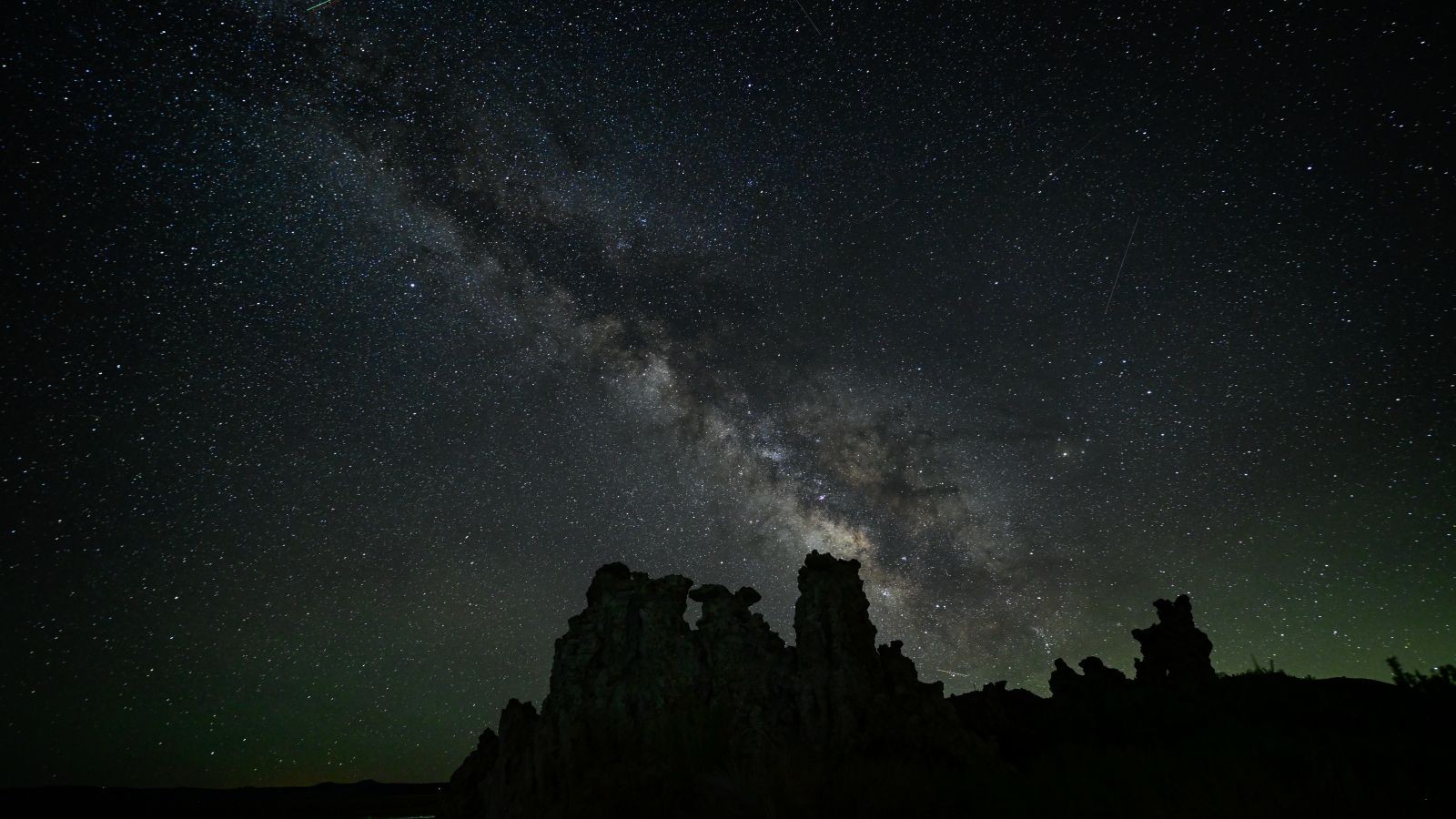
For decades, a significant portion of the night sky has been a blind spot for researchers. This region is known as the “Zone of Avoidance,” a strip of the sky obscured by the Milky Way’s own dense disk of stars, gas, and dust. Because this dust layer thickens toward the galactic plane, it acts as a cosmic curtain, blocking visible light and making it nearly impossible to see what lies on the other side.
This lack of visibility creates a major gap in our understanding of the universe’s large-scale structure. To understand how the universe evolves, astronomers must be able to see the “big picture,” but the Milky Way has effectively been hiding some of its largest neighbors from view.
A Massive Discovery: Vela-Banzi
Initially discovered in 2016 and tentatively named Terra incognita, the structure has now been formally mapped and given a new name: Vela-Banzi. In Xhosa, a language spoken in South Africa—where much of the research was conducted—the name translates to “revealing widely.”
The scale of this discovery is staggering:
– Size: The supercluster spans approximately 300 million light-years across—roughly 3,000 times the width of the Milky Way.
– Mass: It contains a mass equivalent to roughly 30 quadrillion suns.
– Composition: It consists of at least 20 galaxy clusters, each housing hundreds or thousands of individual galaxies.
– Structure: The mass is concentrated into two massive cores that are currently moving toward one another.
In terms of cosmic hierarchy, Vela-Banzi is more massive than Laniākea (the supercluster that houses our own galaxy) and ranks as a close second only to the Shapley Supercluster, which is widely considered the largest known supercluster.
How Astronomers Pierced the Veil
Since visible light cannot penetrate the dust of the Milky Way, the research team had to rely on alternative methods to “see” the structure. By combining 65,000 existing galaxy distance measurements with 8,000 new redshift observations, they were able to calculate how fast galaxies are moving away from Earth.
The breakthrough relied heavily on the MeerKAT telescope in South Africa. Unlike optical telescopes, MeerKAT detects infrared radiation from massive clouds of hydrogen gas. This allowed researchers to track the movement of galaxies within Vela by observing their radio emissions, bypassing the dust that blocks visible light.
Why This Matters for Cosmology
Mapping these gargantuan structures is not just about cataloging new objects; it is about testing our fundamental understanding of physics.
To validate current cosmological models —the mathematical frameworks that describe how the universe began and how it expands—astronomers need two critical pieces of data: the size of large-scale structures and the speed at which they move.
“To understand the one, we need to know the other,” explains study co-author Renee Kraan-Korteweg. “And if we have both, we will be able to check if we can reconcile these observations with the models of the universe.”
While future, more powerful radio telescopes may provide even clearer maps, some parts of the supercluster may always remain partially obscured, as not all galaxies contain enough detectable hydrogen to be seen through the dust.
Conclusion: The mapping of the Vela-Banzi supercluster provides a crucial missing piece of the cosmic puzzle, helping scientists bridge the gap between what we can see and how the universe actually functions on its largest scales.