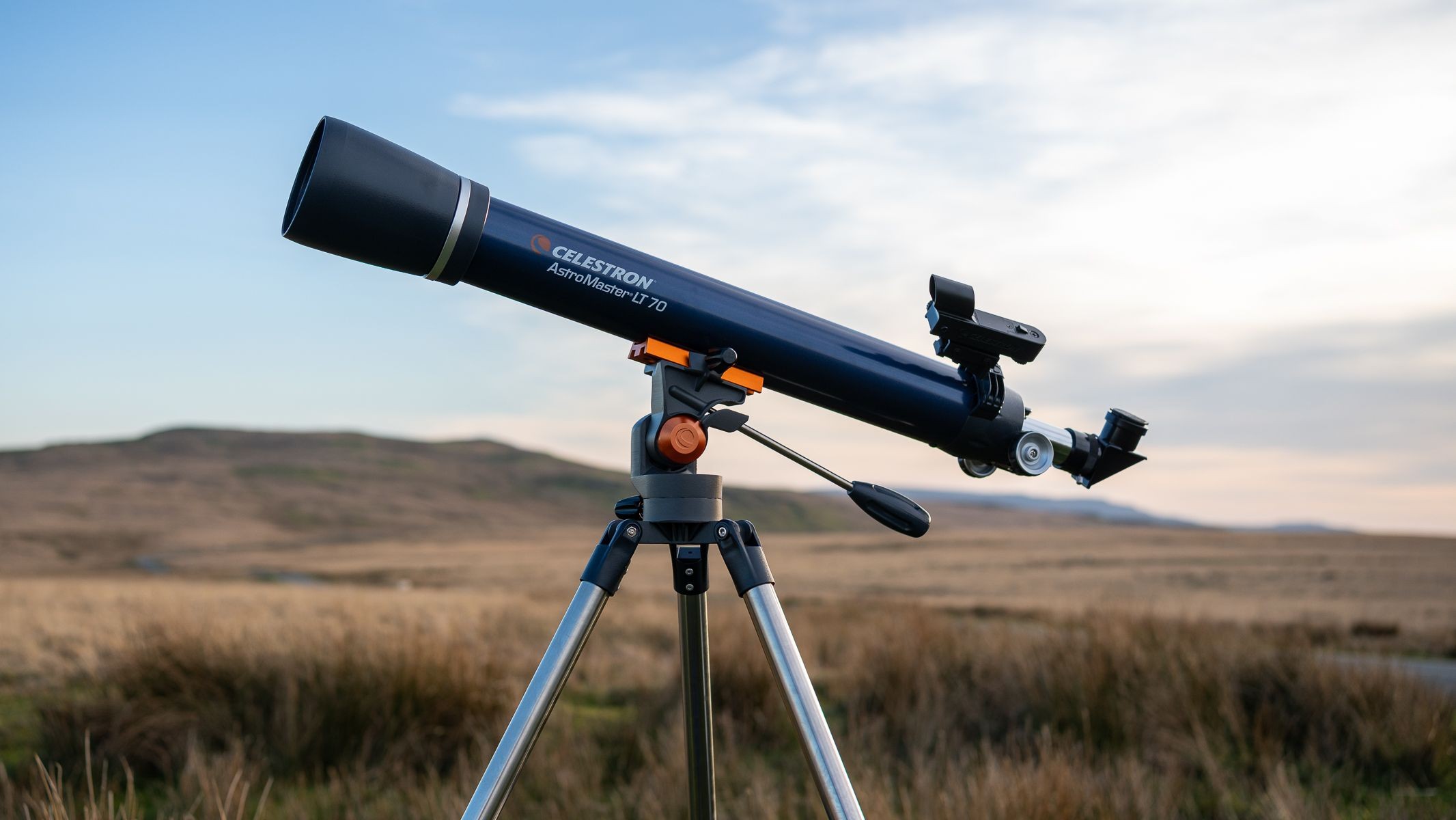
We looked at Celestron’s beginner scopes recently. Two models, really. The StarSense Explorer LT and this one. The AstroMaster LT 70Az. They look the same, but there’s a split.
The AstroMaster has a longer focal length. It wins on planet detail. The StarSense uses your phone to hunt for stars, but the AstroMaster? You hunt yourself.
It’s the “learn it yourself” approach.
Simple setup. Traditional sky gazing. Steep learning curve for sure. But the portability saves it. It fits in a backpack, fits in a kid’s room, fits your budget.
Build & Feel
Lightweight.
That’s the first thing you notice. The second thing is the mount. An alt-azimuth design that moves up, down, side-to-side. Feels like a camera tripod. Not a lab instrument.
This is good if you’re scared of tech. It’s terrible if you wanted something solid.
The tripod legs adjust. Good for sharing. But the whole rig wobbles. Just a little shake when you touch the focus knob. Typical for this price bracket, sure. Acceptable, maybe. It’s a no-frills design because frills cost money. You assemble it in minutes. No tools required. Just twist, click, and point it at the dark.
Performance
The Moon.
That is where this telescope lives. Crisp focus, lots of texture, hours of just staring at craters. It does the Moon right.
Move to Jupiter. You’ll see the bands. You’ll spot the Galilean moons. It looks small, yes, but it’s there. Saturn? The rings appear, though fine details get muddy fast.
Go deeper. Here’s the problem.
Deep sky objects like the Orion Nebula show up. They’re bright enough. But don’t expect Hubble photos. It’ll be faint, fuzzy, underwhelming if your expectations are online-based. Push the magnification? The image falls apart. The mount shakes when you breathe too hard. Point it high in the sky for Jupiter late in the night and it might droop. It’s decent for what it is, just has no headroom left.
The Manual Labor
There are no buttons here.
No electronics. No GoTo feature. No hand controllers beeping at you. Everything is manual. You turn the handle. You look through the red dot finder. You align the two.
It sounds romantic until 11:00 PM.
Finding a dim galaxy takes patience. The red dot is basic, needs calibration. Once lined up, it’s okay for bright targets. Useless for anything faint. The single control handle on the mount is simple but jittery. Tiny adjustments feel like fighting a sticky door. No slow-motion controls, either. Keeping a planet centered requires wrist strength and steady hands.
Verdict
Buy it if you’re broke.
Or if you’re teaching a teenager the basics of the night sky. It’s cheap. It’s simple. It shows you planets without making you read a manual thicker than a phonebook. The frustration is the point, honestly.
You’ll learn the sky. You’ll understand the mechanics. But you’ll outgrow it fast.
The mount fights you. Finding things feels like a chore after a while. If you lack patience, this scope will feel like punishment. If you love the struggle, it’s a start. Just know you’ll probably want better soon.
Who else remembers what it was like to actually find Polaris before Google told them where it was? 🌌