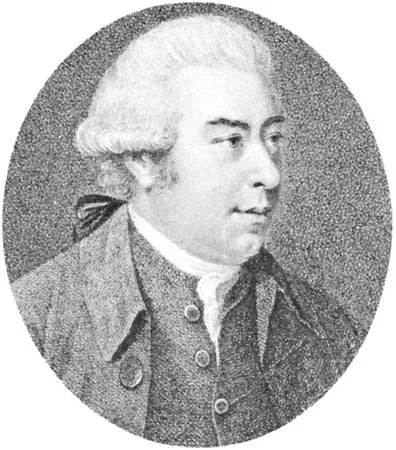
He was the king of the British branch of the Enlightenment. Sir Joseph Banks didn’t just study nature; he engineered its spread across the empire. Born in London on February 13, 1743, he inherited a fortune that gave him the freedom to travel, collect, and eventually dominate academia for decades. When he died at Isleworth on 19 June 1820, he left behind a changed landscape of British science.
Banks was a product of the traditional elite. Harrow School, Eton College, then Christ Church College, Oxford 1760–1763. He left school without a degree, probably because his actual education took place elsewhere. He took over the family property in 1761 and immediately used it for exploration. His first trips were not random vacations. In 1766 he traveled to Newfoundland and Labrador. Then came the great voyage: the world voyage with Captain James Cook in 1768–1771. He also visited Iceland in 1772. Each trip ended with boxes full of specimens. Every specimen was cataloged, pressed, or preserved.
His obsession wasn’t just curiosity. It was economics. Banks looked after investments that Britain could make money from. He insisted on bringing useful species to new areas. This was not harmless botany. It was a colonial strategy disguised as science. He wanted plants that could thrive in Britain’s colonies, reducing dependence on foreign imports. His network became the driving force behind these efforts. As honorary director of the Royal Botanic Gardens, Kew, he sent collectors to remote corners of the world. His home became a center where ideas were exchanged as freely as plant specimens.
The political side of Banks was less flattering. He was President of the Royal Society from 1778 until his death in 1820. That’s forty-two years. A long enough time to change an institution. He raised the status of science in Britain. They maintained relationships with foreign scientists and broke off Isolationist tendencies. But he also centralized power. Many colleagues accused him of being too controlling. One even called him a “despot.” He didn’t just lead; he ruled. Nevertheless, the honors kept piling up. Baronet in 1781. Knight Commander of the Bath in 1795. Member of the Privy Council in 1797.
His scientific contributions were special and often forgotten. In 1805, he proposed a connection between wheat rust and the barberry fungus. This was a breakthrough in the understanding of plant disease cycles, although the full mechanism was not understood until much later. He also argued that marsupial mammals were more primitive than placental mammals. At the time, this was a bold claim that challenged established views of mammalian evolution. It wasn’t just taxonomy; it was a statement of biological hierarchy.
Physical evidence of his work has survived. His herbarium is now part of the British Museum. So is his library, a vast collection of natural history works. Together they form one of the most important scientific archives of all time. Then there is Banks’ Florilegium. This was a collection of botanical engravings based on drawings made by the Swedish botanist Daniel Solander during Cook’s voyage. It took more than two