Matt Damon didn’t just walk on Mars. He survived it. That’s the hook. The rest is history. Ridley Scott directed the hell out of it. Drew Goddard wrote the screenplay. It is based on Andy Weir’s novel. Same name. Same premise. Different medium. The result is pure sci-fi adventure. Released in 2015. It changed how we think about space travel. And problem-solving.
The Science Behind the Story
Mark Watney is an astronaut. Stranded. Alone. On the Red Planet. He has to use botany. Engineering. And sheer stubbornness to stay alive. The movie does not shy away from the science. It embraces it. Watney talks to himself. He logs his survival. He treats the planet like a garden. A hostile, deadly garden. But a garden nonetheless. This focus on practical solutions over dramatic heroics is what sets it apart. You don’t see flashy laser battles. You see potatoes. Lots of potatoes.
The Martian is a testament to human ingenuity under extreme pressure.
Why It Resonates With Viewers
It’s not just about staying alive. It’s about the teamwork. Back on Earth. The people involved are working around the clock. NASA. JPL. Private companies. They are all trying to bring him home. The film shows the bureaucracy. The politics. The risk. It’s a puzzle. And everyone is trying to solve it. The tension builds. Not from aliens or monsters. From physics. From lack of oxygen. From hunger. The stakes are real. The science is solid. The acting is grounded. Matt Damon carries the weight. He makes you believe he’s really there. Really suffering. Really fighting.
A New Era for Space Films
Before The Martian. Space movies were often about discovery. Or horror. This one is about survival. And humor. Dark humor. Watney jokes while he’s dying. It keeps the tone light. Even when the situation is dire. This balance is key. It makes the story accessible. Not just to scientists. To everyone. The visual effects are stunning. But they serve the story. They don’t overwhelm it. The Mars landscape is brutal. Beautiful. Empty. It feels real. You can feel the dust. The cold. The silence.
The Cultural Impact
The movie sparked a renewed interest in space exploration. People started talking about Mars. About SpaceX. About private spaceflight. It’s not just entertainment. It’s inspiration. It shows what can be done. When people work together. When they use their brains. When they don’t give up. It’s a message. Clear. Simple. Powerful. And it’s wrapped in a package that’s fun to watch. Exciting. Thought-provoking. A rare combination. That’s why it stuck. That’s why it’s remembered.
How The Martian’s Science Holds Up on Re-watch
Most people remember the suit scenes. The silence. The dust storms. But the real hook of The Martian isn’t just that Matt Damon survives against impossible odds. It’s how he does it. The film treats orbital mechanics and botany not as background noise, but as the actual plot devices. This specific blend of hard science and survival thriller is what makes it stick in the culture.
Matt Damon’s Mark Watney is famously stranded after his crew believes he’s dead during a violent storm. He’s left behind. Alone. On a planet with no oxygen, no water, and food for only a few months. The premise feels like a high-stakes puzzle. Watney has to solve it.
“I’m going to have to science the shit out of this.”
That line isn’t just a meme. It’s the thesis statement. The movie refuses to hand him a miracle. Instead, it shows the grinding work of calculation and experimentation.
The Real Science Behind the Survival
What separates The Martian from generic sci-fi disaster flicks is its commitment to technical accuracy. Ridley Scott didn’t just slap some red filters on a desert set. The production consulted extensively with NASA. The result is a film that respects the physics of space travel.
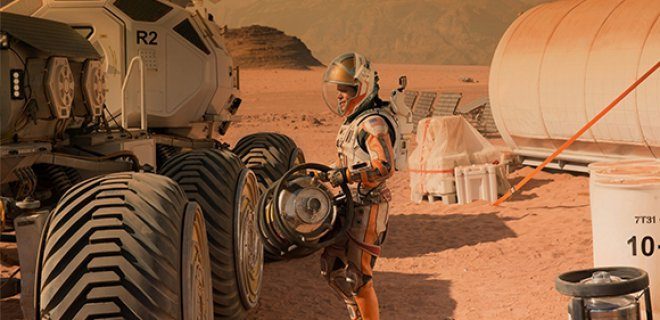
The agricultural scenes are particularly telling. Watney doesn’t just plant seeds. He deals with regolith soil that’s toxic due to perchlorates. He has to convert Martian dust into arable ground using human waste. It’s gross. It’s detailed. It’s realistic.
This attention to detail serves a purpose. It grounds the absurdity of the situation. When Watney calculates his trajectory using basic Newtonian physics, you believe it because you’ve seen the homework he did. The science isn’t decoration. It’s the engine.
Why Matt Damon Carried the Whole Thing
A movie with almost no dialogue for long stretches could easily become a silent film about a man talking to plants. It would be boring. Damon saves it.
His performance walks a tightrope. Watney needs to be smart enough to survive, but relatable enough to keep the audience invested. Damon leans into humor as a coping mechanism. The logs he leaves for himself are funny. They’re also heartbreaking.
This balance prevents the film from becoming too dry or too melodramatic. He’s not a stoic action hero. He’s a frustrated botanist who keeps his sanity by making jokes. The chemistry between his isolation and his wit is what makes the character work. Without that human element, the science feels cold. With it, it feels urgent.
Ridley Scott’s Visual Language
Scott is known for atmosphere. His previous work, like Blade Runner, proves he can build worlds that feel lived-in and heavy. Here, he brings that same tactile quality to Mars.
The planet doesn’t look like a glossy theme park. It looks hostile. The wind sounds are constant. The light is harsh and unforgiving. Scott uses wide shots to emphasize Watney’s smallness against the vast landscape. It’s a visual reminder of the stakes.
Yet, the film never loses its energy. The pacing is brisk. The action sequences, from the rover chases to the rocket launches, are shot with clarity. You always know where Watney is and what he’s trying to do.
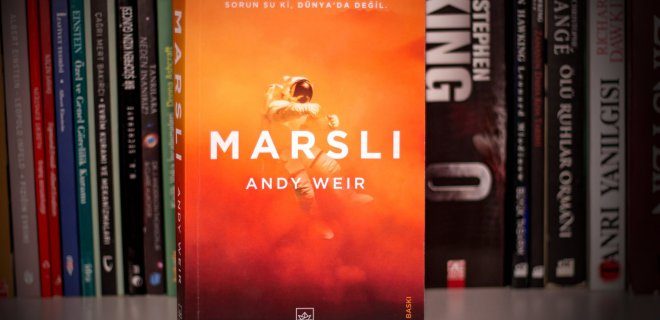
The transition from Andy Weir’s novel to the silver screen wasn’t just a translation; it was a reconstruction. Drew Goddard took the dense technicalities and intricate plot of the book and boiled them down to their essence. For readers, the movie feels less like an adaptation and more like the definitive version of events. It captures the math. It captures the panic. It captures the dark humor that makes survival on Mars feel both impossible and oddly routine.
The Math That Keeps You Watching
Mark Watney doesn’t just survive Mars; he calculates his way through it. The film lingers on these moments. You watch him crunch numbers, solve equations, and figure out how to turn a broken rover into a greenhouse. It’s not just exposition. It’s tension. The audience is forced to pay attention because if Watney makes a mistake in his calculations, everyone dies. The science is hard, but the execution is accessible. You don’t need a PhD to get the stakes, but you do need to respect the logic.
“The water was warm when I finally got to it.”
The Signal That Changes Everything
There is a scene where NASA makes contact. It’s not just a plot point. It’s an emotional explosion. The relief is palpable. The excitement is infectious. For weeks, Watney has been alone, talking to himself, documenting his failures. Then, the voice comes through. The team on Earth finds him. The isolation breaks. It’s one of those rare moments in blockbuster cinema where the spectacle serves the character, not the other way around. You feel his breath catch. You feel the weight lift.
Red Dirt and Root Vegetables
Then there’s the potatoes. Of course, there are the potatoes. Watney turns a hab module into a farm. It’s funny. It’s absurd. It’s also incredibly inspiring. Seeing him tend to crops in the dead of space humanizes the entire ordeal. He’s not just a botanist fighting for survival; he’s a guy trying to have a normal Tuesday. The film uses this juxtaposition to great effect. The horror of the environment is undercut by the mundanity of gardening. It works. It has to.
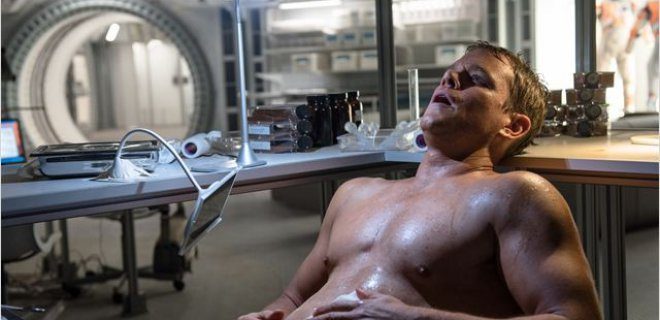
The Technical Backbone of Survival
Getting a red planet to look red on screen is harder than it sounds. Ridley Scott didn’t just green-screen his way out of trouble here. He built it. The visual effects and set design work in tandem to create an atmosphere that feels less like a movie and more like a documentary from the future.
NASA didn’t just lend its name. Scientists actually consulted on the project. Their input merged with Andy Weir’s dense, technical novel. The result? A sci-fi movie that respects the math. It doesn’t hand-wave the physics. It leans into the hard science.
“The Martian earns its suspense not through monsters, but through the crushing weight of reality.”
This attention to detail elevates the film beyond standard genre fare. It’s not just about explosions or alien invaders. It’s about botany. It’s about water. It’s about solving problems with your brain when everything else is trying to kill you.
Why It Resonates Beyond the Genre
You don’t need a degree in aerospace engineering to care about Mark Watney. Matt Damon carries the film on his shoulders. His performance is a masterclass in understated panic masked by humor. He’s not a superhero. He’s a guy who refuses to give up.
The story taps into something primal. Human ingenuity against an indifferent universe. It’s a theme that sticks. Long after the credits roll, you’re left thinking about resilience. About how far one person can go when they refuse to quit.
The film offers a dual reward. First, the adrenaline. The close calls. The race against time. Second, the inspiration. It reminds us that intelligence and stubbornness are powerful tools. In a genre often dominated by spectacle, The Martian proves that a good idea, executed with precision, hits harder than any special effect.
It’s a rare hybrid. Thriller. Drama. Science lesson. And it works. The audience doesn’t just watch Watney survive. They want him to make it. That emotional investment is built on trust. Trust that the science holds up. Trust that the performance is authentic.
There’s a moment where the sheer scale of the problem hits you. And then another where the solution clicks into place. Simple. Elegant. Human.