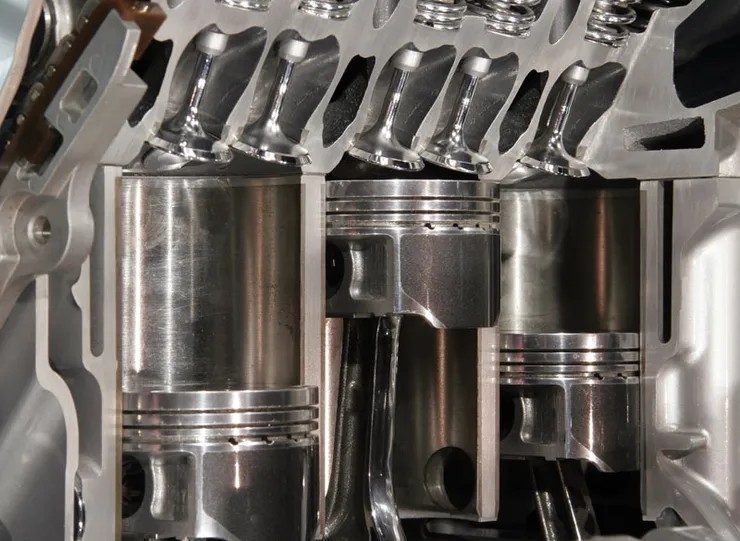
You turn the key. The car starts. Behind the hood, a controlled explosion pushes metal around, creating motion. It sounds simple. It isn’t.
The gasoline engine is the heartbeat of modern transport. It is the most common internal combustion engine on the planet. You find it in cars, trucks, and countless other machines. But these engines are not one-size-fits-all. They vary wildly in size. They differ in weight per unit of power. The arrangement of their parts shifts depending on the job they need to do.
The Four-Stroke Standard
Most cars use a reciprocating-piston engine. Specifically, they rely on the four-stroke cycle. This is the dominant design for a reason. It balances power and efficiency.
Each cycle takes four distinct steps. The piston moves up and down.
1. Intake. The cylinder pulls in fuel and air.
2. Compression. The piston pushes everything tight.
3. Power. A spark ignites the mix. The explosion pushes the piston down. This is the only stroke that generates force.
4. Exhaust. The piston pushes the burnt gases out.
This sequence requires two full turns of the crankshaft. It is slower. It is more complex. But it runs smoother and cleaner than its rival.
Why Two-Stroke Engines Survive
Not all engines follow the four-stroke rule. Some use a two-stroke cycle. Here, the math changes. The engine completes the compression and power strokes in a single up-and-down motion. It skips the dedicated intake and exhaust phases, relying on ports in the cylinder wall instead.
One revolution of the crankshaft is all it takes.
This design is lighter. It is smaller. It costs less to build per horsepower. That is why you see two-stroke engines in specific niches. They power small motorcycles. They drive most marine motors. You find them in handheld landscaping tools like hedge trimmers and chainsaws.
Where four-strokes dominate highways, two-strokes rule the edges. They are raw. They are efficient in the way that matters for portable power.
The Trade-Off
Simplicity has a cost. Two-stroke engines often burn more fuel and produce more emissions. They lack the refinement of four-stroke designs. Yet, their advantages in weight and compactness keep them relevant.
The choice between them depends on the application. You need power-to-weight ratio? Go two-stroke. You need longevity and clean operation? Stick to four.
Inside the block, pistons rise. Gases expand. Metal meets metal. The cycle repeats. Thousands of times a minute. It is an old technology. It is still evolving. New materials. Better ignition systems. Smaller displacements.
The engine is not disappearing. It is just getting smarter. Or quieter. Or both.
But the core principle remains. Fire pushes. Metal moves. We drive.