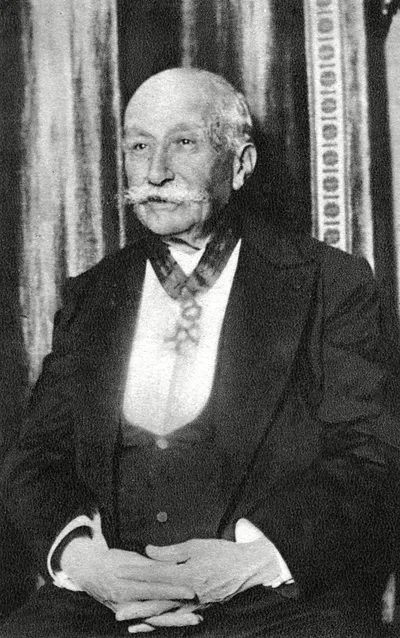
Clément Aderr doesn’t just build airplanes. He built the first motor-powered airplane that took off from the ground under its own steam. Ader, who was born in Muret, France in 1841 and died in Toulouse in 1926, was a self-taught engineer who refused to wait for permission. He doesn’t have a college degree. He has dreams and many obsessions.
Even before he touched the plane, he was already making waves in the field of communication. He invented early microphones and public address systems. He built a reputation over the phone. But in 1876 he left a secure job at the Bridge and Road Administration. He wanted a fortune. More importantly, he wanted to fly.
In 1870, he began to develop balloons. By 1873 he had developed a strong interest in heavier-than-air flight. He created a winged machine which he named “Bird”. It made tethered flights. It didn’t go far. But this is a start.
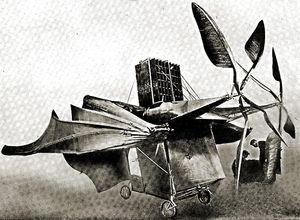
The actual work began in 1882 and lasted eight years of hard work. The result is Éole. It is named after the Greek god of wind. This is a tailless monoplane. Powered by steam. On August 11, 1890, Ader received a patent for his model.
Six weeks later, that moment came. October 9, 1890. Éole takes off. It flew about 50 meters (165 ft) above the ground.
Is this the first flight ever? The answer is complicated.
Éole Unable to maintain flight. It’s out of control. This is a jump. Jump. However, it was the first time a manned, powered aircraft took off on a flat area without catapults or hills. This distinction is important. It changed the trajectory of the aviation industry forever.
Ader claimed to have made a second jump in September 1891. He said the jump was about 100 meters (330 ft). Most historians do not support it. The evidence is weak. The first jump is a concrete fact. The rest is legend.
The End of an Era for Aderrr’s Wings
The French army has been patient, but only up to a point. In 1892, the Minister of War extended a lifeline to Clément Aderrr and offered him the first part of a possible grant of 650,000 francs. The goal was clear. It’s about building a flying machine. This was a huge amount at the time, and it was enough to show that the authorities believed in Aderrr’s vision, or at least the spectacle.
Aderr poured his own resources into the Avion II. However, this model never left the drawing board in a functional state. It was abandoned before construction was completed.
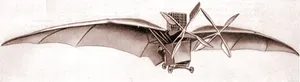
By the end of 1897, attention was focused on the Avion III. The plane was towed in an orbit around the Satory military base On October 12 and 14, but it didn’t take off. No flight. Just wheels on the gravel and the engine fighting gravity.
But the official report was surprisingly generous. According to witnesses, the plane had not yet taken off. But they did not demand that the experiment be stopped. Instead, it recommended continuing testing. It is the recognition of an opportunity. This indicates that the fault may be mechanical rather than conceptual.
That signal went ignored.
Officials have seen enough. They had watched the Avion III roll. They read a report that recommended further tests. They decided to spend their money better elsewhere. The subsidy dried up. The project stopped.
It wasn’t a dramatic crash. It wasn’t a scandal. It was just a door closing. Aderr reached for the sky. The military looked away.
1897 Flight Claim Not Established
It’s been nine years since Europe’s first heavier-than-air flight gained global attention. On October 14, 1897, Claude Aderr reported flying 90 meters (about 300 feet) in the Avion III. This sounds like a win.
However, eyewitness accounts tell a different story. The wheels lifted. Then the plane immediately crashed.
The first information at the time ignored the accident. The focus is on lifting, not landing. This omission is important. Later, some aviation historians began to attribute this flight to Aderr. They saw a successful attempt where others saw a failure.
This story continued after World War II. Then came the scrutiny. This evidence was studied by the famous French aviation historian Charles Dolphus and the British aviation historian C.H. Dolphus. Gibbs Smith. They didn’t just doubt the 1891 claims. They dismantled them.
Their research shows that there is little evidence to support Aderr’s claims for the 1891 and 1897 flights. The myth of Europe’s first flight, based on selective memory and silence, collapses under basic historical rigor.
Ader wants to be the first. He got a round of applause. History has understood the truth.