They come from everywhere. During the winter sports season, avalanches can appear out of nowhere in the mountains and kill skiers and hikers in seconds. Almost half of mountain deaths are caused by such rapid snow accumulation. But how exactly do avalanches form? How do you recognize danger before it’s too late? What can you do to protect yourself from the so-called “white death”?
How snow crumbles
An avalanche is more than just snow falling from a mountain. It is a complex interaction of physics and weather. The snow hardens and does not fall. Build it layer by layer. Some layers are strong. Some are weak. Avalanches occur when a sticky layer of snow detaches from the rest of the slope. It slides through the weak layer below.
Problems often start from the weakest layers. It can be surface hoar—frost crystals formed on cold, clear nights. Alternatively, it may be large, cup-shaped crystals with a deep off-white color that grow near the ground due to temperature gradients. These structures are fragile. They don’t hold much weight. When new snow is added or the sun warms the surface, the pressure on the weaker layer increases. Eventually, it fails.
“A snowpack is a layered system. Stability is determined not only by the total amount of snow, but also by the bond between the layers.”
This is not just an academic matter. Knowing which layers are dangerous can mean the difference between a narrow escape and being buried. If you hear a “whumpf” sound (snow crumbling under your weight) while skiing, this is a clear sign that a weak layer is breaking.
Signs of instability
You can’t see an avalanche before it starts. However, there are signs that the slope is unstable. The signs are subtle. Requires observation and possibly a simple test.
- Recent Avalanches : If you see debris below, the slope is active.
- Cracks : If you hear or see cracks propagate away from you while skiing, this is a big red flag. This means that the snowpack is fracturing.
- Rapid rise in temperature : After a warm front, the snow warms up quickly. This reduces the friction between the layers.
- High winds : The wind blows snow on the slope on the sheltered side. The result is a dense, heavy and slabs.
These are not just theoretical risks. These are real-time indicators. If you are in the mountains, you have to be careful about them. Not because it’s scary. But it is practical.
Why skiers are in danger
Skiers and snowboarders put themselves directly on the slope. Add weight to the snowpack. It can cause slab avalanche that wouldn’t happen otherwise. This does not mean that they are reckless. Most accidents happen on apparently safe slopes. Danger often lurks beneath a seemingly stable surface.
Hikers and climbers face different risks. You may encounter loose snow avalanches, which occur more frequently but are usually small. Being surprised can still be fatal. The most important thing is to understand the difference. Slab avalanches are the biggest killer. Loose avalanches are more common but less powerful. Both demand respect.
Protection and prevention
So, how do you stay alive? This starts with education. Taking an
One minute, the snow became hard. Then everything slides out. A slab avalanche occurs, and large bands of snow roll down the mountain like giant skateboards. Or it can be powder snow, an avalanche of debris, where the powder snow turns into a fast-moving mist of ice and air.
Sounds like the end of the world. However, an avalanche is only a natural phenomenon. They have been around since the mountains first touched the sky. Around 25,000 serious landslides occur in the world every year. Countless tiny ones go unnoticed. Most cause no damage. Disaster only strikes when people or infrastructure get in the way.
What causes snow to become unstable?
The structure of the snow itself determines its stability. The recently dropped powder consists of delicate six-armed star-shaped crystals. These complex branches intertwine to form a stable surface. It is very well put together.
The shape changes with time and temperature. As the snow ages and warms, the crystals become rounder. They are granular rather than branched. This reduces the stability of the package. Even worse is faceted snow. This condition occurs when water vapor refreezes in the snowpack. When pressure is applied, large cup-shaped crystals are formed, which act as ball bearings. It breaks easily.
This is where the danger grows. When new snow, rain or vibration adds weight to this weak layer, the foundation will fail. The faceted crystals give way. They become a lubricant. The heavy slab above slides off.
That’s why spring is dangerous. A typical trigger is new snow falling on top of compacted old snow. The same applies to sudden weather changes. Rapid heating or freezing can upset the balance completely.
Recognize dangerous snow conditions
Not all snow looks the same, and not all snow acts the same. Understanding the difference between stable and unstable layers is key to preventing slippage.
- Pulverulent Faceted Snow: Stable branched crystals.
–Granular Faceted Snow: Round crystals formed by ripening. It is not very stable. - Faceted Snow: Cup-shaped crystals formed by the refreezing of steam. Very unstable.
If these weak layers are overloaded, catastrophic failure can occur. The result is a slide.
How to assess avalanche risk
You don’t need a glaciology degree to stay safe. You just need to be aware of the warning signs.
- Watch out for cracks: If the snow cracks away from you, it’s a bad sign.
- Note recent slides: Small sluffs indicate a weak layer.
- Check your weather history: Has the temperature risen recently?
- Avoid steep slopes: If the angle is between 30 degrees and 45 degrees, you are in the danger zone.
The mountain doesn’t care about your plans. They follow physics. Respect the snow. Be careful.
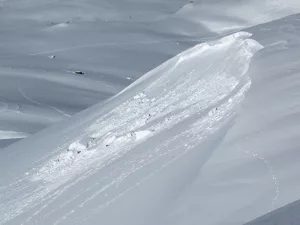
Why slope is important for avalanche risk
The slope angle is a silent killer in winter sports. It determines whether a mountainside holds its breath or lets it out in a roar.
Most people believe that the steeper the slope, the more dangerous it is. That’s wrong.
If the slope exceeds 50 degrees, the snow will not stay still. It slides down in a small but continuous avalanche. Nothing has been built. No weak layers are formed. Mountain weight is reduced regularly. It’s safe by accident.
Flat terrain is less dangerous. The snow just sat there. Unless…
There’s a trap. Look for long grass or ice under the snow. The surface looks like an ice rink. Reduces friction. Slopes below 24 degrees can suddenly turn into slides if the bottom is slippery. Snow loses its grip on the ground.
The real danger zone is 35-50 degrees.
This is where physics works against you.
The weight of the snow causes shear stresses. Separate the layers. The connections between the snowflakes weaken. You don’t need a crowd to cause a slide here. The chain can break due to the weight of the skier.
Almost no force is needed to tilt the balance.
The wind made the situation even worse. It piles snow into thick slabs called cornices. These are inherently unstable. They hang over ridges. It triggers most large avalanches.
Identifying dangerous terrain
Not all slopes are created equal. Understanding the geometry helps you stay alive.
- Steep slopes (>50°): Self-cleaning. There is not enough snow to form a dangerous snowpack.
- Gentle slopes (<24°): Generally stable, unless the bottom is slippery (ice/grass).
- Moderate slopes (35-50°): “Danger area”. High shear stress. Easy to trigger.
If you find a slope between 35 and 50 degrees, pay attention to the wind direction. Look for cornices on the ridge. If they are present, the slope below is likely loaded.
The combination of angle and wind loads creates the perfect storm.
The role of wind and snow eaves
The wind doesn’t just blow snow. It sorts it. Move light, fluffy snow to the windward slope. It is tightly packed. This creates slabs.
The board is sticky. they move as one unit. This is the most dangerous type of avalanche.
Cornices are formed when the wind blows snow onto the ridge. They grow outwards. Looks impressive. They are fragile. A cornice collapse can cause massive avalanches below.
Don’t just believe your eyes. Determine the wind direction. Look for signs of recent snow movement.
Real-world effects on outdoor safety
Understanding slope is not just an academic problem. It will change the way you plan your day.
You might be relieved to see the steep side. But remember that the danger is not over. It’s just different. The snow is loose and not sticky.
If you see a flat field, don’t relax. Check the base. Is it icy? Is there grass poking through?
The middle part is where you need the most attention.
35 to 50 degrees is where most accidents happen.
Why? Because it’s where people play. It’s the sweet spot