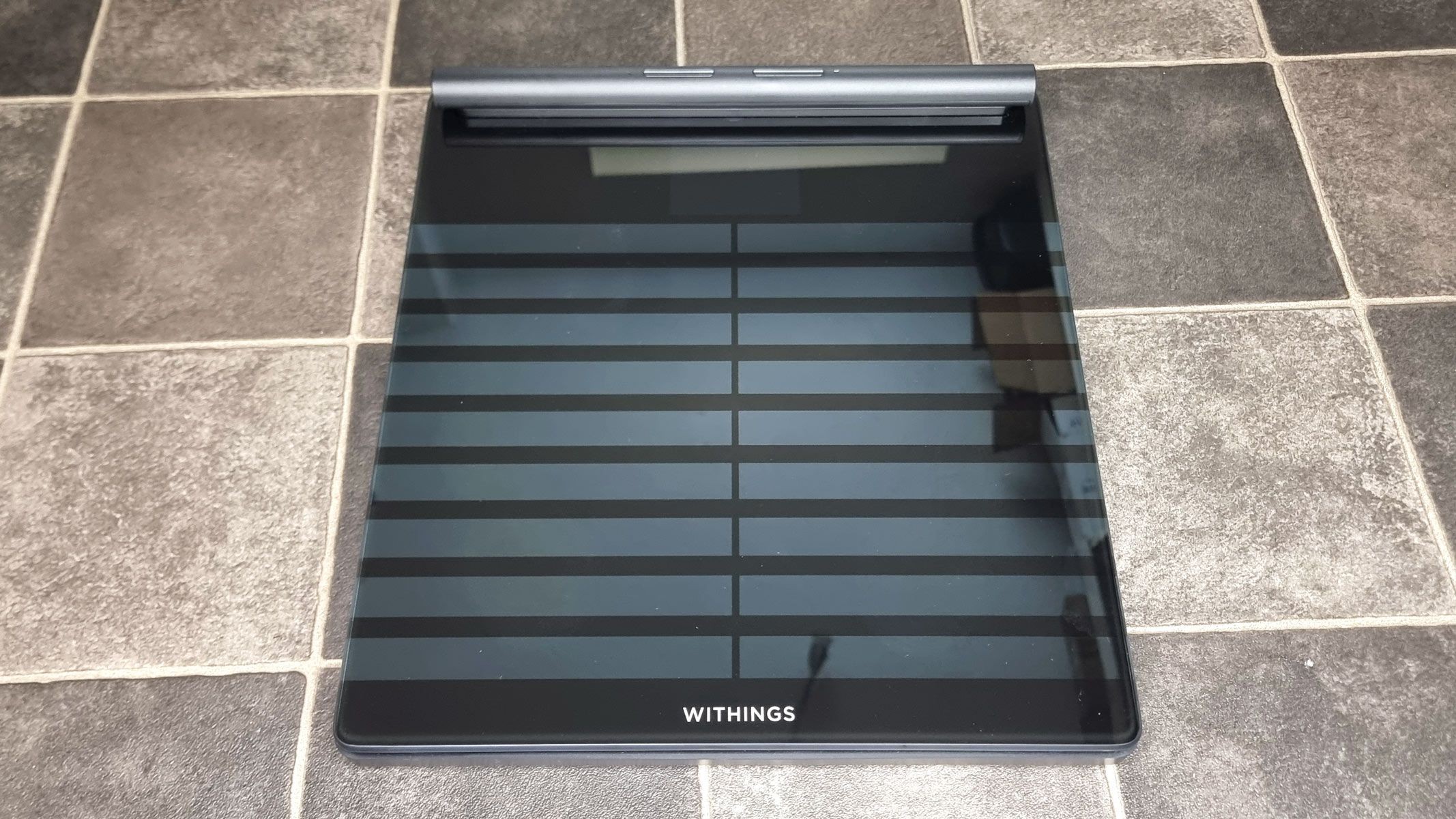
More than just weight
Smart scales usually do the bare minimum. Weight. BMI. Maybe muscle mass if you’re lucky. Some pricier ones throw in basal metabolic rate or biological age. A few even do segmental analysis, checking left vs. right with handles you have to hold.
None of them touch what the Withings Body Scan does. It measures your cardiovascular health. It checks your nerve activity.
“Put simply, the Withings Body Scan serves as a holistic health hub, extending beyond traditional body composition metrics.”
You hold the handles. You step on the plate. It tracks heart rate. It maps electrical signals in your heart. It calculates arterial stiffness by timing pressure waves through your arteries. It gives you a Nerve Health Score based on skin conductance. It’s less a scale, more a clinic visit on your bathroom floor.
Is it worth it?
That’s the catch. The price. $499.95. That is double most premium competitors. Fifteen times a basic platform. A serious investment.
The mechanics behind the magic
The device uses four technologies. Most scales use one. Bioelectrical Impedance Analysis, or bioimpedance, is the standard. It shoots low-voltage current through your body. Water conducts well. Fat does not. Algorithms turn resistance into numbers.
It’s not perfect. Hydration throws it off. Skin temperature changes readings. It’s good for trends. Bad for single-day truths. Clinicians use DEXA scans for real accuracy. This isn’t that. Don’t expect it to be.
Then there is pulse velocity measurement. It mixes impedance plethysmography with ballistocardiography. Essentially it records when blood leaves your heart and when it hits your feet. Longer travel times mean stiffer arteries. Stiffer arteries mean higher cardiovascular risk. A 2024 Reviews in Cardiovascular Medicine article supports this link. Clinical settings use tonometry, often on the neck and groin, with patients lying down. This scale stands you up. The readings correlate. They don’t replicate the gold standard exactly. Close enough for tracking, not diagnosis.
The Nerve Health Score uses Electrochemical Skin Conductance. Sweat glands have tiny nerves. They conduct electricity well. Damage from diabetes, chemo, or metabolic syndrome kills that conductance. Scores above 50 are normal. Below 50 signals potential neuropathy. Biopsies remain the clinical gold standard for nerve health, involving tissue removal. ESC is a promising, painless alternative for tracking regeneration or damage over time. Ethnicity affects results. So does location. Your foot nerves don’t tell the whole body’s story. Just a part.
Built to last
Design matters. This thing is heavy. Literally. It handles users up to 440 lbs. Most max out at 396. That extra width helps. Obesity often comes with balance issues. Diabetic neuropathy affects foot sensitivity. A wider, sturdy platform matters.
It survived our tests. We dropped it. Twice. Hard tiles. No scratches. No dents. The glass platform doesn’t smudge easily. Sweat patches wipe off with one pass. Other scales collect fingerprints like magnets. This one fights back.
The display is small, 2.8 inches, but clear. No clutter. The language is body-positive. It doesn’t shame. It informs. For someone with eating disorders, that distinction is everything. Minimalist. Tasteful. Expensive, yes, but it feels like it.
Features and friction
The smart side is genuinely smart. Up to eight users. Auto-detects by weight. Step on. Go. No logging in. No friction. It syncs with Apple Health, Google Fit, Samsung Health, and the ScanWatch 2. Your health data talks to your watch data. Holistic. Convenient.
Weigh-ins are fast. No redoing scans. We hated doing that with cheaper brands. It tracks the basics well: weight, fat mass, bone density, water, BMR. Segmental analysis shows differences between trunk, arms, and legs. Useful for tracking muscle gain. It shows trends. Not just snapshots.
Athletes might be frustrated. It doesn’t separate visceral fat from subcutaneous fat. It doesn’t split left arm from right arm. If you’re rebuilding one side after an injury, or bench-pressing with specific goals, you miss granularity. The Body Scan sees the whole, not the parts.
It has modes. Baby mode. Pregnancy. Athlete. Eyes-closed. We love Eyes-closed mode. The screen hides the numbers. Shows a smiley face instead. Motivation without the stress of the scale. Some people need that boundary.
The app, though? It’s a mess. Navigation is tricky. We spent time hunting for stats. It’s not clean. It’s not clinical. It’s opinionated. It gives lifestyle tips over raw data streams. If you want a dashboard of numbers, look elsewhere. If you want trends and nudges, it works. Just forgive the UX.
Does it hold up?
Battery life is insane. A year, per Withings. We didn’t test for 365 days. Online reviews swear by it. Frequent users report lasting power.
Accuracy is solid. We pitted it against a commercial FitQuest machine. Same weight. The Body Scan guessed 2% higher fat, 3% higher muscle, 3% less water. That’s tight. Cheaper rivals missed by 5% or 4%. It’s more precise.
Heart rate matched our ScanWatch 2 perfectly. Only a 2 bpm difference at rest. ECG readings aligned. We couldn’t verify the nerve score. No diabetic syndrome in our crew. No biopsy results for comparison. The score felt right for healthy skin, but healthy is easy. Broken skin is another matter.
Connectivity never failed. Instant sync. Data moved between devices without hiccup. Good connectivity isn’t guaranteed in this market. This delivered.
The verdict
Reviews are split. Withings stores: 4.1 stars. Walmart: 4.5. Best Buy: 3.8. Amazon: 2.9. People hate the price. Or they hate the app. Or they just wanted a scale.
At nearly five hundred dollars, expectations are sky-high. It delivers on durability. On unique metrics. On long-term tracking. It falters on app design. On advanced athletic nuance.
Is it necessary? No. Will it tell you more about your body than anything else on the shelf? Absolutely. The nerve health feature is the killer app. Arterial stiffness adds depth. Most people won’t notice. Then one day they might.