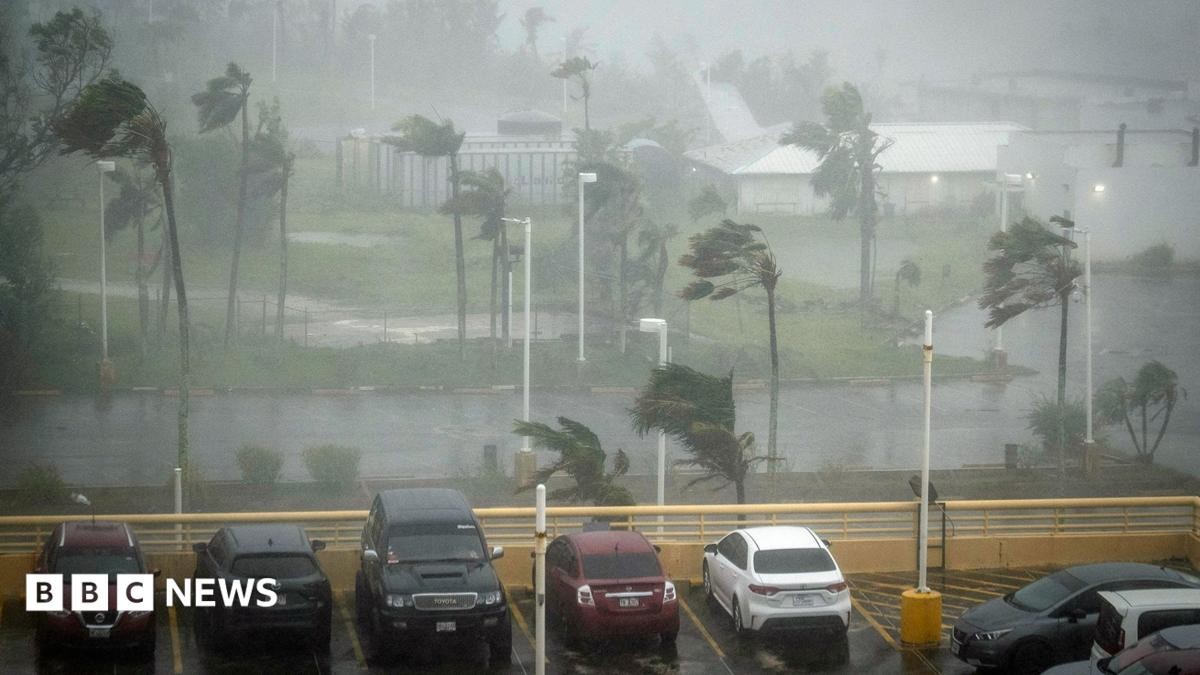
Wind screaming. Rain lashing. That’s Monday. Super typhoon Bavi doesn’t just arrive on Guam and the Northern Mariana Islands; it pummels them. Hard.
The US National Weather Service calls it “very dangerous.” And they’re not exaggerating.
Bavi brought wind speeds of 190 mph as it churned over Rota.
Catastrophic damage is the forecast. Waves rising 35 feet high? Possible. An official tells AFP that “major damages” are already reported across the Northern Marianas. This isn’t a drill.
By Tuesday morning the beast moves west over the Philippine Sea. Guam officials say they’ll assess the mess at first light. But the danger doesn’t vanish because the center moved on.
The Joint Information Center warns Bavi keeps grinding along. Up to 165-mph winds remain likely. Tropical storm-force gusts could stretch 320 miles out from the eye. Don’t step outside yet.
The Aftermath Starts
Alerts stick around for Guam, Rota, Tinia, and Saipan. Coastal flooding. High surf. The NWS screams about “dangerously large breaking waves” reaching 25 feet.
Water? Spotty. The Guam Waterworks Authority says 28 out of 99 wells are offline. Good luck finding a drink.
Then comes the military machine.
Joint Region Mariana — the US command here — enters active recovery at 6 AM Tuesday. Scouting teams deploy. Resources move in. Governor Lourdes Arsenio “Lou” Leon Guerrero’s crew starts walking the rubble early that morning too.
A Direct Hit on Rota
Rota took the worst of it.
As the southernmost inhabited island in the Marianas, it sat directly in Bavi’s path. About 50 km northeast of Guam, residents braced for impact. The mayor’s office warned of “destructive winds.”
Conditions expected to deteriorate rapidly.
Being outdoors meant risking life or limb. One spokesperson told AFP: “We are hanging in there. Heavy winds and flooding.” Major damages reported by locals. No surprise there.
Saipan Still Healing
North of Rota lies Saipan. Wind gusts exceeded 100 mph at the airport. Meteorologist Marcus Landon Aydlett tracked it for the Associated Press.
Here’s the kicker: many people had no power left.
Typhoon Sinlaku hit back in April. It killed 17. It caused $1.5 billion in damage. The grid barely recovered before Bavi arrived. The NWS notes typhoon-force winds wouldn’t drop until afternoon Monday. Tropical storm winds linger past midnight.
Islands used to sunshine now face a different reality. Climate change is making these monsters more common, scientists say. It’s no longer unusual; it’s a pattern.
Guam opens five shelters in schools. Capacity is tight: about 1,70 people max. Mostly for the vulnerable.
One center filled up by Sunday afternoon. 1 PM. Civil Defense confirmed it.
Residents moved early. Shelters packed. Last-minute panic turns into long nights waiting out the gale.
Was it a mistake to expect less?
Maybe. Or maybe just the new normal. The wind doesn’t care about tourism boards or recovery plans. It just hits.