They aren’t just rocks floating in the void. They are worlds.
Look up at the night sky. You see the Moon, singular and bright. But that is an outlier. It is the exception that proves the rule: most planets have their own satellites. When astronomers count the bodies circling the giants of our solar system, the numbers get staggering. We are not talking about a handful. We are talking about hundreds.
There are 416 confirmed moons orbiting the planets in our solar system today. That is a lot of natural satellites. And the count is not static. As telescopes get sharper, as data mining improves, more small, dark, distant rocks are pulled into the census.
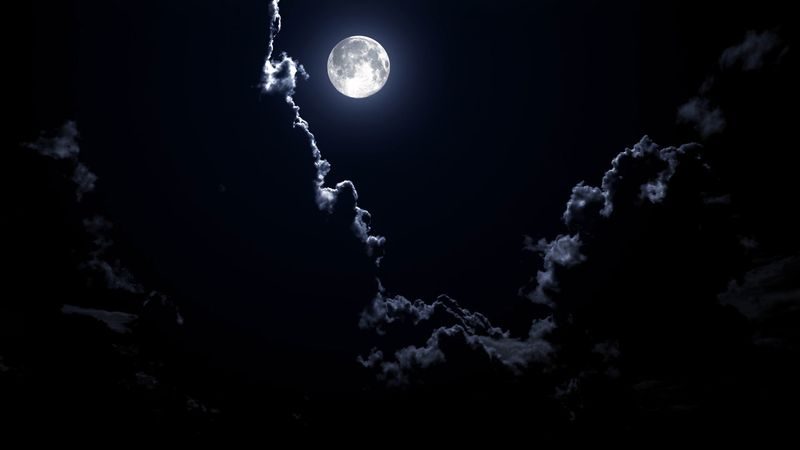
Earth has one. Just one. The Moon. It dominates our night sky. It drives our tides. It stabilizes our axial tilt. It is unique in its influence on a terrestrial planet.
Mars has two. Small, irregular, captured asteroids. Phobos and Deimos. They look like lumpy potatoes more than worlds.
Then you get to the gas giants. And the numbers explode.
Jupiter leads the pack with 95 confirmed moons. Saturn follows with 274. Uranus has 28. Neptune has 16. These aren’t just rocks. They are oceans under ice. They are volcanoes spewing nitrogen. They are worlds with their own weather, their own geology, their own potential for life.
But the planets aren’t the only hosts. Dwarf planets like Pluto have moons. Asteroids have moons. Kuiper Belt objects have moons. The solar system is a nested hierarchy of satellites. A moon can have a moon. It’s moons all the way down, until the gravity breaks or the orbit becomes unstable.
The size difference is absurd.
Some moons are tiny. Tens of meters across. Small bodies in orbit around asteroids. Hard to see. Hard to detect. They are essentially flying rocks with a companion.
Then there is Ganymede.
Jupiter’s largest moon. It is bigger than Mercury. Bigger than Mars. Its diameter is 5,262 kilometers. Three thousand two hundred and seventy miles of water ice and iron. It has a magnetic field. It has a thin oxygen atmosphere. It is a full-fledged planet, trapped in Jupiter’s gravity.
We have not found any moons around extrasolar planets yet. Not one. The technology to detect them is still catching up. We can find planets by the wobble they cause in their stars. But a moon? A moon is small. A moon is dark. A moon is hard to see against the glare of a sun hundreds of light-years away.
For now, our solar system is the only place we know with certainty where these worlds exist.
416 of them.
Orbiting.
Turning.
Waiting.
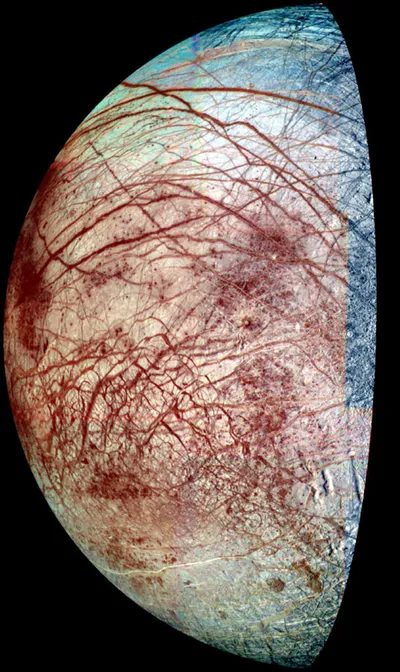
The search for life doesn’t always start on Earth. Scientists are looking outward, past the blue marble, to places that defy the vacuum. Take Jupiter’s moon Europa. Beneath a crust of ice lies a global ocean, kept liquid by the gravitational squeeze of its massive planet. It’s a dark, high-pressure world, but potentially habitable.
Then there is Saturn’s moon Enceladus. It’s smaller, colder, and far more volatile. Geysers erupt from fractures near its south pole, spewing water vapor and organic molecules directly into space. We can sample this material without even landing. The chemistry is there. The ingredients for life are being ejected into the void.
Humanity has been to the Moon before. We’ve been there many times.
During the nine Apollo missions between 1969 and 1972, twenty-four American astronauts orbited the lunar surface. Twelve of them stepped onto the gray dust. They left footprints. They planted flags. Then they came home. For fifty years, the Moon remained a monument to past ambition rather than a destination for future settlement. That changes now.
The Artemis Return
NASA launched the Artemis program in 2017 with a singular, ambitious target: return humans to the lunar surface by 2027.
This isn’t just about planting another flag. The goal is permanence. Artemis aims to establish a sustainable human presence on the Moon. This means building infrastructure. Creating habitats. Developing life support systems that can operate independently for long periods.
Why does this matter?
If we can live on the Moon, we can learn how to live on Mars. The Moon is the proving ground. It is closer. It is easier to reach. Mistakes here are survivable. Mistakes on Mars are fatal. By mastering lunar logistics, NASA hopes to pave the way for deeper space exploration.
The strategy is clear. Use the Moon as a stepping stone. Test technologies. Refine operations. Then push further.
The Apollo era was about proof of concept. Artemis is about infrastructure. It’s about staying. The dust will be swept up. The bases will be built. The next generation of astronauts won’t just visit. They will work.
We are moving from tourism to occupation. The ice in Europa’s ocean and the organics in Enceladus’s plumes are still out there. Waiting. But to reach them, we first need to master the place next door.