We’ve been using stamps for longer than you think. It is estimated that humans have been pressing objects against surfaces for over 6,500 years. Start by making simple decorations on clay or ceramic objects. Then the casting started. Postage stamps also helped stamp these early currencies.
The oldest surviving traces belong to the Phaistos disc. This is a fired clay disc dating from around 1700 BC. It will take a long time for the tools to remain relevant.
Early signs and stickers
In Germany, the first physical stamps appeared in the 12th century. Before that, people trusted seals. There are no stickers stamped on the pages. Push it into the hot wax. This method is used to seal letters and official documents.
This practice was mainly limited to two groups. Priests and nobility used these wax seals. They have resources and need to communicate securely. Ordinary people usually do not use this method.
Materials and methods
Early stamp materials were simple. Man sculpts bone, wood, clay and metal. Letters were etched on these surfaces. Sometimes I carve patterns. It can also have a deeply carved pattern. Or cast metal and shape it.
The goal is always the same. Transfer marks. Transfer authorization. Transfer your ID. We still do this today. Technology has changed. I don’t have that desire.

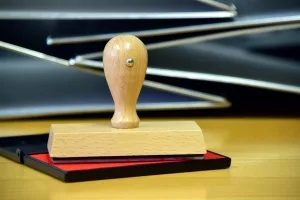
Although the stamp manufacturing process has changed, the core material has not abandoned its roots. Wood and metal are still the preferred materials for manufacturers, but their design has changed dramatically. For example, consider a classic wooden stamp. Yes, it still consists of two turned pieces of wood. One is the handle. The other is the foot, which is the foundation. Glued to the underside of that foot is a rubber or latex plate.
That rubber discovery wasn’t just a minor update. It was a milestone. Before the advent of rubber, it was not possible to create the fine details we see today. The design (usually written text or a logo) is engraved directly onto this elastic surface.
The transition from hand engraving to machine precision does not just speed up production. it changed what was physically possible to print.
The rubber revolution and the death of hand carving
Early stamp makers carved these rubber sheets by hand. It was tedious. It’s very slow. One slip of the knife ruined the whole lot. Today, machines handle that carving. This mechanization has revolutionized design possibilities. Now you can achieve complex fonts and small logos that would have been impossible with a steady hand and a dull knife. Consistency is uniform. The depth is accurate.
Why modern wooden stamps look and feel different
If you buy a quality wooden seal made today, you will probably get a different impression than seals made 50 years ago. Turning (shaping the wood frame) is still done with a lathe. But this is no longer physical work. It’s automated. The wood is spun and cut with tools to create perfectly symmetrical handles and legs.
But most people don’t realize the protective layer exists until they hold it in their hands. The wood is coated in lacquer. This is not just about aesthetics. This is armor.
- Moisture resistance: Wood swells. Varnish prevents this.
- UV resistance: Sunlight weakens wood. The coating prevents that.
- Dust-resistant: Ink and dust stick to raw wood. They slide off lacquer.
This treatment significantly extends the life of the tool. Keeps stamps stable in humid environments where raw wood might warp or crack.
Changes in work and precision
The move to mechanical lathes and laser engraving means that the “art” of stamp making has moved from physical cutting to digital design. The designer inputs the vector file. The machine executes it. The result is a product that is durable, consistent, and far more detailed than what a single craftsman could have produced an hour ago.
Is the soul of the craft gone? Some may think so. But the accessibility cannot be denied. Buy stamps with crisp, sharp custom fonts at a fraction of the cost and time of commission a hand-carved version. This technology democratizes precision.
However, wood has a tactile feel that plastic never quite replicates. Weight. grain. Even though it is coated with varnish, you can feel it’s organic. It’s more than just a tool. It is a piece of wood shaped by nature and machine with one purpose: to leave a mark.
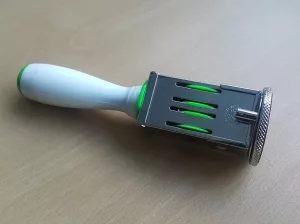
plastic and metal. This is now in your hands. A ink pad? integrated. No messy pads do not need to be cleaned. It has a durable cover that slides neatly into your drawer. But inside that shell? It’s not just a piece of rubber, it’s a marvel of modern technology.
There are three main ways of making plates: laser engraving, polymer and vulcanization.
“Today, the technology of stamp makers has evolved into a specialty called flexographic printing.”
The fact is that local stamp makers are disappearing. Instead we use flexographers. The term comes from the flexible printing plates (rubber or plastic) used in flexographic printing. There are more than 300 types of stamps. From transit tickets and date stamps to clocks and address markers. Where do you think it was made? on your computer. Companies such as Trodat and Colop sell these products worldwide, mainly online.
How laser engraving is changing the stamp industry
Let’s look at the main method: laser engraving.
It used to be done by hand. sharp blade. Precise work that takes hours. now? machine. Better material. core technology hasn’t changed much, but what about lasers? They were light years ahead. We are talking about rotary lasers. they move fast. The stamp plate is ready in a few minutes.
And what about accuracy? This is crazy. The laser can be used to engrave very fine details even on hard materials.
This is how laser engraving actually works.
- Digital design: Patterns are created on a computer.
- Engraving: The laser beam burns the unprinted areas of the rubber sheet.
- Backing: The plate is lined with foam to maintain constant pressure.
- Assembly: Accurately glued to the bottom of the stamp body.
This method enables incredible detail even on difficult surfaces such as glass and metal. It is fast, efficient and accurate.
Vulcanization: A trusted veteran
Vulcanization is one of the oldest methods and is still very popular. Why? Because it’s cheap. And it’s fast.
The resulting plate has high stability and good elasticity. This makes it durable against uneven surfaces.
The process is tactile. The stamp maker places the rubber sheet in a vulcanizing press that already has a metal printing form. Add heat. The rubber becomes soft and flexible. The pressure of the press forces the rubber and forms the image. After cooling, remove the plate and cut it to a suitable size.
It’s a low-tech solution to a high-tech world. it works.
Why are physical seals still important?
Digitization is penetrating the printing industry. But what about stamps? They are enjoying the moment.
They’ve been “old school” for a while. Now they are back. DIY movement. Bullet Journal. kids. Craft stores.
“Stamps provide a tactile connection to paper that cannot be copied onto a screen.”
In the office, the company stamp is still important. Contracts can be sent by email, but physical mark are usually required for signature. Warehousing? stamp goods as they come in and out. Healthcare? Doctors stamp the date and name on the files. Bureaucracy? The approval process still requires a physical seal.
But it’s not just a bureaucracy. It’s about craftsmanship.
Small businesses use custom stamps to brand their packaging. Artists hand carve their own stamps for a unique touch. the desire to have something handmade for invitations, weddings, baptisms, etc. It’s not just about buying products. You are buying a process.
There are more design options than ever before. New production methods mean new motifs. New types. Stamps are not dead. It’s getting smarter.
we are still figuring out exactly how much of our paper remains analog.