You look at a saw and see a blade. A strip of metal. A disk of steel. But the real engineering is in the teeth.
Most saws are just thin metal strips with jagged edges or disks with teeth around the rim. The trick isn’t the sharpness. It’s the shape.
The teeth are set. They bend.
Not straight. Alternating sides.
Left. Right. Left. Right.
This creates a kerf. The groove cut into the material. The kerf is wider than the blade itself. Why? To prevent binding.
If the groove was the same width as the blade, the wood or metal would pinch the saw. It would get stuck. You’d be fighting friction instead of cutting. The alternating teeth ensure the cut stays open. The blade slides through without dragging.
Hand saws. Machine saws. They all rely on this simple geometry.
Circular saws? Always machine-powered. They need the speed and force to slice through solid materials at prescribed lengths or shapes. But the principle remains the same.
The saw cuts because it’s smarter than the material it’s trying to divide. It doesn’t just slice. It widens the path. It makes room for itself.
Think about that next time you’re holding a hand saw. Or watching a machine rip through plywood. It’s not just sharp. It’s strategic.
The teeth don’t just cut. They create space. They prevent the kickback. They keep the cut clean.
It’s basic physics. But it’s essential. Without the set, the saw fails. The material wins.
So why does this matter? Because efficiency. Because precision. Because you don’t want a jammed blade ruining your project.
The saw works because it anticipates resistance. It accounts for friction. It’s designed to survive its own operation.
That’s engineering. Simple. Direct. Effective.
But there’s more to saws than just the teeth. The handle. The spine. The angle. Each component plays a role. But that’s a story for another time.
For now, just remember: the saw cuts because it doesn’t fit perfectly. It leaves room. It makes space.
It’s a lesson in itself.
Precision and Power: The Mechanics of Cutting
The hand hacksaw remains a staple in machine shops, largely because its design is brutally simple yet effective. It features a U-shaped frame housing a blade typically 20 to 30 cm long. That blade is thin—just 0.06 cm thick—and under tension provided by a screw adjustment in the handle. You use it to slice through solid parts clamped in a vise. Butchers also rely on this tool for cutting bones. If you need to cut curves or irregular shapes in wood, you switch to a coping saw, also known as a jeweler’s saw. It has a deeper U-frame and a much narrower blade, offering the flexibility a standard hacksaw lacks.
Motorized Cutting: Jigsaws and Power Hacksaws
For those same irregular cuts, a power jigsaw or scroll saw does the work mechanically. Its narrow blade is mounted vertically between a pulsating lower shaft and a reciprocating upper shaft. This setup moves the blade up and down rapidly. In a general-purpose machine shop, power hacksaws are indispensable. Driven by electric motors, they cut metal with a blade that is significantly wider, thicker, and housed in a heavier frame than a hand tool. The frame moves back and forth, cutting only on the forward stroke, while automatic feeding pressure keeps the saw pressed against the work.
The Vertical Bandsaw
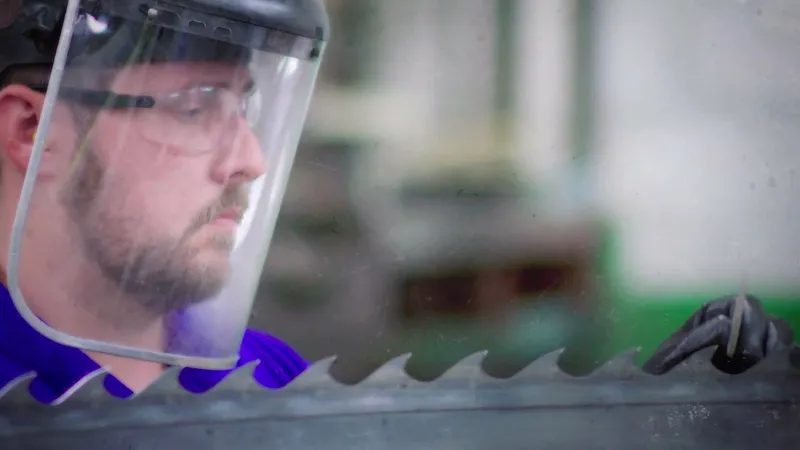
The vertical bandsaw operates on a different principle. Its blade is an endless narrow metal strip with teeth along one edge, running around two large motorized pulleys stacked vertically. The blade passes through the table where the work rests. You can swap in blades with various tooth sizes, and most machines allow you to vary the blade speed to suit the material being cut.
Hand Saw Fundamentals: Ripsaws, Crosscuts, and Backsaws
Saws that aren’t loops or disks include the three most common carpenter’s hand saws: the ripsaw, crosscut saw, and backsaw. The first two have roughly triangular blades about 50 cm long. They are 10 cm wide at the handle and taper to 5 cm at the opposite end. The difference lies in the tooth grind. Ripsaws cut with the grain using teeth that act like chisels, with cutting edges at 90° to the blade. Crosscut saws cut across the grain with knifelike teeth set to alternate sides. These teeth cut two parallel lines on each side of the kerf, breaking up the wood in between. The backsaw is essentially a crosscut saw with a rectangular blade and a heavy steel backing along the non-tooth side. This backing keeps the blade straight, and it is often guided by an attachment to maintain level, angular cuts.
Radial-Arm and Table Saws
Among machines using rotating steel disks with peripheral teeth, the radial-arm saw is highly useful. The motor-driven blade is manually drawn along a horizontal shaft, called a radial arm, supported by a vertical column on a heavy base. The motor-blade unit moves back and forth along the arm and can be adjusted vertically. It can also pivot for angular and ripping cuts. The work sits on a wooden table on the base, and the unit is pushed across it.
The table saw, or stationary circular saw, is another basic woodworking machine. Its circular saw can be raised and tilted, protruding through a slot in a horizontal metal table. You push the work into the saw. With hard enough blades, table saws can cut metal bars too. For heavy-duty operations in steel plants, such as cold-drawing mills, the circular or cold saw is used extensively. The saw carriage feeds slowly into the work to cut large quantities of bars and shafts.
Portable Power Tools
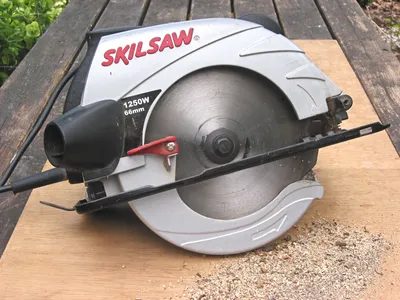
The portable electric circular saw is probably the most common saw for home handymen. The blade attaches to a motor shaft. With the right blade, it cuts wood, metals, plastics, fiberglass, cement block, slate, and brick. On wood, it rips, crosscuts, and makes angle cuts. The sabre saw is basically a portable jigsaw. It moves up and down with a stroke of up to 2.5 cm. It can also rip, crosscut, and angle cut.
The portable chainsaw has largely replaced the woodman’s axe and two-man hand saw for felling trees. It consists of a thin metal frame supporting a steel roller chain with saw teeth at intervals. The teeth are slightly wider than the chain to prevent binding. An electric motor or small gasoline engine rotates the chain sprocket, drawing the chain around at high speed.
This evolution from hand tools to high-speed motors highlights a shift in efficiency. We gained speed and versatility. We lost some of the tactile feedback. Does that matter? Probably not for the job. But the mechanics remain the same. Tension, teeth, and torque. That’s all there is to it.