


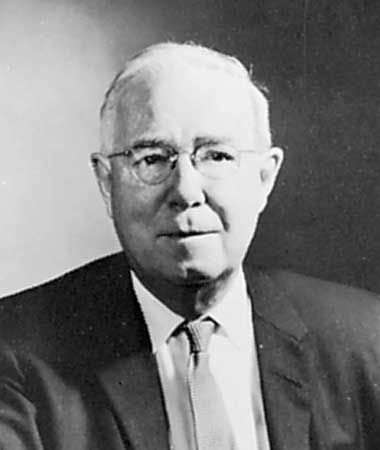
Leo Sowerby wasn’t just a composer. He was a bridge. Born in Grand Rapids, Michigan, in 1895, he lived through a massive shift in how Americans experienced sacred music. His work didn’t just sit neatly in the 19th-century tradition or rush headfirst into modernism. It walked right down the middle.
He died in Port Clinton, Ohio, in 1968, leaving behind a legacy that defines a specific era of American church music. If you are looking for who shaped that transition between old-school hymns and modern harmonies, Sowerby is the name you need to know.
The Prix de Rome Pioneer
Sowerby’s early career wasn’t typical. He studied in Chicago but also took his talents to Rome. Why? Because he became the first American to win the prestigious Prix de Rome. That award didn’t just buy him a trip. It launched his career.
He returned to the US with a heavy load of responsibility. From 1925 to 1962, he taught composition and theory at the American Conservatory of Music in Chicago. That’s nearly four decades of shaping other musicians.
But teaching wasn’t his only gig. From 1927 to 1962, he served as the organist at St. James Church. The building is now known as the Cathedral of St. James, but back then, it was just his workplace. He knew what worked in a sanctuary. He knew what made a congregation look up.
Leadership and Modern Harmonies
In 1962, he moved. He became the director of the College of Church Musicians in Washington, D.C. He didn’t leave the Episcopal Church behind, though. He stayed closely associated with the National Cathedral.
His style? You can hear it in the details. Sowerby had a gift for melody. But he didn’t write simple tunes. He layered them with modern harmonies. It was complex music that still felt singable. It was accessible, yet sophisticated.
His Canticle of the Sun for chorus and orchestra (1944) won the Pulitzer Prize in 1946.
This piece wasn’t random. It was based on a canticle by St. Francis, translated by Matthew Arnold. The combination of text and music struck a nerve. It earned him the Pulitzer. That’s not just a win. It’s a validation of his unique approach to sacred sound.
More Than Just Hymns
People often reduce church composers to their hymn books. Sowerby rejected that limit. His orchestral output was massive. He wrote four symphonies. The dates matter here: 1921, 1927, 1940, and 1947. Each one marks a step forward in his thinking.
He also wrote tone poems. Prairie (1929) is the standout example. It captures the wide-open spaces of America in sound. It’s not abstract. It’s literal landscape painted with strings and brass.
Chamber music was part of the mix, too. Concerti for piano, cello, and organ filled out his catalog. He didn


