Imagine a world where Ernest Hemingway handed his typewriter to Salvador Dali. Picture The Old Man and the Sea rendered not just in text, but in Dali’s melting, surreal illustrations. The words and images would bounce off each other, creating a story that operates on both a literal and symbolic level. That specific pairing is long gone, but the fusion of narrative text and visual art lives on in graphic novels.
What Defines a Graphic Novel?
Defining the term is tricky because there is no single, agreed-upon rulebook. However, distinct differences separate graphic novels from standard comic books.
- Length: Graphic novels are significantly longer than the average comic book.
- Structure: Most comic books are part of ongoing series, released monthly. Graphic novels often present a single, self-contained story, sometimes spread across multiple volumes.
- Format: They are typically square-bound, resembling traditional books rather than stapled pamphlets.
Beyond these structural differences, the similarities are striking. Both rely heavily on typography to drive the narrative and use boxy frames reminiscent of comic strips. Both are forms of sequential art, meaning the narrative is conveyed through a combination of text and drawn imagery.
Understanding Panels, Gutters, and Balloons
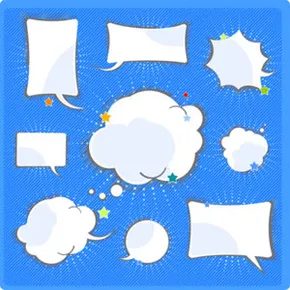
The layout of a graphic novel is specific. Each page contains panels, or boxes, separated by borders. While these are usually square or rectangular, the experimental nature of the genre allows for free-form layouts that resist precise classification.
The blank space between panels is called the gutter. Like white space in other visual arts, gutters are functional. A wide gutter surrounding a specific panel might signal that frame’s heightened importance to the reader.
- Thought balloons or speech bubbles indicate what a character is thinking or saying.
- Panels contain the visual action.
- Gutters control pacing and emphasis.
In essence, they function like extended comic strips. But they are not the Sunday funnies.
Why Graphic Novels Are Not Just “Comics”
Misconceptions abound. Graphic novels are not books with pictures inserted for decoration. They are not movie scripts, despite the wave of Hollywood adaptations based on this medium. They are also not simply collections of serialized comic books bound together; those are known as trade books or trade publications.
Some purists argue that graphic novels do not belong to the comic genre at all. They view it as an independent artistic medium, distinct in the same way music, poetry, and sculpture are unique disciplines. The artwork is intricate, and page layouts are carefully constructed to become part of the message itself.
The Rise in Popularity
The debate over definition aside, the commercial trajectory is undeniable. Graphic novels are gaining massive popularity. In 2006, sales reached approximately $330 million. That figure represented a fourfold increase compared to 2001. The medium is adding evermore zam, blam, and pow to its pages, evolving rapidly compared to its ancestors.
From Cave Walls to Newsstands: The Long Road to Graphic Novels
People have always needed pictures to make sense of the world. Long before written language became widespread, humans scratched stories onto cave walls. Hieroglyphs in Egypt did the same job. Symbols carried weight. Words were secondary. For most of history, reading was a privilege reserved for the elite and scholars. The working class relied on visual media to process information.
Newspapers and almanacs leaned heavily on illustrations. Political cartoons dominated the page. Images did the heavy lifting, helping readers grasp complex ideas quickly. This visual dependency set the stage for what would become the comic strip.
In 1837, Swiss artist Rodolphe Topffer published the English version of The Adventures of Mr. Obadiah Oldbuck. This work is often cited as one of the first comics. It featured panel borders and a tight interplay between text and cartoon images. The format helped move the story forward. It was a blueprint.
The Golden Age and the War Effort
Comics exploded in popularity roughly 100 years later, particularly in North America. From the late 1930s through the 1950s, the medium found its familiar shape. Short books. Superhero paradigms. Icons like Superman and Batman emerged as global celebrities.
World War II supercharged this trend. American soldiers carried comic books overseas. They were cheap, portable entertainment. More importantly, characters who always triumphed over evil provided a necessary morale boost. Superman never failed. That consistency mattered to troops far from home.
As the war ended, however, the simple good-versus-evil formula started to fade. Publishers scrambled to fill the void. They turned to horror, crime, Westerns, and science fiction. The content shifted, but the format remained rigid. Page counts stayed static until 1950.
“It Rhymes with Lust” and the Early Push for Length
That year, St. John Publications released It Rhymes with Lust. It was a 128-page comic billed as a full-length picture novel. Writer Arnold Drake and illustrator Leslie Waller aimed for sophisticated storytelling paired with refined art. It was one of the first deliberate attempts at what we now call a graphic novel.
The book was successful. But it did not trigger an immediate wave of similar works. The industry was in turmoil. Literary snobs and federal authorities were about to demonize comics entirely.
The Backlash: Wertham and the Comics Code
In 1954, psychiatrist Frederic Wertham published Seduction of the Innocent. He blamed comics for juvenile misbehavior. To the comic book fandom of that era, Wertham was a real-life villain.
The public didn’t burn their collections, but the panic was real. Publishers responded by creating the Comics Code Authority. This body dictated what artists and writers could and could not do. The goal was to assuage parental fears. The result was blandness. Mainstream comics became safe, repetitive, and sterile.
The Underground Revolution and the Birth of Comix
Bored readers and frustrated creators sparked a counterculture revolution in the late 1960s. Independent publishers released underground comics, deliberately misspelled as comix. The “X” signified the racy, often X-rated content inside. Drug use, sex, and political dissent were common themes.
This artistic freedom changed the medium. Comix replaced childish superhero tropes with grit, edge, and humor. It proved that comics could handle adult themes. The door was wide open for more complex narratives.
Eisner, Kyle, and the Term “Graphic Novel”
A pivotal moment arrived in 1978 with the publication of Will Eisner’s A Contract with God. Eisner presented the book to a publisher, labeling it a “graphic novel.” He believed he had invented the term. He had not.
Comic book fan Richard Kyle had used the phrase in a 1964 Comic Amateur Press Alliance newsletter. Nevertheless, Eisner’s book popularized the designation. A Contract with God contained four short stories set in a poverty-stricken part of New York City. The overarching theme explored humanity’s relationship with God.
The term caught on. Lengthier comics began appearing in droves, hoping to capitalize on the new label. Yet a tension remains. Many artists insist on the term “graphic novel,” forcefully rejecting the “comic book” moniker associated with their medium’s earlier, more restricted history.
Defining the Modern Graphic Novel Landscape
The shift from pulp comic to graphic novel wasn’t just about page count. It was about perception. Eisner’s work, and the comix that preceded it, established that the medium could carry literary weight. The term “graphic novel” served as a boundary line. It separated the new, adult-oriented work from the sanitized, code-bound publications of the 1950s and 60s.
This distinction continues to matter. When an author calls their work a graphic novel, they are signaling a certain level of narrative ambition. They are inviting readers to engage with the text and art as a unified, complex whole. The history of the medium is marked by these battles over definition. From Topffer’s panels to Eisner’s Bronx, the fight has always been about what comics are allowed to be.
The medium has evolved, but the underlying dynamic remains. Comics are still viewed by some through the lens of Wertham’s critique, while others see them as a serious art form. The terminology reflects that ongoing negotiation. It is not just a label. It is a declaration of intent.
Why Artists Avoid the Word “Comics”
The 1930s and 1940s gave us the Golden Age, and it left a scar on the genre’s reputation. Superheroes got stuck in a specific lane, and that label still follows them today. Many graphic novel artists actively steer clear of terms like “comics” or “comic book.” They don’t want to be boxed in by those old stereotypes. So they reach for graphic literature or graphic memoirs instead.
Is it worth the hassle? Probably not.
These linguistic games are mostly semantics. The medium itself is vast. Sequential art covers everything from high-octane action to quiet, devastating drama. You get horror, romance, mystery, and slice-of-life. The audience isn’t just kids. Teens read them. Adults read them.
How Graphic Novels Compare to Traditional Literature
The range is wild. You’ll find pieces that are flippant and fun, then others that are heavy and unflinching. Graphic novels wrestle with the same complicated topics as standard prose novels. They use the same toolkit: symbolism, foreshadowing, flashbacks, anthropomorphism, metaphor.
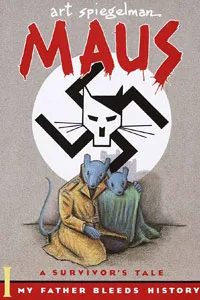
Take Art Spiegelman, for example. His work, Maus, is largely autobiographical but defies easy categorization. He told the true story of his father’s survival during the Holocaust. In the art, Jews are drawn as mice. Nazis are cats. It is a gut-wrenching memoir.
Spiegelman won a Pulitzer Prize for this work. It remains the only Pulitzer ever given to a graphic novel.
Could he have released it as a long series of comic books? Sure. Nothing stopped him. He just chose this format to express himself. The label is less important than the execution.
Where to Buy Graphic Novels vs. Comic Books
There is one consistent difference between the two: where you buy them. You can usually find regular comic books at street newsstands. Graphic novels live in comic book shops or bookstores. If you are standing at a gas station rack, you are looking at the wrong shelf.
Monsters of Graphic Novel Rock
Now that you know the scope of what these books can do, it is worth digging into the graphic novels section at your local bookstore. You might find something that hits harder than any blockbuster movie. The genre is ready to surprise you.
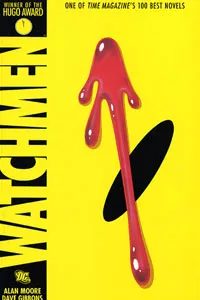
Alan Moore and Dave Gibbons didn’t just write a comic. They built a time machine. With colorist John Higgins, they crafted Watchmen, a 12-issue series that later became a trade paperback and cracked Time Magazine’s top 100 novels list. It sat in the Cold War era, looking straight at nuclear annihilation, philosophy, and human morality.
No flying capes here. Just “vigilantes.” Flawed, masked, and psychologically wrecked. The tagline “Who watches the watchmen?” isn’t just a hook. It’s a challenge to the entire superhero genre. The book treated readers like adults. It asked uncomfortable questions about power and control that standard comic books wouldn’t dare touch.
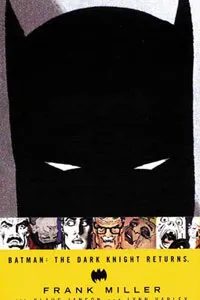
Then came Frank Miller. The Dark Knight Returns took Batman out of the museum and put him back on the streets. But this wasn’t the gleaming icon you saw on cereal boxes. Bruce Wayne was retired, bitter, and living in a Gotham City where crime had eaten the city alive. Miller painted a bleak picture. The suit came back, but the man underneath was fractured. Like Watchmen, it stripped away the perfection and left the messy human element.
You might expect these heavy hitters to be the only ones selling. You’d be wrong.
The market is messy and loud. The Mighty Avengers pushes Ironman, that massively popular anti-evil character, to the forefront. The Incredible Hercules keeps the Greek protagonist running from challengers trying to destroy Atlantis. It’s outlandish. It’s fun. It sells.
Geography stops mattering once you open the cover. In Japan, manga isn’t a niche hobby. It’s a cultural pillar. Readers devour them voraciously. The fan base is massive, spanning men and women, kids and adults. Creators dive into every topic imaginable because the audience is that diverse.
And the wave hit the US coast. Manga titles now compete head-to-head with native language works for bestseller spots. It’s not just a trend anymore. It’s a market force.
Groundbreaking work isn’t hiding in a dusty bin. It’s right there, waiting to be found.
The creative engine behind the page
Those writers aren’t operating in a vacuum. They’re usually one gear in a massive, intricate machine.
Think about Neil Gaiman. He’s a novelist first, but The Sandman proved he could translate that literary density into panels. The series doesn’t stick to one genre. It jumps from Freudian analysis to pop culture references, dragging immortal characters like Death and Desire through centuries of human history. It’s dense. It’s layered. It demands you pay attention.
Then there’s the political weight of Howard Cruse. His 1995 DC Comics release, Stuck Rubber Baby, tackled a very specific intersection: a white, gay Southerner navigating the Civil Rights movement. That’s a high-wire act. You have to balance identity, history, and race without losing the narrative thread.
Marjane Satrapi did something different with Persepolis. She took her own childhood, warped by the Iranian revolution, and turned cultural and gender issues into a visual autobiography. It’s personal, but it’s also political. The line between the two is blurry there.
And don’t sleep on Chris Ware. Jimmy Corrigan, the Smartest Kid on Earth is a headache in the best possible way. The protagonist wrestles with family trauma, race, and memory. Ware strips text off entire pages. Just images. You have to read the faces to get the plot. It’s a different kind of literacy.
Joe Sacco brings the journalist’s notebook to the drawing board. In Palestine, he sketches the West Bank and Gaza Strip based on his own visits. The art is bleak because the reality is bleak. He covers the Israeli conflict and war with a directness that feels more like reportage than fiction. Safe Area Gorazde follows a similar blueprint, using survivor interviews to dissect the Bosnian War.
Great graphic novels don’t just tell a story. They assemble a world.
It takes serious energy to build these things. The writer sets the skeleton, but the visual language does the heavy lifting. That’s where the team comes in.

How a graphic novel gets made: the team behind the panels
A novel is one person with a keyboard. A graphic novel? That’s a factory floor. You need a writer, a penciler, an inker, a colorist, and a letterer. Five different sets of hands. Five different brains.
The writer sets the stage. They handle the plot, the dialogue, the character arcs. But words alone don’t make it “graphic.” That’s where the penciler steps in. They break the page into panels, draw the gutters, and sketch the characters and environments. It’s raw, skeleton-like work. The penciler has to be a chameleon, able to render a skyscraper or a stray dog with equal accuracy.
Then the inker takes over. They don’t just trace over the pencil lines. They build the image. Using brushes and pens, they add depth, shade, and form. Often, they wipe away the original pencil work entirely. Why? Because rough, random lines kill the final image quality. The inker gives the art its definition.
If the book isn’t black and white, the colorist gets the fun job. They aren’t just decorating; they’re directing mood. Dark tones signal danger. Bright hues lighten the page. While the old school used paints and pens, the modern workflow is almost entirely digital. Adobe Illustrator is the standard tool now.
Finally, the letterer adds the voice. They draw the speech balloons and pick fonts that match the tone. Big, bold type hits hard. Squiggly, small letters whisper uncertainty. It’s a specific skill, not just typing.
Collaboration is messy. Sometimes the team bounces ideas to find the perfect shot. Other times, they bounce each other off the walls.
The dynamic shifts with every project. Some writers dictate the art direction with an iron fist. Others, like Dean Koontz on his Frankenstein adaptation, hand the keys to the artists. They let the visual team decide how to interpret the story.
That creative tension is part of the appeal. And when a name like Koontz sits on the cover, the sharks smell blood. Hollywood investors are watching closely. The next step is usually the big screen.
How graphic novels are rewriting classroom rules
Schools used to be a no-go zone for comics. Teachers treated them like junk food: okay for a rainy-day read, but definitely not curriculum. That dynamic is shifting fast. Graphic novels are moving into high school and even college syllabi, forcing educators to confront their own biases against the medium.
The resistance wasn’t just about content. It was about status. Comic books carried a stigma that stuck to them long after the superhero genre matured. Now, titles with literary depth and complex visual storytelling are being used to teach critical thinking, history, and narrative structure.
This isn’t just a trend. It’s a structural change in how we define “literature.”
“We are seeing a generation of students who are visually literate. They process information through images and text simultaneously. The classroom has to meet them there.”
The shift forces a rethink of what counts as reading. If a student can deconstruct the visual language of a graphic novel, can they not also deconstruct a film or a video game? The skills overlap. The resistance fades.
Why schools are finally saying yes
The primary driver is engagement. Traditional novels often lose teenagers. Graphic novels hold their attention. The format is immediate. The stakes are clear. The art does half the work.
Consider Maus by Art Spiegelman. It’s not just a comic. It’s a historical document. It’s a family memoir. It’s a metaphor for trauma. Teachers use it because it works. Students read it because they understand it.
Other titles are following suit. Persepolis, The Book of the Dead, and even modern superhero stories are finding their way into AP English and history classes. The argument for including them is simple: they are accessible, complex, and relevant.
Which graphic novels are actually being taught
You won’t find every comic on a syllabus. The ones that make the cut tend to share a few traits:
- Thematic depth: They tackle real-world issues like war, identity, or social justice.
- Visual literacy: The art is integral to the meaning, not just decoration.
- Narrative sophistication: They use non-linear storytelling, multiple perspectives, or meta-commentary.
Alan Moore’s Watchmen, for example, is a staple in many university courses. It deconstructs the superhero genre while exploring Cold War politics, nuclear anxiety, and moral ambiguity. It’s dense. It’s challenging. It’s the kind of text that sparks debate.
The digital divide in the classroom
Here’s the friction point. Students live in digital spaces. They read on tablets, phones, and e-readers. But most school libraries still stock physical copies. And many graphic novels are expensive.
This creates a gap. A kid might have access to a free digital version of a classic graphic novel on their phone, but their school only has three copies of the physical book. The library checkout lines get long. The digital version gets lost in the noise.
Publishers are trying to fix this. Some are releasing digital-only editions designed for classroom use. Others are partnering with educational platforms to provide free access. But the infrastructure is slow to catch up.
Teachers are left to improvise. Some print out panels. Some use personal devices. Some just hope the school buys the next batch of copies.
How this changes the future of reading
The inclusion of graphic novels in education is more than a novelty. It’s a signal. It says that reading is not just about words on a page. It’s about meaning. It’s about how we communicate.
If a student learns to analyze the visual rhetoric of a comic, they’re learning a skill that applies everywhere. In advertising. In politics. In film. In social media.
The old gatekeepers are losing their grip. The medium is no longer “less than.” It’s a tool. And schools, for the first time, are picking it up.

Why Graphic Novels Are Breaking Through Classroom Resistance
The old trick still works. Hide Silver Surfer behind a sociology textbook and you’ve got a free period. But the dynamic is shifting. Graphic novels aren’t sneaking in anymore; they’re being handed out as curriculum.
This isn’t just a trend. It’s a recognition that the brain doesn’t process information uniformly. Some students latch onto prose. Others need visual scaffolding to decode meaning.
How Teachers Are Rethinking Visual Literacy
Jeff Hayes, a Ph.D. candidate in secondary education English language arts at the University of Alabama, points to a historical blind spot in U.S. education.
“Our educational system became obsessed with the idea that information was and is best learned through prose, poetry, and script devoid of visual context or connection of any kind.”
That obsession left a gap. Students whose learning styles don’t align with text-only instruction were often written off. Hayes argues graphic novels fill that void. They expose pupils to a different mode of communication, one that is dense with style and nuance.
But inertia is strong.
Teacher training programs are squeezed between standardized testing pressures and funding constraints. There isn’t much room to experiment. Then there’s the stigma. To many parents and administrators, comics still feel like a distraction from “real” reading.
Which Students Benefit Most from Graphic Novels?
Despite the resistance, the data on student engagement is hard to ignore. Struggling readers, reluctant learners, and students with dyslexia often respond better to the format.
Why? The word count is lower. The intimidation factor drops. The colors and layouts grab attention immediately.
Teachers report that these tools help with the fundamentals, like punctuation and paragraph structure. But they also tackle advanced concepts. Inference, satire, parody, irony, symbolism, and allusion are easier to grasp when the visual context backs up the text. A reader who struggles to parse a dense paragraph might easily catch the irony in a panel sequence.
Why Schools Are Finally Embracing the Medium
It’s not just about helping kids who struggle. It’s about engaging everyone in a tech-saturated culture. Passive consumption, like mindless web surfing or cable binging, is the norm. Comics demand active participation. You have to read the words, track the eye lines, and infer the gaps.
Whether digital or printed, graphic novels are becoming a powerful vehicle for both frivolous and serious storytelling. They serve entertainment and education simultaneously.
It’s a shift that feels overdue. And yes, it’s the kind of happy ending that would make Superman proud.