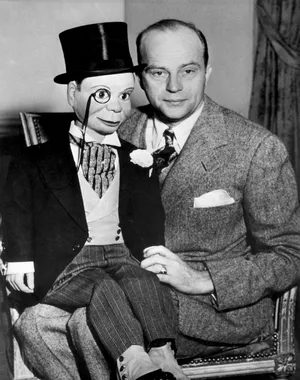
Edgar Bergen wasn’t just a ventriloquist. He was a radio titan. He was born on February 16, 1903 in Chicago and finally died on September 30, 1978 in Las Vegas. His career spanned nearly 60 years. Vaudeville stages gave way to radio. Then came the screen. One name ruled: Charlie McCarthy.
The partnership was more than a gimmick. Bergen offered a straight man. Charlie offered sarcasm. This dynamic fueled the Edgar Bergen-Charlie McCarthy Show. It operated in network radio between 1937 and 1957. That’s 20 years of continuous dominance.
But Charlie wasn’t alone. Bergen filled his suitcase with other voices. Mortimer Snerd, the slow-witted poet. Effie Klinker, the loud housekeeper. These characters were not disposable. They were woven into the fabric of the program. The show didn’t just survive. It was successful.
From 1937 to 1940, it was the most popular radio program in America. From 1942 to 1943 it was the most popular radio show. From 1937 to 1952, it remained in the top seven. This is an incredible success.
“Bergen was best known as the foil of his ventriloquist’s dummy Charlie McCarthy.”
People still ask, “How did Edgar Bergen become so famous?” It wasn’t just a magic trick to making wood speak. It was the timing. The wit. The way he let Charlie steal the spotlight while he played the confused host.
Why was the show so well received by the audience? Maybe because Charlie said what everyone was thinking. Bergen gave him a voice. But Charlie gave the act its soul.
Swedish roots and Chicago streets
It started on a trip to Sweden when Bergen was only four years old. His parents brought him back to their homeland, a trip that satisfied more than just cultural curiosity. It gave him practical language skills. Years later, this linguistic foundation appeared in unexpected places, with various characters sometimes expressing themselves in Swedish. It was a small skill, but one that stuck.
In Chicago, public school life didn’t exactly stifle his originality. At the age of 11, he discovered his talent for vocal tricks. The ability to manipulate the voice led directly to an obsession with ventriloquism. He didn’t just watch; he built.
The project became serious while still in high school. He commissioned the head of the dummy Charlie McCarthy to be carved. He didn’t stop there. He made the body himself. The result was a complete figure, assembled with professional skill and amateur work.
By the time he enrolled at Northwestern University, the hobby had become a hustle. He wasn’t just playing anymore. He was skilled enough to make a living doing ventriloquism and magic tricks. Tuition fees and expenses? Covered by the act.
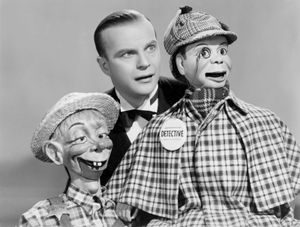
From vaudeville theaters to theater of war
His career was not limited to the theater. He moved through the vaudeville scene and then conquered the nightclub scene in the United States and Europe. It was tiring but kept him in sight.
Then the war started. Things got serious. Bergen didn’t just watch from the sidelines. He brought along his comedy partner McCarthy. Your mission? Bergen McCarthy WWII service tours. They traveled to the Aleutian Islands, Alaska and Greenland. The goal was simple, but important: entertain American troops.
Radio became their medium. They appeared in special shows and boosted morale where it was most needed. But when those radio shows ended, the duo didn’t disappear. Television was on the rise. They adapted quickly. Bergen and McCarthy became regular guests on variety shows and translated their stage chemistry to a new medium.
The transition from the theater of war to the living room showed their adaptability.
This change kept them up to date. It wasn’t just about nostalgia. It was about presence. They remained a staple of popular culture and moved from the front lines to the forefront of American entertainment. The work did not stop. It just changed shape. And they continued.