It wasn’t about strength.
Or intelligence. Or speed.
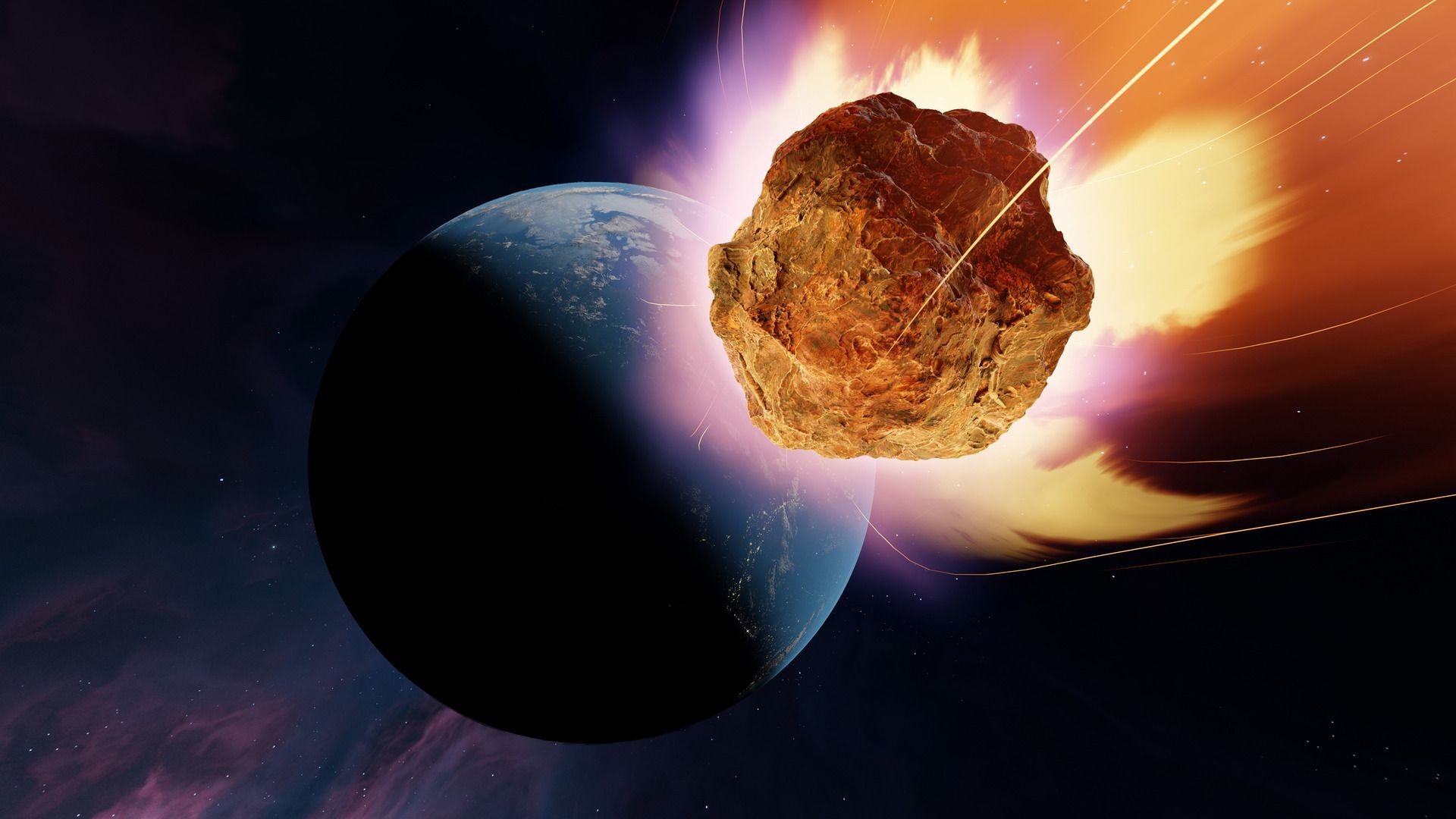
Around 66 million years back, Earth got hit hard. A massive asteroid slammed into the Gulf of Mexico, turning the sky into a weapon. Superheated rock spewed upward, baking the upper atmosphere to 439°F. Tsunamis the height of buildings raced across the ocean. Fires burned everything in sight.
Then the dark came.
Sulfur particles choked the sun. Acid rain fell. For a decade, the light was gone.
Seventy-five percent of species died. The T-rex? Gone. The Mosasaurus? Finished. The age of monsters ended in fire and ash.
Yet some made it. Birds. Turtles. Small mammals. Even a few fish.
Why?
It was a size problem first
Being big was a death sentence.
Kenneth Lacovara, a paleontologist at Rowan University, says the logic is brutal. If you weigh as much as a small car, you can’t hide. When the blast waves hit, the ground shook apart. Large predators had nowhere to run. Worse, they were hungry.
They needed food constantly. There was no food.
Survival belonged to the small.
“Get small, get underground,” Lacovara notes. Animals smaller than badgers—lizards, early mammals—could burrow away from the heat. In the water, turtles and certain fish sheltered in deeper zones, eating less, needing less.
Birds got lucky too.
They had wings. When the world caught fire, they flew away from it. Their chicks grew fast, stopping them from dragging parents down with endless demands. The average size of surviving land animals dropped to house-cat level. In the sea, big sharks became “average.”
Size mattered. But it wasn’t enough.
The menu changed
When the sun goes dark, plants die. When plants die, herbivores starve. When herbivores starve, the predators eating them die too.
It was a collapse of the food web.
Roger Benson, a curator at the American Museum of Natural Health, points out that even some small animals couldn’t make it. If you only ate green leaves, you were screwed. Photosynthesis stopped. Your buffet disappeared.
But not everyone relied on green things.
Aquatic ecosystems took a different hit. Sunlight couldn’t reach the deep ocean plankton. Those tiny organisms died, collapsing the marine food chain from the bottom up. The giants starved.
Who ate when everything died?
Detritus feeders. Creatures that ate rot.
Sea sponges survived. Certain sharks of the Carcharias genus kept swimming. Mollusks—ancestors of the modern nautilus—persisted. They didn’t need living plants. They needed dead ones.
On land, the winners ate seeds.
Birds switched to nuts and kernels. Early primates like Purgatorius janisae hunted insects hiding in rotting wood. These food sources weren’t dependent on direct sunlight in the moment. They were stored energy.
Generalists thrived. Specialists faded.
If you could eat anything—bugs, fruit, seeds—you survived. Like raccoons today, the flexible ate last. The rigid starved first.
Even turtle shells played a role.
Some turtles, like Hutchinsya remedium, ate shelled creatures living in the muck. A study notes this trait—durophagy, or crushing hard shells—gave them an edge. Their prey survived; so did they.
Behavior mattered. Reproduction speed helped. But so did sheer luck.
The outliers make no sense
Science likes patterns. The extinction doesn’t fully give them.
Take bivalves.
Many modern clams eat microscopic algae that need the sun. Logic says they should have died in the darkness. Many did. But some didn’t. Why? We don’t know. Their survival doesn’t fit the “sunlight starvation” model perfectly.
Or night lizards.
These guys survived right near the impact zone in the US southwest. They have small litters. Low fecundity. Every theory says high birth rates save populations during collapse. Yet here was a slow-reproducing lizard making it.
Why? Probably slow metabolism. They could go weeks without food. A metabolic nap saved their line.
Then there is the crocodile mystery.
Tewkensuchus salamanquisis, a massive land-dwelling croc, survived in what is now Argentina. It weighed 660 pounds. By all laws, it should be extinct. It couldn’t bury itself. It needed too much food.
Unless… the firestorm was worse in the North.
Plant fossils in southern latitudes show faster recovery. The South might have seen a weaker shockwave. Less smoke. More food sooner. The geography of death wasn’t even.
This raises bigger questions.
Why did mammals rise?
We don’t really know. One idea suggests reptiles are prone to fungal infections. With rot everywhere post-asteroid, fungi took over. Maybe mammals just had better immune systems. They shrugged off the mold while lizards rotted from the inside.
It is a chaotic mix of biology and luck.
We exist because our ancestors were small, sneaky, and willing to eat bugs in the dark. The dinosaurs failed because they were too visible, too hungry, too exposed.
Evolution is rarely kind. It just filters.
We are the filter’s residue.
What would have happened if the T-rex could fly? Or if the crocodiles had learned to dig?
Who knows.
Maybe next time, it won’t be us standing at the top.
“We also don’t know why mammals emerged as the dominant macrofauna,” Lacovara said.