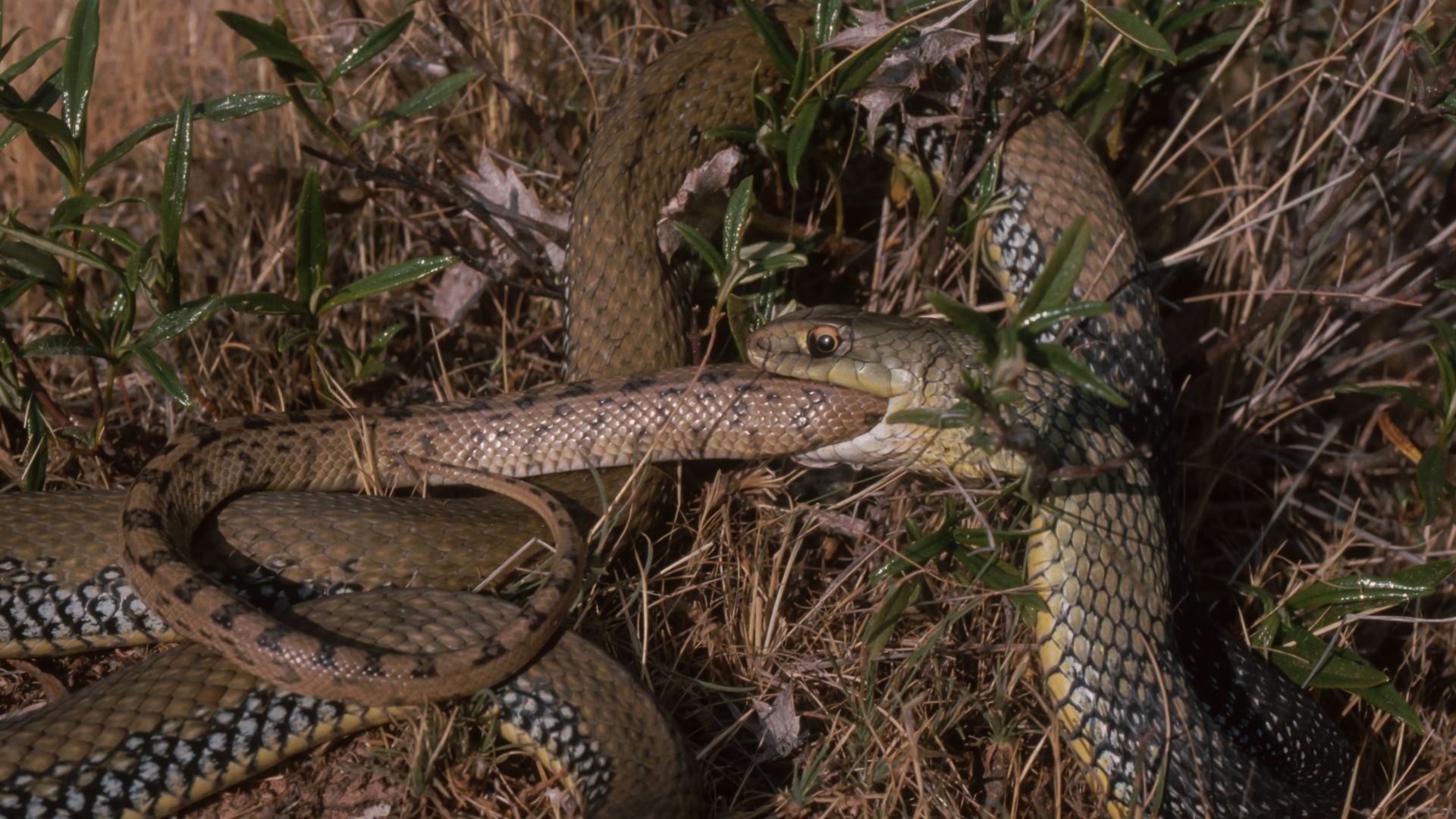
Cannibalism in snakes isn’t a freak accident of nature; it’s a behavior that has emerged independently at least eleven times across different snake species. A recent review of over 500 documented cases confirms that eating other snakes is a common, strategic adaptation, not a bizarre exception.
Why Snakes Eat Each Other
For humans, cannibalism is taboo. But snakes are different. Researchers now believe cannibalism is a flexible behavior that arises when conditions demand it. Whether due to limited food, population control, or sheer opportunity, eating another snake can be beneficial.
The study, published in Biological Reviews, analyzed reports from 207 snake species across all continents. The data shows the behavior is surprisingly widespread. As Bruna Falcão, the study’s lead author, explains: “Snakes have evolved to be opportunistic. Cannibalism isn’t weird for them; it’s simply effective.”
Evolutionarily Advantageous Behavior
The survival value of cannibalism is not new. In other species, such as spiders and praying mantises, cannibalism can give a reproductive advantage. For snakes, the benefits are more direct: increased energy intake when prey is scarce, and a way to reduce competition.
The most common cannibalistic behaviors were found in three families: Colubridae (29% of reports), Viperidae (21%), and Elapidae (19%). The high rate in Colubridae suggests stress – a lack of other food sources – is a primary trigger. Vipers in captivity are also prone to cannibalism, likely due to overcrowding and starvation. Cobras, on the other hand, are known to prey on snakes in the wild.
Adaptability is Key
The researchers found that snakes with wider jaws were more likely to engage in cannibalism – the physical ability to swallow another snake is obviously a prerequisite. But more importantly, the study suggests a strong link between generalist diets and cannibalistic behavior. Snakes that already eat a variety of prey are more likely to turn to other snakes when needed.
However, some biologists caution against overstating this connection. As Xavier Glaudas, a biologist not involved in the study, notes: “The data doesn’t fully confirm a strong link between generalist diets and cannibalism. More evidence is needed.”
A Natural Part of Snake Evolution
Despite gaps in the data, the findings are clear: snakes have repeatedly evolved this behavior as an adaptive strategy. The study provides a valuable overview of a phenomenon that has been underreported and poorly understood.
Snakes are highly adaptable creatures. Their success across the world suggests that cannibalism is simply another tool in their survival toolkit.
The full extent of cannibalistic behavior in snakes remains unknown, with many historical reports buried in obscure books and archives. Further research will likely reveal even more instances of this surprisingly common and ecologically relevant practice.