


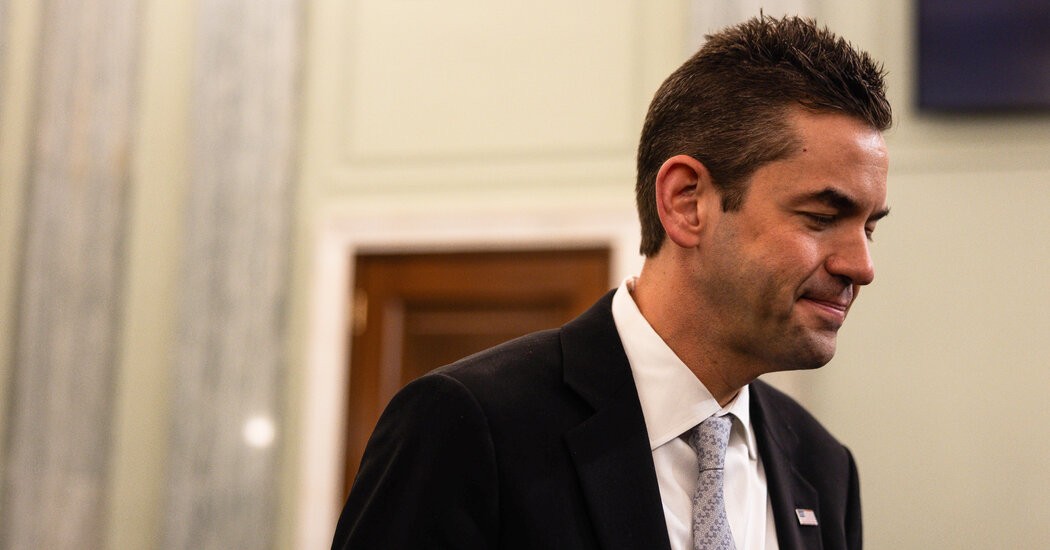
President Trump has unexpectedly renominated billionaire entrepreneur Jared Isaacman to lead NASA, just five months after abruptly withdrawing his initial nomination. This marks a significant turn of events, with the president seemingly reversing course on a prior decision.
Isaacman’s Background and Initial Nomination
Jared Isaacman, 42, gained prominence for leading two private missions to orbit aboard SpaceX rockets. His initial nomination in December appeared linked to his close association with Elon Musk, founder and CEO of SpaceX. However, tensions between Trump and Musk, culminating in Musk’s departure from his government role, led to a falling out and, subsequently, the withdrawal of Isaacman’s nomination.
The Earlier Reversal and Underlying Factors
The abrupt reversal stemmed from Trump’s displeasure over Isaacman’s past contributions to Democratic campaigns, including that of former Senator Bob Casey. Despite Isaacman’s efforts to mitigate potential conflicts of interest—stepping down as CEO of Shift4, cancelling contracts with SpaceX, and divesting aerospace investments—Trump chose to withdraw the nomination.
Isaacman’s Continued Support for Trump
Despite the initial setbacks, Isaacman has maintained a publicly cordial and supportive stance toward Trump, echoing the president’s views on various issues, including military actions against suspected drug smugglers and bolstering the nation’s position in space exploration.
A Turbulent Transition at NASA
NASA has been without a permanent administrator for over ten months. Following Bill Nelson’s departure after Trump’s inauguration, Janet Petro and subsequently Sean Duffy filled in as acting administrators amidst shifts in policy priorities. The Trump administration is actively seeking to reorient the agency, proposing cuts to Earth science and robotic missions while prioritizing crewed missions to the moon and potentially Mars.
Artemis III and Intra-Administration Disputes
A key area of contention revolves around the Artemis III mission, slated to land astronauts on the lunar surface in the south polar region by mid-2027. SpaceX has a contract to adapt its Starship spacecraft as a lunar lander, but concerns are growing regarding Starship’s readiness within the projected timeframe. This has led to calls for a simpler, faster solution, with Secretary of Transportation Sean Duffy reopening the lander contract.
The situation has been further complicated by public disagreements between Duffy and Musk, with Musk questioning Duffy’s competence and suggesting his actions could harm NASA. Isaacman’s role in this situation, considering his alliance with Musk, is likely to face scrutiny during his upcoming Senate confirmation hearings.
Internal Power Dynamics and Future Leadership
Behind the public disagreements, there appear to be internal power struggles for control of NASA. Duffy has reportedly sought to merge NASA with the Department of Transportation, a proposal met with skepticism even among some of Duffy’s Republican supporters who acknowledge NASA’s broader mandates extend beyond space travel.
Ultimately, the renomination of Jared Isaacman reflects a complex interplay of internal politics, shifting policy priorities, and a renewed focus on crewed space exploration. The coming weeks will likely reveal how Isaacman will navigate these challenges and chart the future course of NASA. > This unexpected turn highlights the volatile nature of leadership transitions and the challenges of maintaining stability within government agencies.


